
How Seed & Agribusiness Companies Win Organic Traffic in 2026 — A Multilingual SEO Playbook
A practical, multilingual playbook for seed producers, distributors and agribusiness brands to grow organic search traffic across English, Hebrew, Spanish, Portuguese, French, Arabic and Chinese — without paid ads.
How does SeedMatchGroup handle a requirement like "How Seed & Agribusiness Companies Win Organic Traffic in 2026 — A Multilingual SEO Playbook"?
A buyer submits one private brief through the RFQ builder. A practical, multilingual playbook for seed producers, distributors and agribusiness brands to grow organic search traffic across English, Hebrew, Spanish, Portuguese, French, Arabic and Chinese — without paid ads. A dedicated sourcing specialist normalises it into a single technical specification, issues it to qualified international manufacturers, integrators and EPC contractors, and returns offers that can be compared line by line on the same scope, lead time and delivery terms.
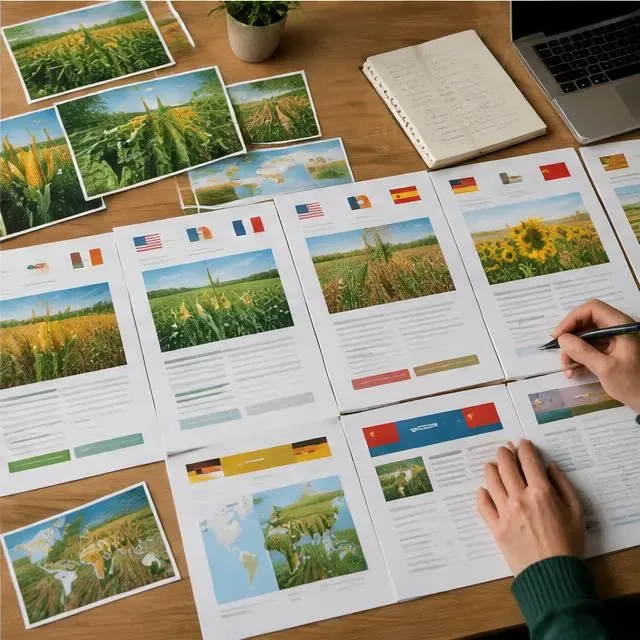
Key takeaways
- Why organic search matters more for agribusiness than for most B2B sectors: Three structural realities make SEO unusually powerful in seed and agribusiness:
- The four pillars of an organic-traffic engine that actually works: Across hundreds of agribusiness pages we have analysed, the sites that consistently grow organic traffic share four disciplines.
- Multilingual SEO: the highest-ROI move most agribusinesses skip: Here is what most agribusiness teams underestimate: the competition for commercial seed queries in Portuguese, Spanish, Arabic, Hebrew, French and Chinese is dramatically lower than in English, while the buyer intent is…
- A practical 90-day organic traffic plan for a seed or agribusiness brand: If you are starting from a typical brochure site, here is the sequence that works.
- What good looks like in each language: English (global commercial).
Organic search is still the most defensible growth channel in B2B agribusiness. Paid campaigns deliver clicks the day you pay for them and stop the day you don't. Organic visibility, when built correctly around real buyer questions, compounds quietly for years. For seed producers, distributors, importers and agribusiness consultancies, the opportunity in 2026 is not just to rank in English — it is to rank in every language your buyers actually search in.
This article is a practical playbook. No theory, no fluff. It is the same approach we use internally at SeedMatchGroup to drive qualified buyer traffic from more than 30 countries, across multiple languages, without paid ads.
Why organic search matters more for agribusiness than for most B2B sectors
Three structural realities make SEO unusually powerful in seed and agribusiness:
Long buyer research cycles. A commercial buyer evaluating a new variety, a new origin, or a new supplier often reads dozens of pages over weeks or months before they ever fill in a contact form. Content that shows up consistently across that research journey builds trust no ad can buy.
Highly specific intent. Searches like 'F1 tomato seed suppliers Israel', 'sementes de milho híbrido Brasil' or 'موردي بذور الخضروات الإمارات' are not curiosity searches. They are professional buyers with budget. Capturing even a small share of these queries is commercially significant.
Underinvested category. Most seed and agribusiness websites are still product brochures. The competitive bar for thoughtful, well-structured, multilingual content is genuinely low — which means well-executed SEO wins faster here than in saturated SaaS or e-commerce categories.
The four pillars of an organic-traffic engine that actually works
Across hundreds of agribusiness pages we have analysed, the sites that consistently grow organic traffic share four disciplines.
1. Real buyer keywords, not vanity keywords. Forget rankings for generic terms like 'seeds' or 'agriculture'. Target the long-tail commercial queries buyers actually type — crop + variety class + region, or crop + use-case + certification. These convert.
2. Page-per-intent architecture. One clear page for each buyer question, each crop, each region, each use-case. Not a single 'products' page trying to rank for everything.
3. Real depth. Each page should answer the buyer's question completely — specifications, agronomy notes, climate fit, certifications, comparison guidance, sourcing options, FAQs. Thin pages do not rank in 2026.
4. Multilingual coverage. Buyers search in their working language. If your only content is English, you are invisible to most of the global commercial market.
Multilingual SEO: the highest-ROI move most agribusinesses skip
Here is what most agribusiness teams underestimate: the competition for commercial seed queries in Portuguese, Spanish, Arabic, Hebrew, French and Chinese is dramatically lower than in English, while the buyer intent is often higher.
A few examples from our own data:
- A Portuguese-language page on 'fornecedores de sementes de tomate' attracts qualified Brazilian buyers with a fraction of the competition of the equivalent English page.
- An Arabic-language page on 'موردي بذور الخضروات' reaches Gulf and North African buyers whose internal procurement teams work primarily in Arabic.
The mistake to avoid: do not auto-translate. Machine-translated pages read like machine translations and Google's quality systems treat them accordingly. Either write natively in each language, or use intelligent tools to draft and a human reviewer to edit. The investment per page is small; the durability of the resulting traffic is enormous.
A practical 90-day organic traffic plan for a seed or agribusiness brand
If you are starting from a typical brochure site, here is the sequence that works.
Days 1–15 — Foundations. Audit the site for crawlability, set up structured data (Organization, Product, FAQ), fix the obvious technical issues, and rewrite the homepage and top five service pages around real buyer queries. Add canonical tags and a real sitemap.
Days 16–45 — Cluster build-out in your primary language. Build a content cluster for each of your priority crops: one pillar page per crop, plus 5–10 supporting pages covering varieties, region-specific sourcing, comparison guidance, and FAQs. Internal-link them aggressively.
Days 46–75 — Multilingual expansion. Translate (with human review) your top-performing English pages into your three highest-priority languages — typically some combination of Portuguese, Spanish, Arabic, French and Chinese for international agribusiness. Add `hreflang` tags properly.
Days 76–90 — Authority and depth. Publish 3–4 long-form thought-leadership articles per month, each genuinely useful to commercial buyers. Pursue organic mentions and links from industry associations, trade publications and partner sites.
By day 90, a previously static brochure site will typically see organic impressions multiply 5–10x, with commercial inquiries starting to arrive from countries you never actively marketed in.
What good looks like in each language
English (global commercial). Focus on buyer-intent queries: 'wholesale F1 hybrid vegetable seeds', 'climate-resilient maize varieties', 'organic seed suppliers Europe'.
Português (Brasil + Lusophone Africa). Long-tail commercial queries: 'fornecedores de sementes híbridas', 'sementes de soja certificadas', 'sementes para estufa Brasil'.
Español (LatAm + Spain). 'Proveedores de semillas hortícolas', 'semillas híbridas F1 invernadero', 'semillas resistentes al clima'.
Français (West/North Africa, France). 'Fournisseurs de semences maraîchères', 'semences hybrides F1', 'semences résistantes à la sécheresse'.
العربية (Gulf, North Africa). 'موردي بذور الخضروات', 'بذور هجينة F1', 'بذور مقاومة للجفاف'.
中文 (China + diaspora buyers). '蔬菜种子供应商', 'F1 杂交种子', '抗气候种子'.
Русский / Türkçe / हिन्दी. Worth covering once your top four languages are mature, especially for buyers in Central Asia, Turkey and South Asia.
Content formats that consistently rank for agribusiness queries
1. Supplier directory pages — region-specific, transparent, well-structured.
2. Crop pillar pages — everything a buyer needs to know about sourcing a given crop internationally.
3. Comparison guides — 'F1 vs open-pollinated', 'tropical vs temperate varieties', 'organic vs conventional sourcing'.
4. Country sourcing guides — 'How to import seeds into Brazil', 'Buying vegetable seeds from Israel', 'Sourcing maize from Argentina'.
5. FAQ hubs — answering the long tail of buyer questions, ideal for intelligent search and Google's featured snippets.
6. Long-form thought leadership — the pieces buyers actually email each other.
How SeedMatchGroup applies this playbook
We run this exact playbook internally. Our public site combines multilingual buyer-intent pages, programmatic country and crop coverage, long-form thought leadership and structured supplier intelligence — all designed to be useful to a commercial buyer regardless of language or geography. The result is a continuous inbound flow of qualified international buyers, brokered privately on their behalf.
If you are a seed producer, distributor or agribusiness brand looking to grow organic traffic — or a commercial buyer looking for a sourcing partner already operating this way — start with our Global seed sourcing hub or request a consultation.
Turn "How Seed & Agribusiness Companies Win Organic Traffic in 2026 — A Multilingual SEO Playbook" into your RFQ
Answer a few questions and we will draft a structured RFQ you can review, edit and submit to our independent supplier network.
Frequently asked questions
- How does SeedMatchGroup handle a requirement like "How Seed & Agribusiness Companies Win Organic Traffic in 2026 — A Multilingual SEO Playbook"?
- A buyer submits one private brief through the RFQ builder. A practical, multilingual playbook for seed producers, distributors and agribusiness brands to grow organic search traffic across English, Hebrew, Spanish, Portuguese, French, Arabic and Chinese — without paid ads. A dedicated sourcing specialist normalises it into a single technical specification, issues it to qualified international manufacturers, integrators and EPC contractors, and returns offers that can be compared line by line on the same scope, lead time and delivery terms.
- What size of project does the platform serve?
- SeedMatchGroup works on commercial agricultural projects from USD 250K upward — greenhouses, irrigation and fertigation, seed processing and production facilities, nurseries, packhouses, cold chain, water treatment, agricultural solar and related infrastructure. Smaller retail or hobby requirements are outside the platform's scope.
- Does the buyer pay anything to use SeedMatchGroup?
- No. Buyers pay no platform fee, subscription or success fee. The platform is compensated by the supply side once a buyer selects a supplier, which is why the shortlist is assembled on technical fit rather than on who pays the most.
- Are supplier names shown on the site?
- No. Supplier, manufacturer and integrator identities, along with price bands and shortlists, are released only inside the private RFQ flow after a requirement is qualified. All communication runs through SeedMatchGroup until the buyer selects an offer.
Move from reading to sourcing
The pages below carry the commercial detail for this topic — cost ranges, supplier verification, specification checklists and financing routes.