Country research · procurement readiness
Greenhouse market screening: Mexico, Netherlands, Spain and Kenya
Evidence checked / editorial update:
Screen a project, not a flag. Mexico and Spain provide tomato-export relevance signals; the Netherlands is a producer and greenhouse economics reference; Kenya offers documented value-chain investment context. None proves an equipment order. Qualify the buyer, crop, site, water, utilities and funding before specifying greenhouse technology or irrigation system design.
This is an editorial market-screening matrix, not a demand forecast, country ranking or customer list. These countries and their firms are not confirmed SeedMatch customers. No yield, savings, financing, availability or supplier-choice guarantee is implied.
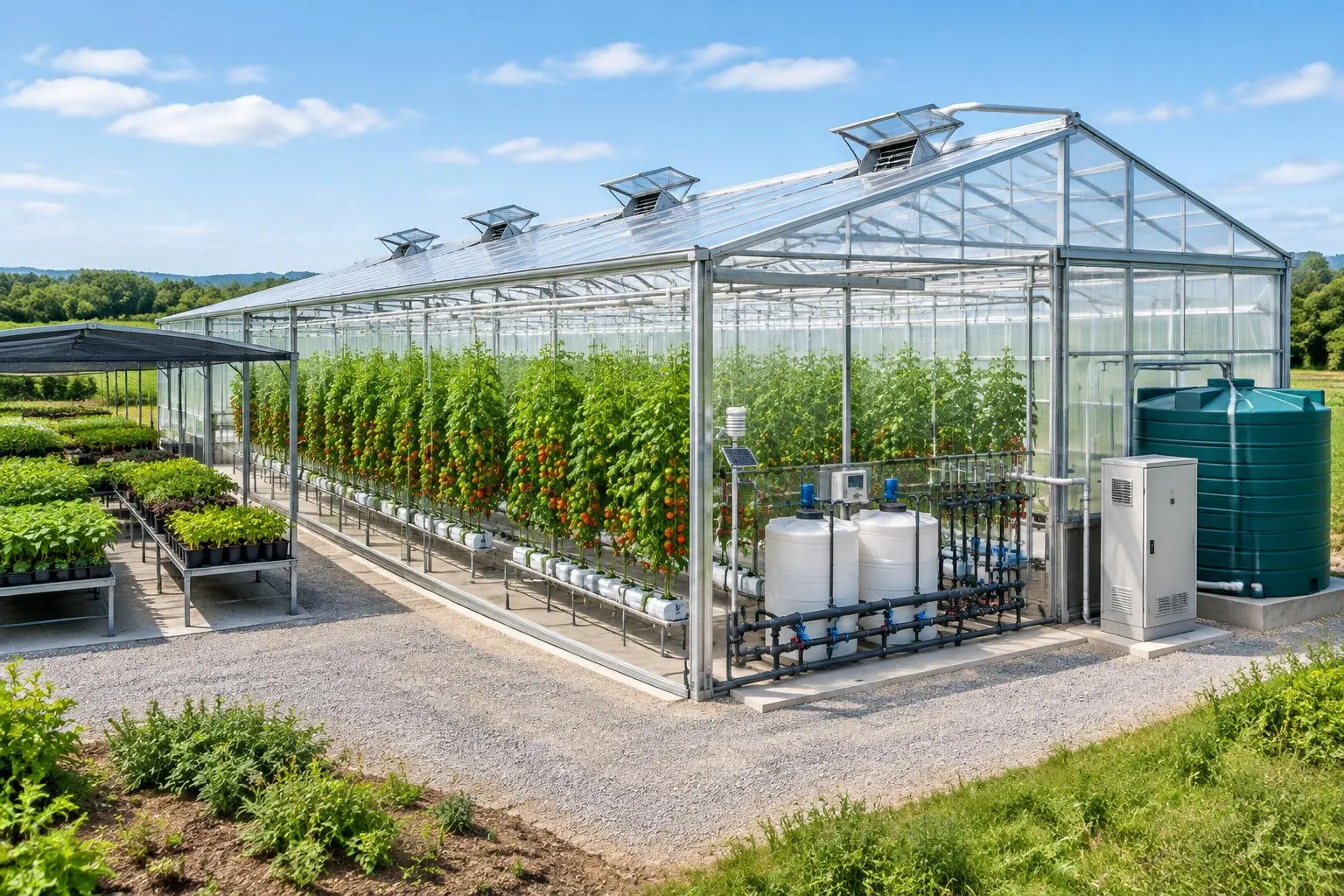
Four-country matrix: evidence versus procurement hypothesis
Sources checked 14 October 2026. WITS reports gross exports of fresh or chilled tomatoes (HS 070200); these are not greenhouse-only exports and can include re-exports. No greenhouse adoption rate or current order pipeline is inferred.
| Market / screening role | Dated evidence | Buyer to qualify | Site-level checks |
|---|---|---|---|
| MexicoProducer/export relevance; expansion is a project hypothesis | WITS 2025: USD 2,650,105.85 thousand in fresh/chilled tomato gross exports. | Commercial tomato growers, exporters, greenhouse operators and integrators with a defined site or upgrade. | Crop calendar, water rights and analysis, temperature/humidity records, power capacity, export specifications and local service. |
| NetherlandsProducer and technical/economic benchmark | WITS 2025: USD 2,290,046.14 thousand. WUR KWIN 2026 describes Dutch crop production, prices, inputs, energy and CO₂ references. | Established greenhouse operators, nurseries, advisers and retrofit project owners. | Actual energy contract, heat/CO₂ interfaces, crop assumptions, controls compatibility and maintenance capacity. Do not transplant Dutch costs. |
| SpainProducer/export relevance; retrofit or expansion hypothesis | WITS 2025: USD 1,094,425.14 thousand in fresh/chilled tomato gross exports. | Protected-crop growers, agricultural cooperatives, nurseries and food exporters with an investment brief. | Parcel-specific heat, water access and quality, irrigation discharge rules, seasonal buyer specifications and local technical support. |
| KenyaExpansion opportunity hypothesis grounded in project context | World Bank NAVCDP release, 29 March 2022: USD 250 million IDA credit, tomato/potato value chains, farmer-led irrigation and market access. | Qualified cooperatives, aggregators, commercial farms and public/private project owners—not an assumption that every smallholder can fund CAPEX. | Current procurement notices, implementing entity, aggregation scale, water/utility evidence, cold chain and financing eligibility. The 2022 announcement is not an open tender. |
From country signal to a qualified project
Define the buyer and outcome
Identify the farm, processor, nursery, exporter, integrator or procurement team, decision maker, crop, commercial output specification, existing capacity and reason for investing.
Prove the site constraints
Record location, usable area in m² or ha, monthly climate data, legal water access, laboratory water analysis, available m³/day and peak power in kW. National averages cannot release a design.
Select an evidence-backed scope
Separate structure/climate, irrigation/fertigation, seed lots, fertilizers and IoT. Confirm local standards, approval owners, installation/service scope and acceptance tests with qualified local advisers.
Test economics before an RFQ
Build downside and base cases from local utility tariffs, supplier quotations, crop schedules and buyer-backed sales assumptions. Identify committed funding and unresolved conditions; then request comparable, human-reviewed proposals.
Greenhouse cost: CAPEX, OPEX and funding are different questions
- CAPEX: itemize design, approvals, structure, climate equipment, irrigation/fertigation, electrical work, installation, commissioning and site works. Quote freight, duties and taxes separately with currency, date and scope.
- OPEX: calculate electricity kWh × applicable tariff; water m³ × applicable tariff; fertilizer kg × quoted price; labor hours × local labor cost. Add maintenance, seed/plant material and logistics without double-counting.
- Funding need = CAPEX + additional upfront items + monthly OPEX × reserve months. Funding gap = max(0, funding need − equity − approved debt). Approved debt is not the same as a hoped-for loan; annual OPEX is not added again to the reserve.
- Compare greenhouse cost per m² only after matching usable growing area, crop, design loads, climate-control duty and exclusions. ROI is a scenario, not a promised return; a public project credit is not financing available to your buyer.
The minimum evidence pack for inputs, water and farm IoT
- Seeds: species/variety, destination rules, lot traceability, germination evidence and delivery window; local crop/market suitability needs verification.
- Fertilizers/fertigation: water and substrate tests, product specification, compatibility, storage, dosing scope and applicable registration. This guide gives no universal recipe.
- IoT: measured variables, sensor locations, calibration, connectivity, data access, power backup and who acts on an alarm; do not buy sensors without an operational owner.
- Qualification: supplied project value, budget currency/date, financing status, project phase, growing season, missing requirements and a named next decision. CAPEX sourcing generally starts at USD 250,000; recurring seeds/inputs may be reviewed separately.
Practical buyer questions
Does a tomato-export ranking identify greenhouse customers?
No. Gross exports indicate trade relevance, not greenhouse-only production, equipment demand or a relationship with SeedMatch. Identify an actual buyer and a dated investment requirement.
Which of the four countries is best for greenhouse investment?
There is no defensible universal winner in this evidence set. Match the crop and buyer to a parcel-level water, climate, utility, market and funding case.
Can I use Dutch KWIN costs for Mexico, Spain or Kenya?
Use KWIN as a reference structure, not a local quote. Rebuild energy, labor, crop cycle, climate duty, freight and maintenance with local evidence. The handbook’s numerical tables were not reviewed for this guide.
Does the Kenya project announcement mean funding is available now?
No. The 2022 documents establish project context, not current calls, eligibility or a lender commitment to your project. Check current procurement and funding conditions with the responsible entity.
What must irrigation system design establish first?
Crop and area, verified source capacity and quality, legal access, peak demand, pressure losses, storage, filtration, fertigation interfaces and local service. A flow calculator cannot replace hydraulic engineering.
Are the calculators and project request free?
Yes. Existing buyer-facing calculators, guides and RFQ/project tools are free without a subscription or obligation. Results remain planning scenarios; optional supplier outreach follows human review of the brief.
Put the screening evidence to work
All linked buyer tools and guides are free to use, without subscription or obligation. English-only destinations are labeled.
- CAPEX–OPEX–ROI scenario →
- Irrigation water and flow calculator →
- Greenhouse project budget guide →
- Tender timeline and evidence gates →
Define outcome and constraints first. SeedMatch reviews the request and scopes the brief before optional, manually managed supplier outreach. Buyer service is free; no automatic marketplace or financing promise.
Prepare a project request →Send your market-screening project brief
Tell us what you are planning and where. The SeedMatchGroup team reviews every brief and follows up with you. Buyer tools and this brief are free, with no obligation; assisted sourcing is for commercial projects from USD 250,000.
Your contact details
Nothing is sent to suppliers when you submit. A specialist reviews the brief first; any supplier introduction is optional and not guaranteed.
Sources and limits
- WITS / World Bank · HS 070200 · 2025
- Wageningen University & Research · KWIN 2026
- World Bank · NAVCDP · 2022-03-29
- World Bank · NAVCDP appraisal · 2022-02-19
- FAO · Good Agricultural Practices for greenhouse vegetable crops · 2013
WUR’s public description was checked, not the paid handbook tables. FAO 2013 addresses Mediterranean climate areas, not universal engineering or current law. The Kenya release is dated 2022 in its header; its opening dateline says 2021. The February 2022 appraisal provides corroborating context. No current tender, local utility reliability, adoption percentage or company purchase intent was verified.