
Next-Generation Agricultural Innovation: How Commercial Projects Will Be Built From 2026 Onward
Autonomy, sensing, data-driven agronomy, water and energy intelligence, and bankable engineering are converging. A practical field guide to the innovations that change commercial agricultural project economics — and how to specify them before you buy.
What is the most valuable agricultural innovation for a new commercial project?
Integration, not a single device. In practice the highest measurable returns come from matching genetics and crop plan to the local climate envelope, then designing irrigation, fertigation and energy around that plan. Sensing and autonomy multiply the value of a correct design and cannot rescue an incorrect one.
Key takeaways
- What "Next Generation" Actually Means in Commercial Agriculture: The last decade of agritech produced impressive point solutions — a sensor, an app, a robot, a dashboard.
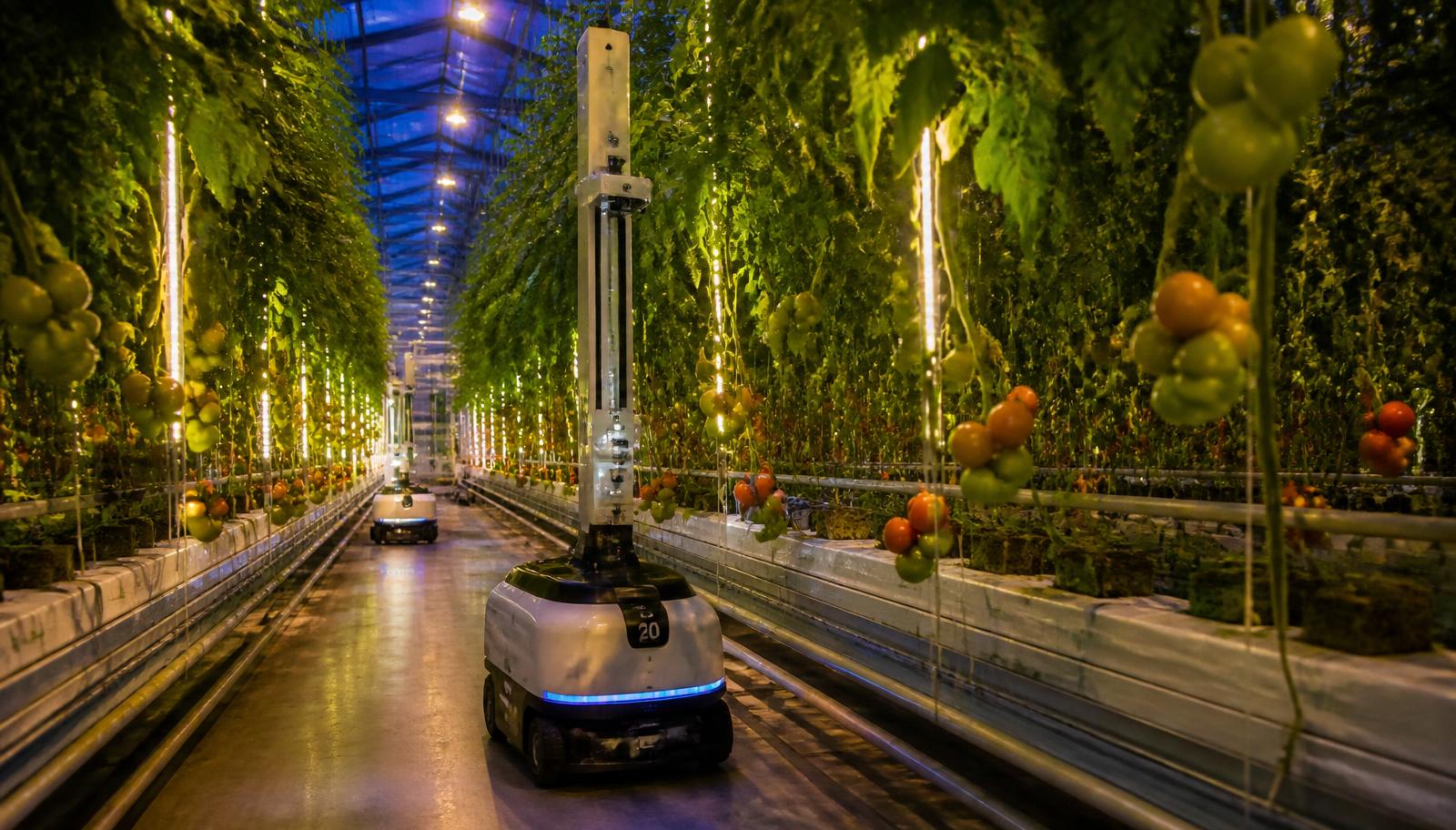
- Autonomy and Robotics: From Demonstration to Payroll Line: Autonomous scouting units, semi-autonomous harvest assist platforms, robotic transplanting and de-leafing systems and automated internal logistics have moved from pilot projects into scheduled operations on large sites.
- Sensing, Imaging and the End of Average Agronomy: Multispectral and thermal imaging, plant-level load cells, sap-flow and stem-diameter sensors, substrate EC and water-content probes, and in-canopy climate arrays have collapsed in price while improving in reliability.
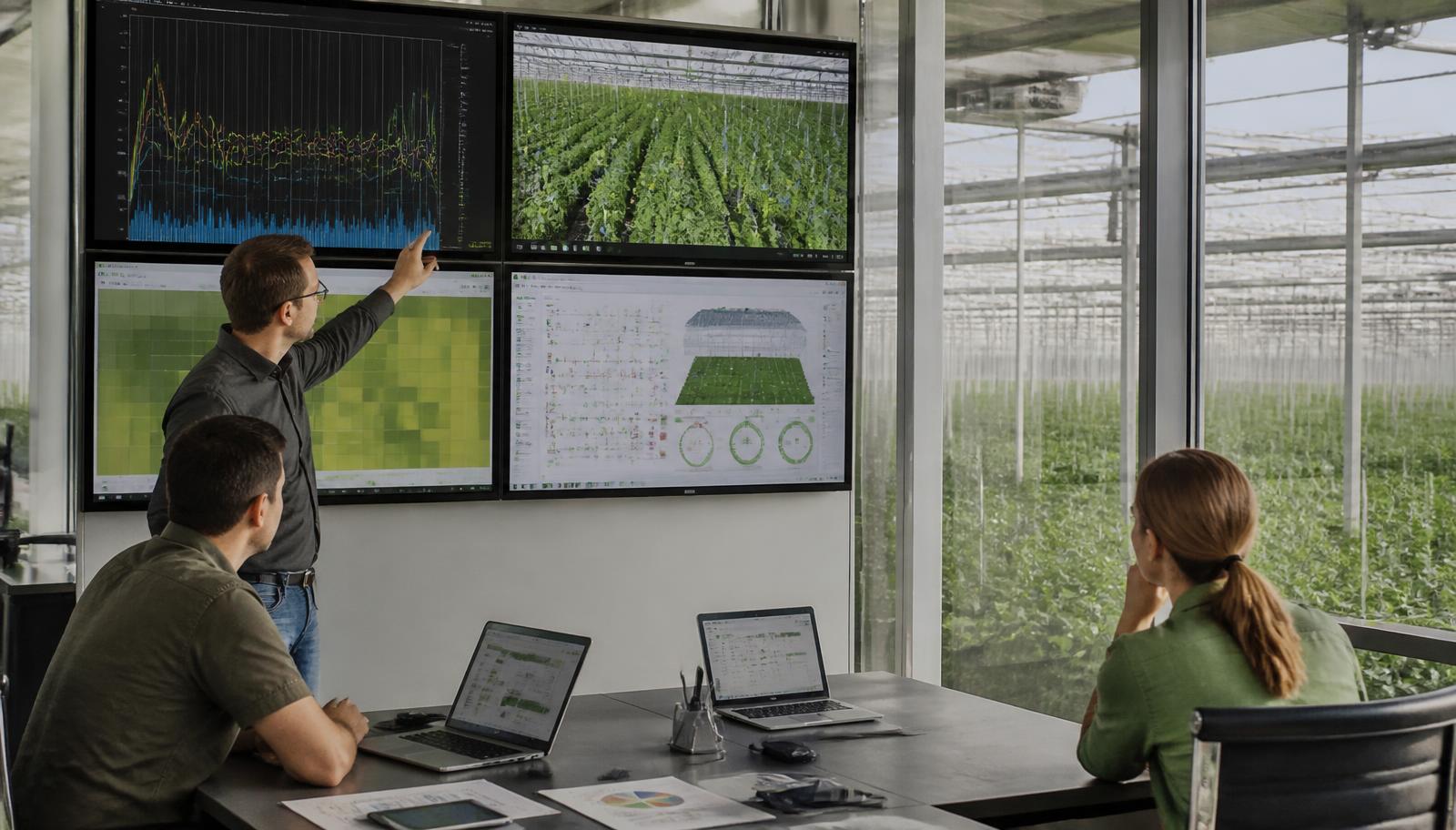
- Data-Driven Agronomy and Decision Models: Crop models, digital twins and predictive climate control are the layer where sensing becomes management.
- Water and Energy Intelligence: The Real Margin Story: In most commercial projects, water and energy determine whether a good crop becomes a good business.
Agricultural innovation is usually sold as hardware. In commercial projects it behaves like infrastructure: the value appears only when sensing, autonomy, water, energy, agronomy and financing are specified together, before procurement begins. This guide sets out what is genuinely changing in 2026, what it does to project economics, and how professional buyers should write it into a specification.
What "Next Generation" Actually Means in Commercial Agriculture
The last decade of agritech produced impressive point solutions — a sensor, an app, a robot, a dashboard. The next generation is defined by integration rather than novelty: a project where the climate strategy, the irrigation and fertigation design, the energy contract, the labour model and the crop plan all reference the same data model and the same assumptions. Innovation is no longer a product you add after commissioning; it is an architecture you choose at the design stage.
That distinction matters commercially. A retrofit sensor network on a greenhouse designed for a different crop and a different climate envelope produces excellent data about an underperforming asset. The same investment, made inside a coherent design, changes what the asset can produce.
Autonomy and Robotics: From Demonstration to Payroll Line
Autonomous scouting units, semi-autonomous harvest assist platforms, robotic transplanting and de-leafing systems and automated internal logistics have moved from pilot projects into scheduled operations on large sites. The commercial case is rarely full labour replacement. It is labour stabilisation: predictable throughput during peak weeks, reduced dependence on seasonal recruitment, and consistent execution of repetitive tasks that directly affect yield quality.
For buyers, the practical questions are unglamorous. What is the machine's realistic hectares-per-shift under your row spacing? What is the maintenance regime and the local spare-parts route? Which tasks remain manual, and does the layout allow both to coexist safely? A project that specifies aisle widths, gutter heights, charging points and floor tolerances for autonomy at the design stage can adopt it later at marginal cost. A project that does not will pay for civil works twice.
Sensing, Imaging and the End of Average Agronomy
Multispectral and thermal imaging, plant-level load cells, sap-flow and stem-diameter sensors, substrate EC and water-content probes, and in-canopy climate arrays have collapsed in price while improving in reliability. The result is that commercial agronomy is shifting from block averages to zone-level and even plant-level decisions.
The value is created at the point of decision, not the point of measurement. A drainage sensor that triggers an irrigation strategy change the same day is worth more than a full sensor suite feeding a report nobody acts on. Serious specifications therefore define the decision loop: which measurement, which threshold, which action, which owner, which review cycle.
Data-Driven Agronomy and Decision Models
Crop models, digital twins and predictive climate control are the layer where sensing becomes management. Modern climate strategies optimise a plant-balance target across a full 24-hour cycle and an energy price curve rather than reacting to a setpoint. Yield forecasting, increasingly accurate two to four weeks ahead, changes commercial behaviour: packaging, labour rostering, logistics and contract fulfilment can all be planned rather than improvised.
This is also where governance matters. Buyers should insist on data portability — open protocols, exportable historical data and documented APIs — because a decade of production history is an asset. Proprietary formats that lock a site into one vendor's controller reduce the value of every future upgrade.
Water and Energy Intelligence: The Real Margin Story
In most commercial projects, water and energy determine whether a good crop becomes a good business. Closed and semi-closed irrigation with recirculation and disinfection, precision fertigation with real-time EC and pH correction, controlled deficit strategies in open field, and demand-shifting of heating, cooling and lighting against tariff structures are the innovations with the clearest financial signature.
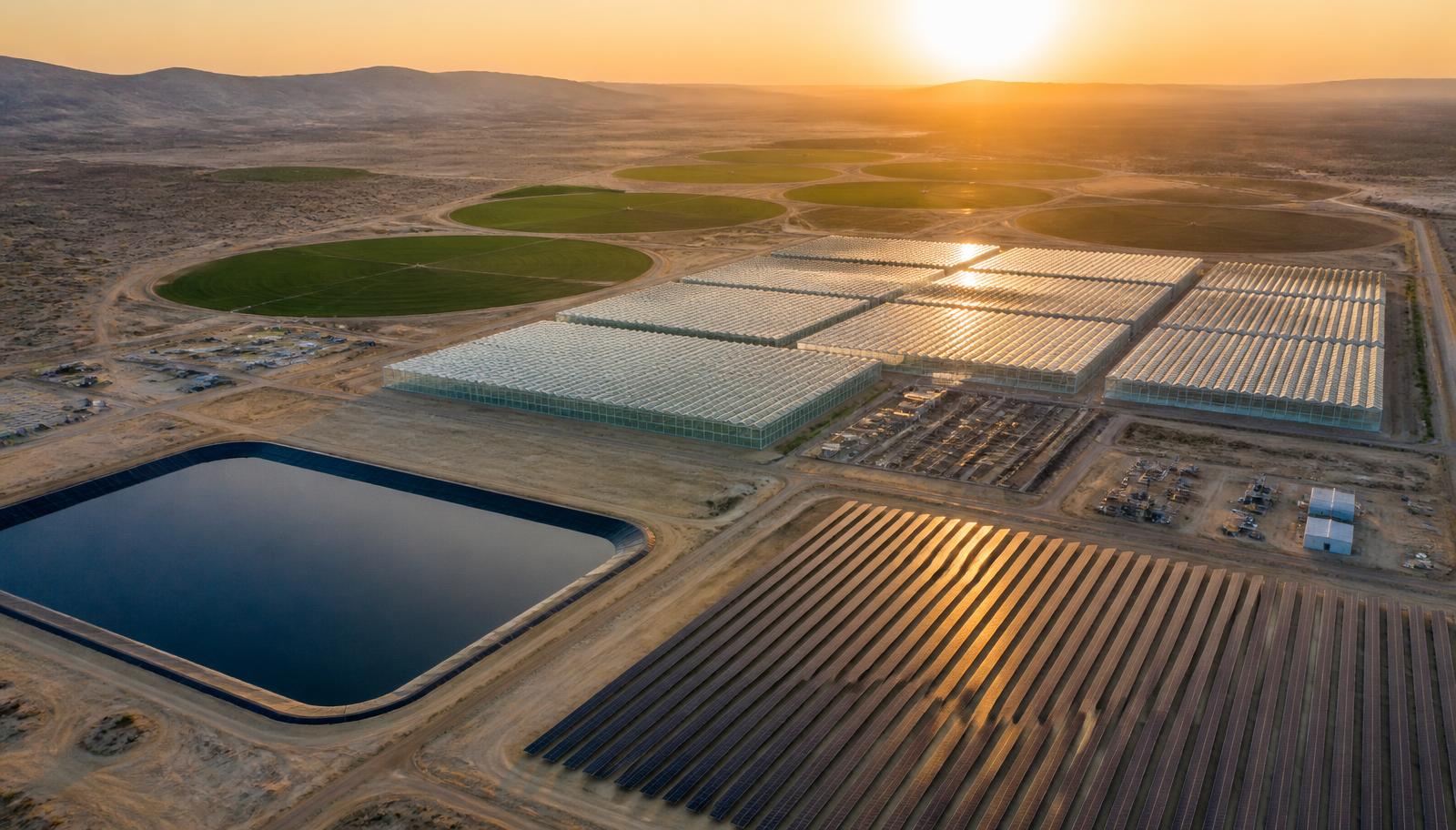
On-site generation increasingly belongs in the same conversation. Solar-plus-storage sized against a modelled load profile, heat recovery, thermal buffers and — where available — grid participation arrangements can move a project from tariff-taker to price-manager. These are engineering and contracting decisions, and they must be modelled before the structure is finalised, because they influence orientation, roof loading, plant-room sizing and cable routes.
Genetics, Seed and Biological Inputs
Variety improvement remains one of the highest-leverage innovations available, and it is often the cheapest. Climate-resilient and disease-tolerant genetics, rootstock strategy, seed quality and treatment protocols, and biological crop protection integrated into an IPM programme change the operating envelope of a site without changing its capital structure. The critical discipline is trial design: replicated, measured comparisons under your own conditions rather than catalogue claims.
Traceability, Compliance and Market Access
Buyer requirements, residue limits, certification schemes and emerging carbon and water reporting obligations are moving from paperwork to system requirements. Batch-level traceability that starts at seed lot and ends at pallet is becoming a condition of access to premium markets rather than a differentiator. Projects that design traceability into their data architecture avoid retrofitting it under audit pressure.
Bankability: Innovation That Lenders Will Actually Fund
Every technology decision eventually meets a credit committee. Lenders and equity partners fund modelled, referenced and serviceable systems. That means documented assumptions, referenced yield and cost benchmarks, a maintenance and spare-parts plan, a named party responsible for integrated performance, and a phasing plan that lets Phase 1 prove the model before Phase 2 scales it.
The most common financing failure in innovative projects is not excessive ambition. It is unmodelled ambition — technology in the scope that never appears properly in the cash-flow model, the maintenance budget or the staffing plan.
How to Specify Innovation Before You Buy
A practical sequence works better than a wish list. Define the crop plan and market first. Model the local climate, water balance and energy profile against that plan. Set the performance targets you will hold suppliers to — yield, resource use per kilogram, uptime, labour hours per hectare. Only then select technology, and select it as a system with defined interfaces. Write data portability, commissioning criteria, training and spare-parts obligations into the contract. Reserve physical and electrical capacity for the automation you intend to add in year three.
Buyers who follow that order routinely end up with less exotic equipment and better economics than buyers who start from a product demonstration.
The Practical Outlook
The next generation of commercial agriculture will not be defined by a single breakthrough. It will be defined by projects that treat autonomy, sensing, agronomy, water, energy, genetics and compliance as one engineered system with one financial model. The technology is available and, increasingly, affordable. The scarce capability is integration — and integration is a procurement discipline, not a purchase.
SeedMatchGroup works with commercial growers, agribusinesses, investors and governments to define scope, model economics and run structured, supplier-neutral procurement for projects of this type. If you are planning a new build, a retrofit or an expansion, start with the project configurator or the commercial greenhouse cost benchmarks, and bring the output into an RFQ.
Turn "Next-Generation Agricultural Innovation: How Commercial Projects Will Be Built From 2026 Onward" into your RFQ
Answer a few questions and we will draft a structured RFQ you can review, edit and submit to our independent supplier network.
Frequently asked questions
- What is the most valuable agricultural innovation for a new commercial project?
- Integration, not a single device. In practice the highest measurable returns come from matching genetics and crop plan to the local climate envelope, then designing irrigation, fertigation and energy around that plan. Sensing and autonomy multiply the value of a correct design and cannot rescue an incorrect one.
- Is agricultural robotics financially viable at commercial scale in 2026?
- For repetitive, schedulable tasks on large sites — scouting, internal logistics, harvest assist, de-leafing — yes, when the business case is built on labour stability and throughput predictability rather than full replacement. Viability depends on row layout, floor tolerances, charging infrastructure and local service support, all of which should be specified at design stage.
- How much data infrastructure does a commercial farm or greenhouse actually need?
- Enough to close specific decision loops. Each sensor should map to a threshold, an action and an owner. Beyond that, prioritise data portability: open protocols, exportable history and documented APIs, so production history remains usable across future controller or vendor changes.
- Does innovative technology make a project harder to finance?
- Not if it is modelled. Lenders fund documented assumptions, referenced benchmarks, maintenance plans and clear accountability for integrated performance. Financing problems arise when technology appears in the scope but not in the cash-flow model, maintenance budget or staffing plan.
- Should innovation be installed at build or retrofitted later?
- Design for it now, install by phase. Reserving aisle widths, structural capacity, electrical headroom, plant-room space and cable routes costs little at build and makes later adoption incremental. Retrofitting these provisions typically means paying for civil and electrical works twice.
- Which innovations most reduce operating cost per kilogram?
- Water and energy measures usually show the clearest signature: recirculating irrigation with disinfection, precision fertigation with live EC and pH correction, energy demand-shifting against tariff curves, heat recovery and thermal buffering, and on-site generation sized against a modelled load profile.
Move from reading to sourcing
The pages below carry the commercial detail for this topic — cost ranges, supplier verification, specification checklists and financing routes.