
Post-Harvest Infrastructure · Packing House
Commercial Packing House Project Planning
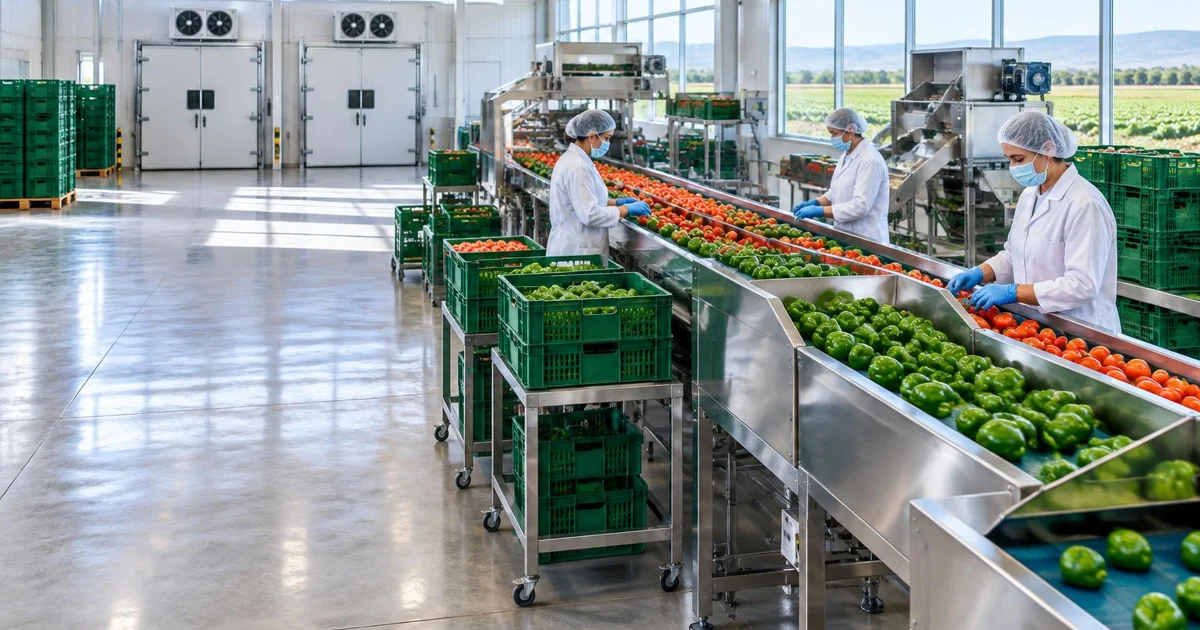
Plan a fruit, vegetable or flower packing house end-to-end — throughput, zone layout, pre-cooling, sorting and grading, cold storage, packaging lines, food-safety certification and export logistics. Vendor-neutral resources for projects from USD $1M to $50M+.
- USD 250K+ Projects
- Supplier-Neutral
- Human-Reviewed
- Global Sourcing
SeedMatchGroup is an independent, human-led global sourcing platform. We do not manufacture packing-house equipment or represent specific suppliers; we help buyers specify projects and open them to vendor-neutral RFQs.
Packhouse in brief
Plan intake, sorting, packing and cooling around your crop mix and peak throughput. One reviewed brief keeps supplier quotations comparable.
Project cost calculatorUse your own cost inputs. The calculator builds a planning budget, not an equipment price or supplier quotation.
Planning pillars
Right-size tonnes/hour by crop, harvest window and export SKU mix before any equipment selection.
Forced-air, hydrocooling and cold-room sizing so produce enters the export chain within hours.
Mechanical, optical and robotic lines matched to product fragility and SKU complexity.
Refrigerated truck bays, palletising, dock design and integration with export forwarders.
GlobalG.A.P., BRCGS, IFS and HACCP layout, materials and traceability from day one.
Country-specific import protocols, phytosanitary flows and destination-market packaging.
CAPEX bands, throughput-based unit economics and 5-7 year payback modelling.
Land, permits, food-safety, offtake contracts, financing package and RFQ documentation.
Development finance, equipment leasing, PPP and export-credit structures for packhouses.
One private RFQ to qualified global packhouse EPCs and equipment integrators.
Plan peak intake, one-way product flow, hygiene zones, equipment interfaces and acceptance criteria.
Where the project needs dedicated cold rooms, our cold-chain platform ColdMatch Group covers refrigeration planning in depth.
Frequently asked questions
Crop mix, peak tonnes per hour, harvest season, destination markets, cooling needs and site utilities. A sourcing specialist reviews your brief before researching suitable suppliers.
Use the Project Budget Calculator with your own estimates for equipment, civil works, installation, logistics and working capital. It totals your inputs; it is not a packhouse quotation.
Small regional packhouses (1-3 t/h fresh produce) typically fall in USD $1M-$5M. Mid-scale export-grade lines with pre-cooling and cold storage sit at $5M-$15M. Large integrated packhouses handling multiple crops with automated sorting, robotic palletising and long-shelf-life cold rooms can exceed $25M-$50M depending on throughput and automation.
Reception and pre-sorting, pre-cooling (forced-air or hydrocooling), washing/waxing, sorting and grading (mechanical or optical), packaging lines, cold storage rooms at multiple set-points, dispatch and refrigerated truck bays, plus utility rooms for refrigeration, boilers, air handling and food-safety-compliant staff areas.
A packing house transforms raw produce into retail-ready SKUs (grading, sizing, labelling, palletising). A cold storage warehouse holds product at controlled temperatures. A commercial packhouse typically integrates both, plus pre-cooling, so the produce enters the export cold chain within hours of harvest.
GlobalG.A.P., BRCGS Food, IFS Food, HACCP and country-specific import protocols. Layout, materials, drainage, air-handling and traceability systems must be specified from day one to pass audits without rework.
General context only — not an offer, quote or recommendation, and not verified for any specific buyer or project. Common structures include development-finance loans (IFC, EBRD, AfDB), commercial equipment leasing for sorting/refrigeration lines, and PPP frameworks in government export-corridor programmes. Our financing readiness checklist maps CAPEX to lender appetite before you approach banks. SeedMatchGroup does not offer, arrange, approve or guarantee financing; confirm current eligibility and terms directly with the provider.
Move commercial packing house project planning into a structured RFQ
Editorial · not a sales pitchThis page is reference material. When you are ready to convert planning into pricing, a structured RFQ replaces weeks of unstructured email with days of comparable, supplier-neutral offers.
The facts a complete, supplier-neutral request on this topic includes. Use it as a checklist before submitting.
- Project location, scale (hectares / m² / units) and target start window
- Crop, product category or equipment scope required
- Technical scope: structures, equipment, controls, irrigation, energy
- Delivery terms, incoterms, packaging and destination port or site
- Budget band (USD $250K+) and approval status
- Financing route: equity, senior debt, leasing, ECA, grant — where relevant
- Site plan, layout sketch or existing BOQ
- Any feasibility study or previous supplier quotation
Opens the RFQ Builder with this topic pre-selected so a specialist can scope it before any supplier is contacted. You stay in control — nothing is submitted until you review and confirm.
Free to submit · supplier-neutral · reviewed by a specialist before any supplier is contacted.
What to do next
Most organizations move through these four steps in order. Each one can be started independently, and nothing is shared with suppliers until you approve the scope.
Turn your project scope into one supplier-neutral request qualified manufacturers can price consistently.
Site, water, energy, permits and documentation — the readiness work lenders and EPC contractors expect before quoting.
Debt, leasing, blended and export-credit structures for commercial agriculture CAPEX, assessed alongside the technical scope.
Supplier-neutral guidance on greenhouses, CEA, irrigation, nurseries, packing houses and project finance.
How this guidance is produced
We do not manufacture equipment and do not represent a fixed vendor list. Guidance reflects the project, not a catalogue.
Content is prepared and reviewed by sourcing specialists working on live commercial agriculture projects, supported by proprietary technology.
Practice drawn from greenhouse, CEA, irrigation, nursery, packing-house and processing projects across multiple climates and regulatory environments.
Project details stay private. Nothing is published, listed or shared with suppliers without your approval.
Editorial approach and company background: About SeedMatch Group.
Prefer WhatsApp?
Send a quick message with your project type, crop and country. A sourcing specialist will review it and confirm the next steps; timing depends on the request and available information.
Packing house RFQ
One private RFQ — qualified packhouse EPCs respond
A dedicated sourcing specialist opens your packing-house brief to independent global EPCs and equipment integrators. Vendor-neutral, buyer-first, no supplier contact details shared.