
Drip Irrigation for Greenhouse Cucumber — Procurement Guide
How commercial growers scope a drip and fertigation system for greenhouse cucumber: driplines or drip-to-substrate, fertigation head, filtration, pumping and controls. Cucumber is a fast-growing crop with high water and nutrient demand, so emitter layout, irrigation frequency and drain management should be specified before suppliers are compared.
Soil-grown drip or substrate for cucumber?
Soil-grown drip is common in tunnels and lower-technology houses. Substrate (rockwool or coco) with drip stakes is used in high-technology greenhouses where drain water is measured and often recirculated. The choice affects fertigation, drain and disinfection scope.
New to drip? Read the guide: what is drip irrigation — components, water and fertilizer efficiency benchmarks, and maintenance.
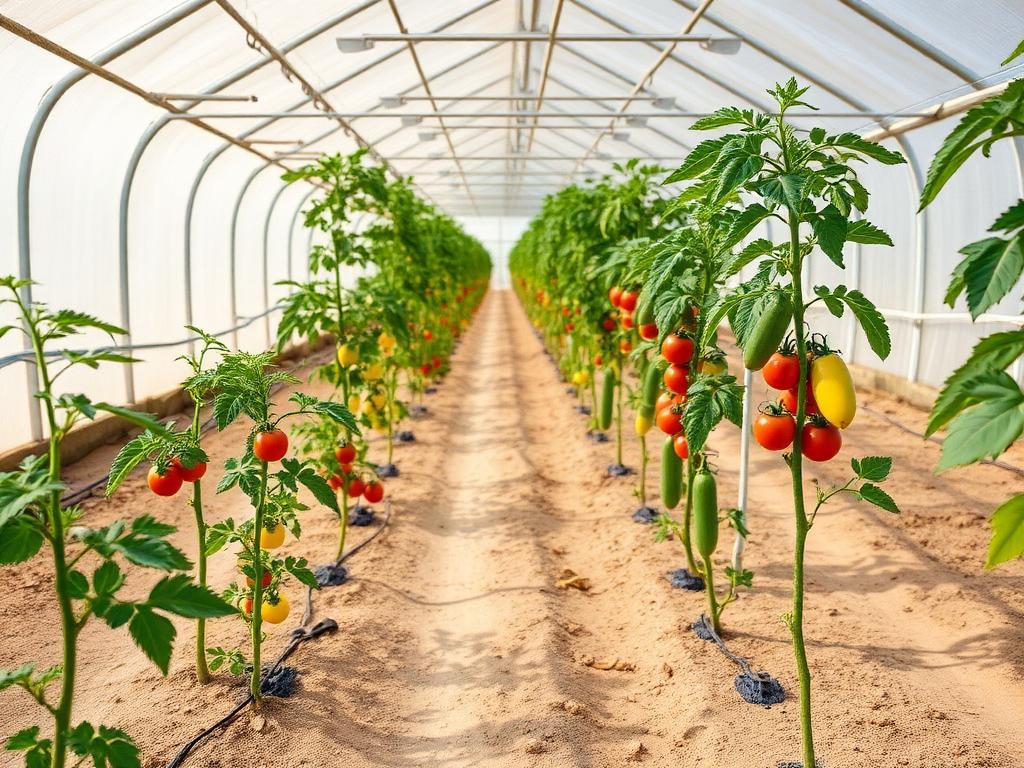
Typical design envelope
Reference parameters used to open the RFQ. Final values are sized by our engineers against source-water, soil and crop stage.
System components
Heavy-wall pressure-compensated lines for soil beds, or stake emitters for substrate slabs.
Dosing channels, mixing tank and EC/pH sensors, matched to the number of irrigation valves.
Automatic backflushing filters selected from the water analysis, not a default mesh size.
Pump sized to the largest valve flow, with pressure regulation at each zone.
Scheduling by radiation sum or timer, with drain measurement where substrate is used.
Why drip for cucumber
- Water and nutrients are delivered to each plant, which suits cucumber's frequent irrigation needs.
- Substrate systems allow drain water to be measured and, if specified, collected for reuse.
- One RFQ can cover driplines, fertigation, filtration and controls so offers can be compared on the same scope.
- Specification is supplier-neutral; brands are compared after the brief is reviewed.
Published figures for cucumber
Results from named studies, not SeedMatchGroup estimates or guarantees. Yields and water use vary with country, climate, variety, greenhouse technology and management. Compare national yields across countries.
| Figure | Published result | Source |
|---|---|---|
| Greenhouse yield | 7.97–11.54 kg/m² total yield per autumn–winter cycle under commercial film, unheated solar greenhouse, Almería (Spain), 2020–2022 | Moreno-Teruel et al., Agronomy 2026 |
| Water use efficiency | 274% higher under drip than furrow; yield 3.32% lower under drip (tomato, cucumber and pepper trial) | Pakistan plastic-tunnel trial, SAARC J. Agri. 2014 |
| System price | No published commercial-scale price found. Prices depend on area, water quality, automation and country, and come from supplier offers on the reviewed brief. | Not available |
Cucumber drip and fertigation calculator
Enter your own block layout and your agronomist's water and nutrient targets. The starting values are example inputs to replace, not recommendations. Results are planning estimates, not an engineering design or a supplier quotation.
Drip irrigation
Fertigation (nitrogen)
Turn this estimate into a project brief
Send these figures to the fertigation equipment RFQ. Your inputs and results are attached to the private brief for specialist review before supplier outreach.
Buying more than once? Save these project details to your buyer profile so your site, crop, budget and timeline are pre-filled on every future request.
Indicative only. Not financial advice, not agronomic advice, not engineering design. Final numbers require supplier, agronomist, engineer and local regulatory review.
Buyer path
From cucumber block details to a drip irrigation request
- 1 · Define
Crop and site details
Define the country, covered or open-field area, growing system (soil or substrate), water source and analysis, and the planting programme.
- 2 · Calculate
Size the critical systems
Use the focused tools below. Results are planning estimates, not engineering designs or supplier quotations.
- 3 · Request
Create one reviewed brief
Add the figures to a private project request. A sourcing specialist reviews it before any relevant supplier is approached.
Recommended calculators
For commercial projects from USD 250K. Supplier participation and response timing depend on scope, country, availability and brief completeness; neither is guaranteed.
FAQ
Ready to source a cucumber drip system?
A dedicated sourcing specialist opens your RFQ to qualified global manufacturers — driplines, fertigation, filtration, pumps and controls — and returns side-by-side offers.