
Drone Fleets, Docking Stations & Autonomous Operations
Once a farm goes past a single drone and a single pilot, the bottleneck moves from flight time to logistics — batteries, chargers, generators, docking stations and mission-planning software. Fleet-ready platforms with docking and semi-autonomous operations turn a two-person crew into an estate-scale imaging and application programme.
When does a docking station make sense?
When scouting cadence matters more than any single flight — greenhouse envelopes, pivot pipelines, security perimeters and estate-wide biomass tracking. If flights are event-driven and infrequent, a docking station is over-scoped.
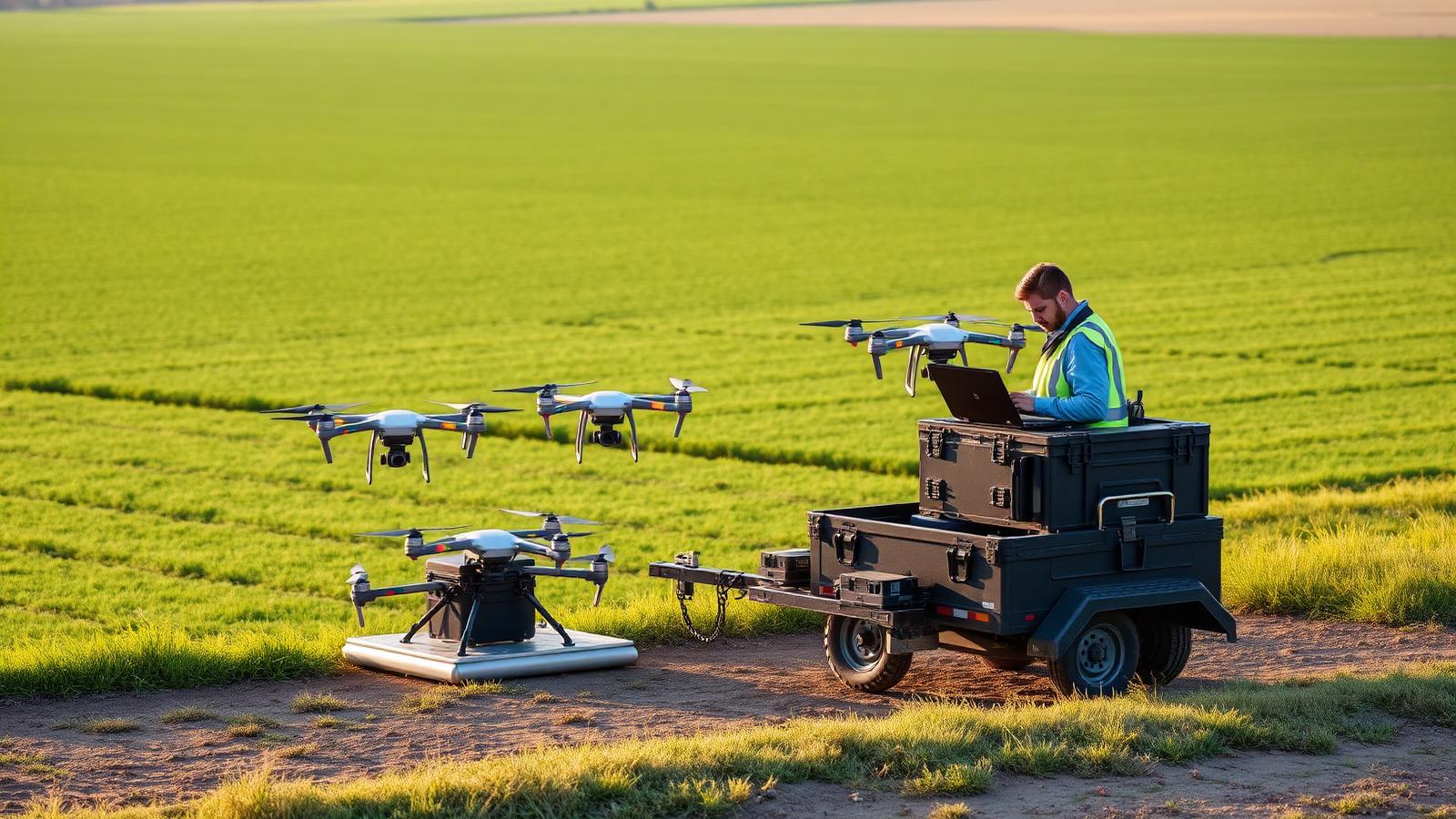
What a well-specified programme includes
Weather-hardened docking stations enable scheduled and event-triggered flights without a pilot on-site — critical for scouting cadence.
Ground-station software coordinates multiple aircraft, splits swaths and manages exclusion zones from a single console.
For jurisdictions where BVLOS is permitted, hardware and documentation packages support the corridor / geo-fence workflow required by the regulator.
Flight logs, application records and imagery flow into a single data store — an audit trail buyers and financiers can rely on.
Typical specification
| Fleet size typical | 2 – 8 aircraft per ground station |
|---|---|
| Docking classes | Weather-hardened rooftop / trailer / hangar |
| Autonomy tier | Scheduled + on-demand + prescription-driven |
| Support | In-country after-sales SLA on the RFQ |
Frequently asked questions
When does a docking station make sense?
When scouting cadence matters more than any single flight — greenhouse envelopes, pivot pipelines, security perimeters and estate-wide biomass tracking. If flights are event-driven and infrequent, a docking station is over-scoped.
Can I run a fleet across multiple farms?
Yes. Ground-station software supports mission libraries and site profiles; the operational question is transport, training and after-sales response across sites, which the RFQ captures.
Is BVLOS available everywhere?
No. BVLOS approvals differ dramatically by country. The RFQ specifies the destination jurisdiction so quotes only include documentation and hardware routes that are actually permitted.
Other agricultural drone use cases
Specify a commercial vineyard and orchard spraying drone programme: 30–70 L payloads, RTK autonomy and terrain following. Vendor-neutral RFQ.
Specify a seeding drone programme for cover crops, over-seeding and granular top-dressing. Vendor-neutral RFQ across leading spreading payloads.
Fixed-wing and multirotor mapping drones for NDVI, multispectral, elevation and drainage surveys. Vendor-neutral RFQ to qualified global platforms.
Thermal-camera drone programmes for orchards, vineyards and irrigated crops: irrigation stress, frost risk and pest hotspots. Vendor-neutral RFQ.
In-country pilot training, spray-drone certification and regulatory documentation for EASA, FAA Part 137, DGCA and more. Bundled into your drone RFQ.
Fleet, docking & autonomy — regulations by destination country
Before the fleet is specified, confirm the destination country's registration, pilot licensing, BVLOS and spray-drone approval route.
Specify the fleet, docking & autonomy programme.
Share destination country, scale and job list. A SeedMatchGroup advisor returns a line-item comparable shortlist across independent global drone manufacturers.