
Seeding & Cover-Crop Drones
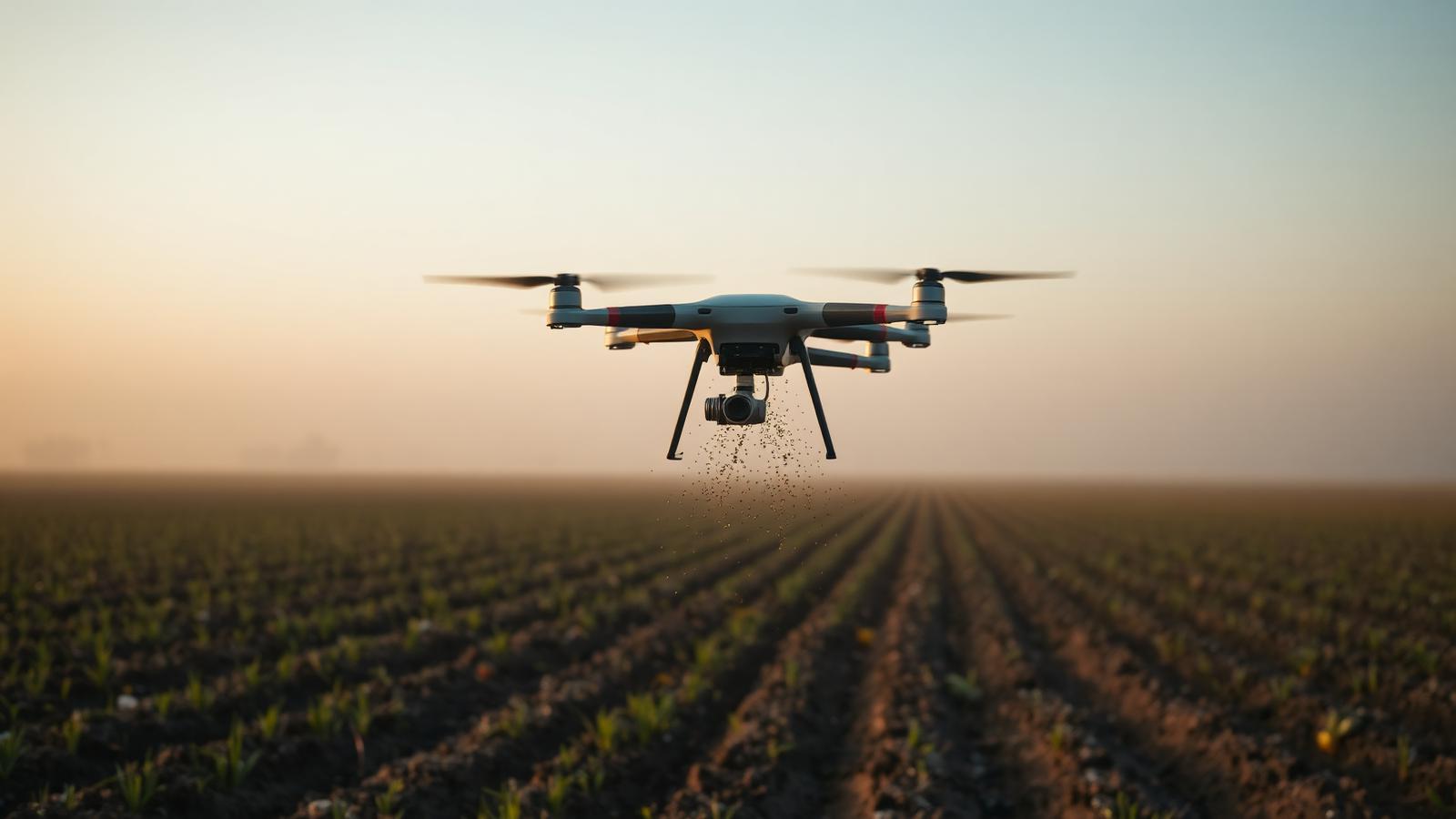
Broadcast seeding into standing corn, over-seeding pasture and pre-harvest cover-crop drops used to belong to airplanes and helicopters. A spreading-payload drone brings the same aerial coverage within reach of a single-farm operator — with the added benefit of RTK-accurate flight lines and shapefile prescriptions.
What seed sizes can a drone broadcast reliably?
Small grains, brassicas, clovers, ryegrass, rice, sorghum and most cover-crop mixes drop reliably. Very large seeds (corn, soy at planting rates) are outside the practical range — drones broadcast, they do not plant to depth.
What a well-specified programme includes
Broadcast rye, radish, clover and mixes 3–4 weeks before harvest without wheel-track damage.
Renovate pasture stands and interseed legumes without cultivation — critical on erodible or organic ground.
Same platform handles urea and granular fertilizer top-dressing when the crop is too tall for ground rigs.
Shapefile prescriptions from NDVI or yield maps drive variable seed rate at the block level.
Typical specification
| Hopper capacity | 40 – 70 L / 30 – 50 kg granular |
|---|---|
| Typical daily throughput | 40 – 80 ha / day at cover-crop rates |
| Autonomy | RTK + auto-return + prescription upload |
| Best fit crops | Corn, soy, small grains, rice, pasture, cotton, orchards under-seeding |
Frequently asked questions
What seed sizes can a drone broadcast reliably?
Small grains, brassicas, clovers, ryegrass, rice, sorghum and most cover-crop mixes drop reliably. Very large seeds (corn, soy at planting rates) are outside the practical range — drones broadcast, they do not plant to depth.
Can I use a spraying drone as a seeding drone?
In most cases, yes. Commercial 40–50 L platforms accept swappable spreading payloads; the RFQ specifies both payloads so pricing, spare parts and training cover the actual job list — not one nominal use case.
What throughput can I plan for on cover crops?
A well-run 50 L class drone with 6–8 batteries and two pilots covers 40–80 ha per operating day on cover-crop rates. Refill logistics and battery swap cycles set the ceiling, not flight time.
Other agricultural drone use cases
Specify a commercial vineyard and orchard spraying drone programme: 30–70 L payloads, RTK autonomy and terrain following. Vendor-neutral RFQ.
Fixed-wing and multirotor mapping drones for NDVI, multispectral, elevation and drainage surveys. Vendor-neutral RFQ to qualified global platforms.
Thermal-camera drone programmes for orchards, vineyards and irrigated crops: irrigation stress, frost risk and pest hotspots. Vendor-neutral RFQ.
Specify a multi-drone fleet with docking stations, battery-swap logistics and BVLOS-ready autonomy for large estates. Vendor-neutral RFQ.
In-country pilot training, spray-drone certification and regulatory documentation for EASA, FAA Part 137, DGCA and more. Bundled into your drone RFQ.
Seeding & cover-crop drones — regulations by destination country
Before the fleet is specified, confirm the destination country's registration, pilot licensing, BVLOS and spray-drone approval route.
Specify the seeding & cover-crop drones programme.
Share destination country, scale and job list. A SeedMatchGroup advisor returns a line-item comparable shortlist across independent global drone manufacturers.