
Thermal Imaging Drones for Orchards & Irrigated Crops
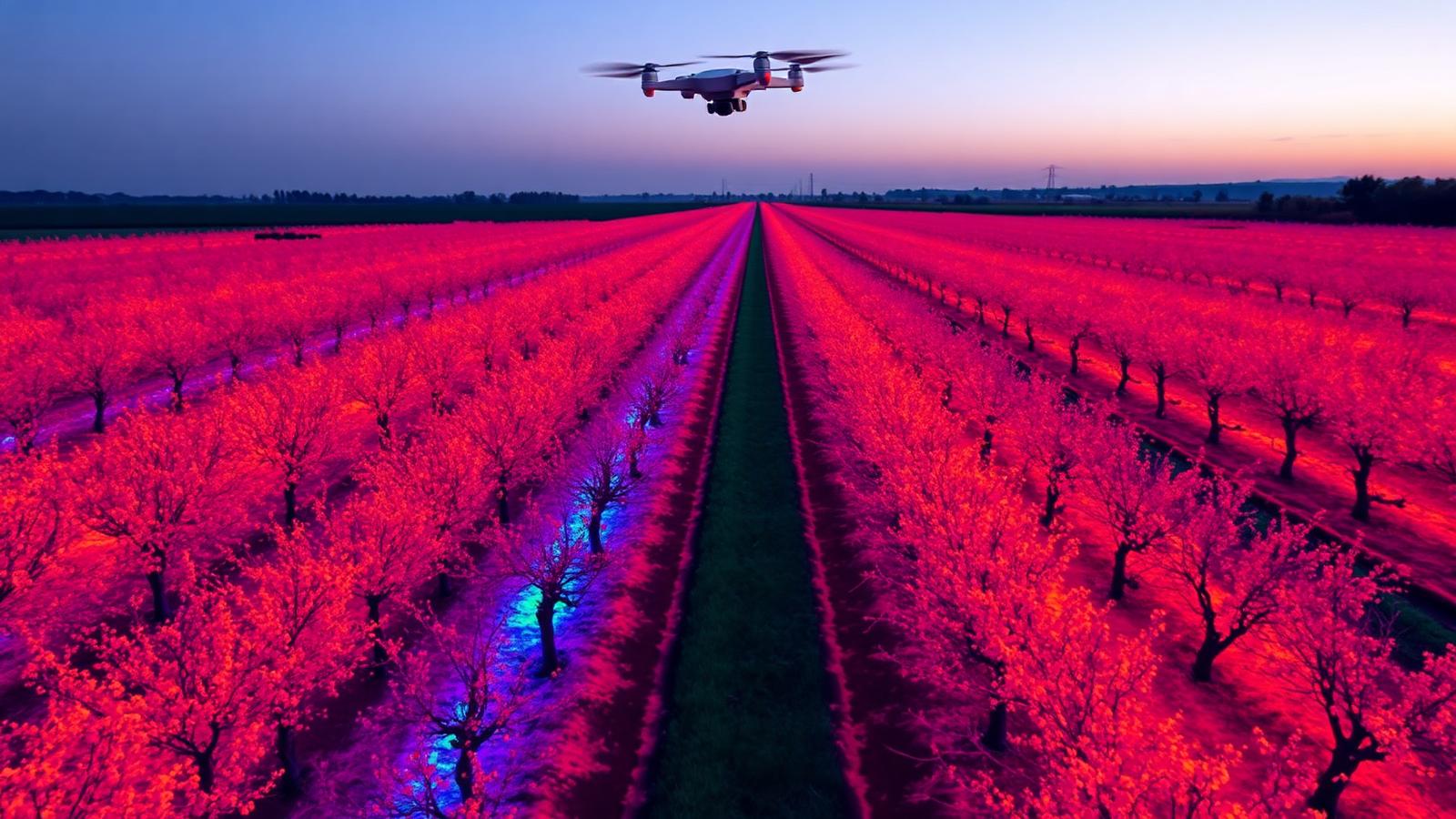
Thermal drone imagery turns temperature differentials into an operational signal — irrigation stress, frost pockets, pest activity, greenhouse envelope leaks and pivot-line problems all show up hours or days before they are visible in RGB.
Is thermal really actionable for irrigation decisions?
Yes — canopy temperature relative to reference targets is a well-published proxy for plant water status. On pivot-irrigated corn, orchards and vineyards, thermal maps typically flag stress 3–7 days ahead of visible signs.
What a well-specified programme includes
Canopy temperature relative to reference plants is a direct proxy for water status — earlier and more accurate than visible greenness.
Overnight thermal flights map cold pockets in orchards and vineyards for wind machine and heater placement.
Metabolic heat signatures and canopy anomalies flag pressure zones before RGB scouting picks them up.
Thermal drones audit greenhouse envelopes, pivot pipelines and PV solar arrays on the same asset flight.
Typical specification
| Sensor class | Radiometric thermal 640×512 typical |
|---|---|
| Best fit | Orchards, vines, greenhouses, pivot-irrigated row crops |
| Typical missions | Weekly in-season + event-driven (frost, heat) |
| Common bundles | Thermal + multispectral on a single dual-sensor platform |
Frequently asked questions
Is thermal really actionable for irrigation decisions?
Yes — canopy temperature relative to reference targets is a well-published proxy for plant water status. On pivot-irrigated corn, orchards and vineyards, thermal maps typically flag stress 3–7 days ahead of visible signs.
Do I need a radiometric thermal camera or is a cheaper sensor OK?
Radiometric thermal (true °C per pixel) is required for repeatable stress maps and multi-flight comparisons. Non-radiometric thermal cameras are inspection tools, not measurement tools.
Can one flight capture RGB, multispectral and thermal at once?
Yes, on dual- and triple-sensor platforms. That halves flight logistics and simplifies analysis but the RFQ must specify each sensor's spec — bundled prices hide compromises.
Other agricultural drone use cases
Specify a commercial vineyard and orchard spraying drone programme: 30–70 L payloads, RTK autonomy and terrain following. Vendor-neutral RFQ.
Specify a seeding drone programme for cover crops, over-seeding and granular top-dressing. Vendor-neutral RFQ across leading spreading payloads.
Fixed-wing and multirotor mapping drones for NDVI, multispectral, elevation and drainage surveys. Vendor-neutral RFQ to qualified global platforms.
Specify a multi-drone fleet with docking stations, battery-swap logistics and BVLOS-ready autonomy for large estates. Vendor-neutral RFQ.
In-country pilot training, spray-drone certification and regulatory documentation for EASA, FAA Part 137, DGCA and more. Bundled into your drone RFQ.
Thermal orchard scouting — regulations by destination country
Before the fleet is specified, confirm the destination country's registration, pilot licensing, BVLOS and spray-drone approval route.
Specify the thermal orchard scouting programme.
Share destination country, scale and job list. A SeedMatchGroup advisor returns a line-item comparable shortlist across independent global drone manufacturers.