
Vineyard & Orchard Spraying Drones
Sloped vineyards, high-density orchards and trellised fruit systems are exactly the terrain a self-propelled sprayer struggles with. A well-specified spraying drone programme replaces the middle 40% of ground applications with precision, low-volume, terrain-following flight — closing the window between scouting and application.
How many hectares per day can a spraying drone cover in a vineyard?
Realistically 10–20 ha per day for a single 40–50 L class drone with two pilots, 6–8 batteries and correctly sized generators. Flight patterns on trellised vines and terraced blocks are tighter than row crops, so battery-swap cadence — not top speed — sets throughput.
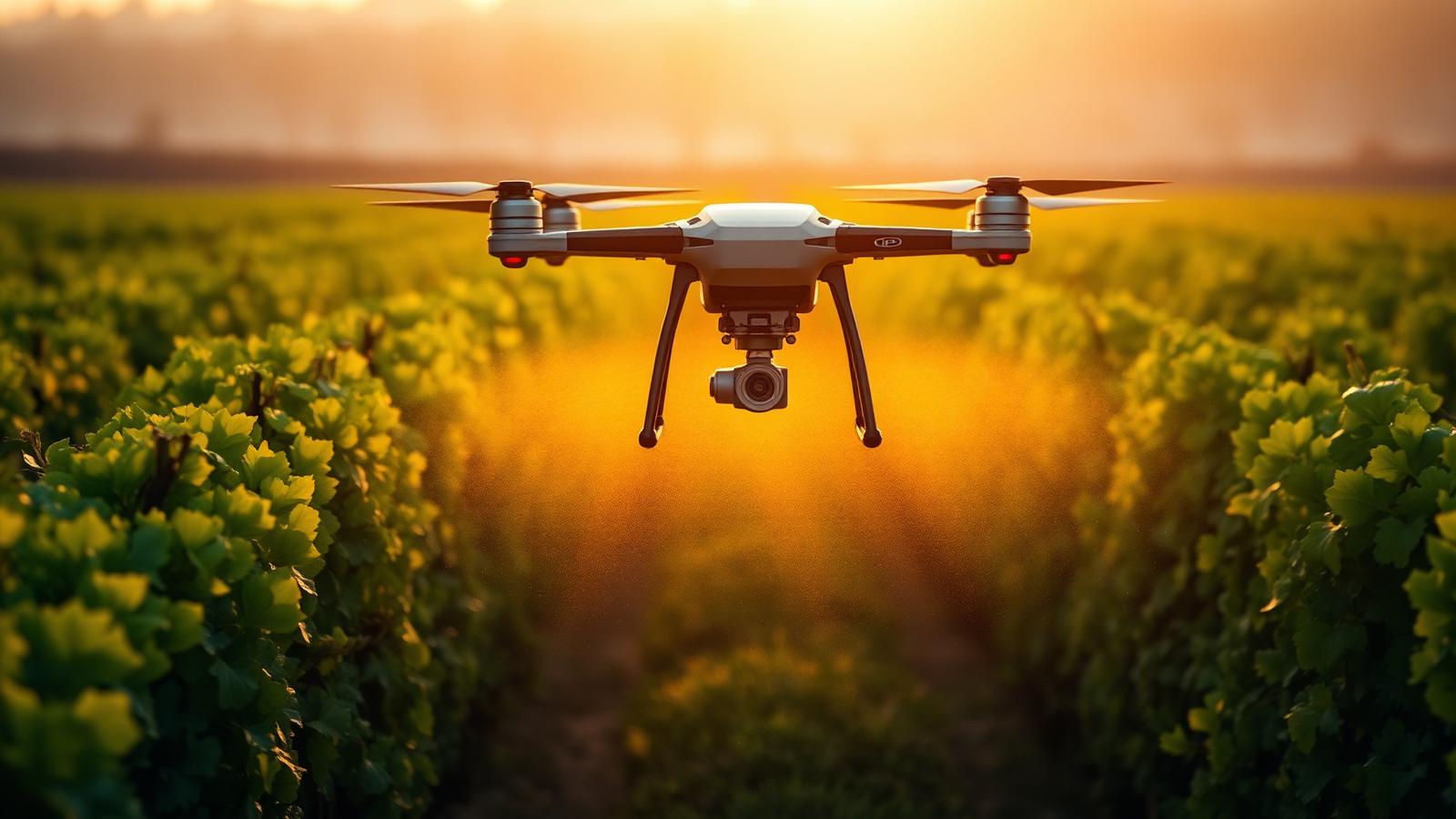
What a well-specified programme includes
RTK-guided autonomy holds a constant boom height over vine rows and terraced orchards, so droplet size and coverage stay consistent instead of collapsing on gradient changes.
Typical vineyard drone jobs run at a fraction of the water per hectare of ground booms. Chemical loading falls proportionally when nozzles, droplet size and swath overlap are correctly specified.
Scouting drones export NDVI / disease-pressure maps as prescriptions; the spray drone executes them block-by-block instead of blanket applications.
Throughput is set by battery count, charger sizing and generator capacity — the RFQ Builder captures those line items so quotes compare like-for-like.
Typical specification
| Payload class | 30 – 70 L tank |
|---|---|
| Typical daily throughput | 10 – 20 ha / day (orchards, vines) |
| Autonomy | RTK + terrain-follow radar |
| Batteries per pilot | 6 – 10 with fast chargers |
| Best fit crops | Wine grapes, table grapes, apples, citrus, avocado, olives, stone fruit |
Frequently asked questions
How many hectares per day can a spraying drone cover in a vineyard?
Realistically 10–20 ha per day for a single 40–50 L class drone with two pilots, 6–8 batteries and correctly sized generators. Flight patterns on trellised vines and terraced blocks are tighter than row crops, so battery-swap cadence — not top speed — sets throughput.
Do drones replace tractor-mounted vineyard sprayers?
For most commercial estates they displace the middle of the job list: sloped or fragmented blocks, biological programmes, spot-treatment and rescue passes. Ground sprayers still win on very high daily hectares in uniform, flat vineyards.
What about drift and chemical registration on wine grapes?
Drone spraying is regulated per crop and per active ingredient — approvals differ in the EU (EASA + national), USA (FAA Part 137 + EPA), South Africa, Chile, Argentina and Australia. The RFQ captures the destination country so quotes include compliant nozzles, droplet-size configuration and pilot certification.
Can one platform cover both vineyards and orchards?
Yes. A 40–50 L class platform with swappable spraying and spreading payloads and interchangeable nozzles covers vineyard fungicide, orchard IPM and cover-crop seeding across the same estate — provided battery count and charger throughput are specified for the biggest job.
Other agricultural drone use cases
Specify a seeding drone programme for cover crops, over-seeding and granular top-dressing. Vendor-neutral RFQ across leading spreading payloads.
Fixed-wing and multirotor mapping drones for NDVI, multispectral, elevation and drainage surveys. Vendor-neutral RFQ to qualified global platforms.
Thermal-camera drone programmes for orchards, vineyards and irrigated crops: irrigation stress, frost risk and pest hotspots. Vendor-neutral RFQ.
Specify a multi-drone fleet with docking stations, battery-swap logistics and BVLOS-ready autonomy for large estates. Vendor-neutral RFQ.
In-country pilot training, spray-drone certification and regulatory documentation for EASA, FAA Part 137, DGCA and more. Bundled into your drone RFQ.
Vineyard & orchard spraying — regulations by destination country
Before the fleet is specified, confirm the destination country's registration, pilot licensing, BVLOS and spray-drone approval route.
Specify the vineyard & orchard spraying programme.
Share destination country, scale and job list. A SeedMatchGroup advisor returns a line-item comparable shortlist across independent global drone manufacturers.