
Project intelligence
Your Business Intelligence Center: Learn More, Plan Smarter, Make Better Decisions
SeedMatch’s Knowledge Center helps commercial agriculture teams turn research into a clearer project brief. Use educational guides, public calculators and country insights to test greenhouse, irrigation and seed-production assumptions before comparing supplier proposals.
SeedMatchGroup editorial team ·
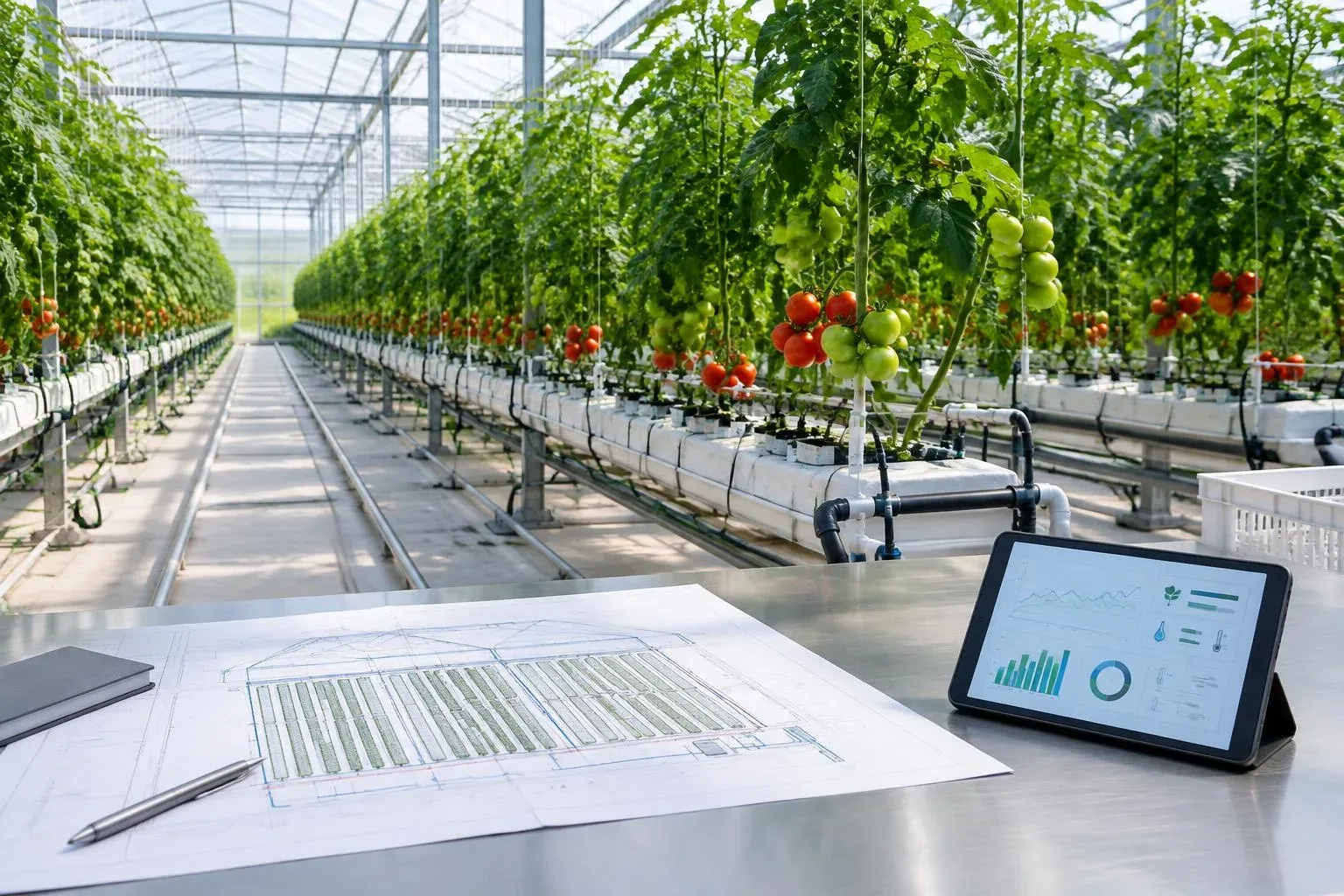
A greenhouse catalogue answers what can be purchased. A business intelligence center helps answer whether it belongs in your project. For professional growers, investors and procurement teams, the useful starting point is not a supplier name: it is a defensible set of assumptions about crop, location, water, capacity and economics. SeedMatch brings educational resources and planning tools together so those questions can be explored before a commercial request is made.
Start with a decision, not a browsing session
The Knowledge Center organizes buyer guidance around planning and structure, climate and energy, water and fertigation, and supplier comparison. Choose the question you must resolve: is the site suitable, which technical scope needs review, or are two proposals actually comparable? Read the relevant guide, record what it changes in your brief, then identify the evidence you still need. Reading is valuable when it produces a next action rather than an impressive folder of unanswered articles.
For example, a grower considering a greenhouse extension should first check whether the existing water supply, electrical connection and operating team can support additional production. A seed-production team may need a different brief: species, intended output, isolation requirements, processing steps and storage conditions. Neither question is answered by selecting a structure alone. The platform’s commercial agriculture scope includes greenhouses, irrigation, seed production and cultivation infrastructure; this article does not turn it into a general-purpose business or flight intelligence service.
Learn the dependencies before fixing the equipment list
Greenhouse design, irrigation, climate management and crop operations are connected. A water analysis can change filtration or treatment requirements. A crop schedule can change irrigation demand and labor planning. A cooling decision can change both the capital budget and recurring energy needs. The fertigation guide and agricultural water-treatment guidance help you frame those interfaces; they do not prescribe a site-specific recipe or certify an engineering design.
Use a reading checklist: crop and commercial target; location and local climate evidence; water source, quality and reliable supply; usable area and production system; electricity and backup; operating skills; permits and commissioning responsibilities. Mark missing evidence as unknown. A measured water test and an approved connection capacity are not interchangeable with a supplier’s standard brochure. Keeping that distinction visible makes a technical conversation much more productive. For the next buying decision, use the greenhouse fertigation procurement guide, its evidence checklist and private RFQ form. For seed establishment, start with the commercial seed problem-solving hub.
Use calculators to compare assumptions, not predict certainty
The agricultural tools directory offers publicly accessible calculators without an account or payment. The greenhouse and irrigation cost calculator lets you explore a budget using entered quantities and prices. The project budget planner helps separate investment scope and funding considerations. The greenhouse ROI calculator explores financial assumptions rather than promising a return. Check each tool’s units, inclusions and limitations before using its result.
An annotated example: compare two greenhouse concepts using the same crop, site and usable area. Keep the structure, irrigation, installation and utility scope explicit in both. If one concept excludes water treatment, record that omission rather than interpreting its lower total as a saving. Then test operating assumptions separately: energy prices, marketable output, selling price, labor and production ramp-up. These are hypothetical scenarios, not quotations or verified performance figures.
Change one important assumption at a time and keep the original scenario. If an investment only looks viable under the most optimistic production and sales assumptions, the next step is verification, not a supplier deposit. No calculator can validate local permitting, financing approval, crop suitability or future market prices. Its practical value is showing which unknowns deserve attention first and which proposal differences require a technical explanation.
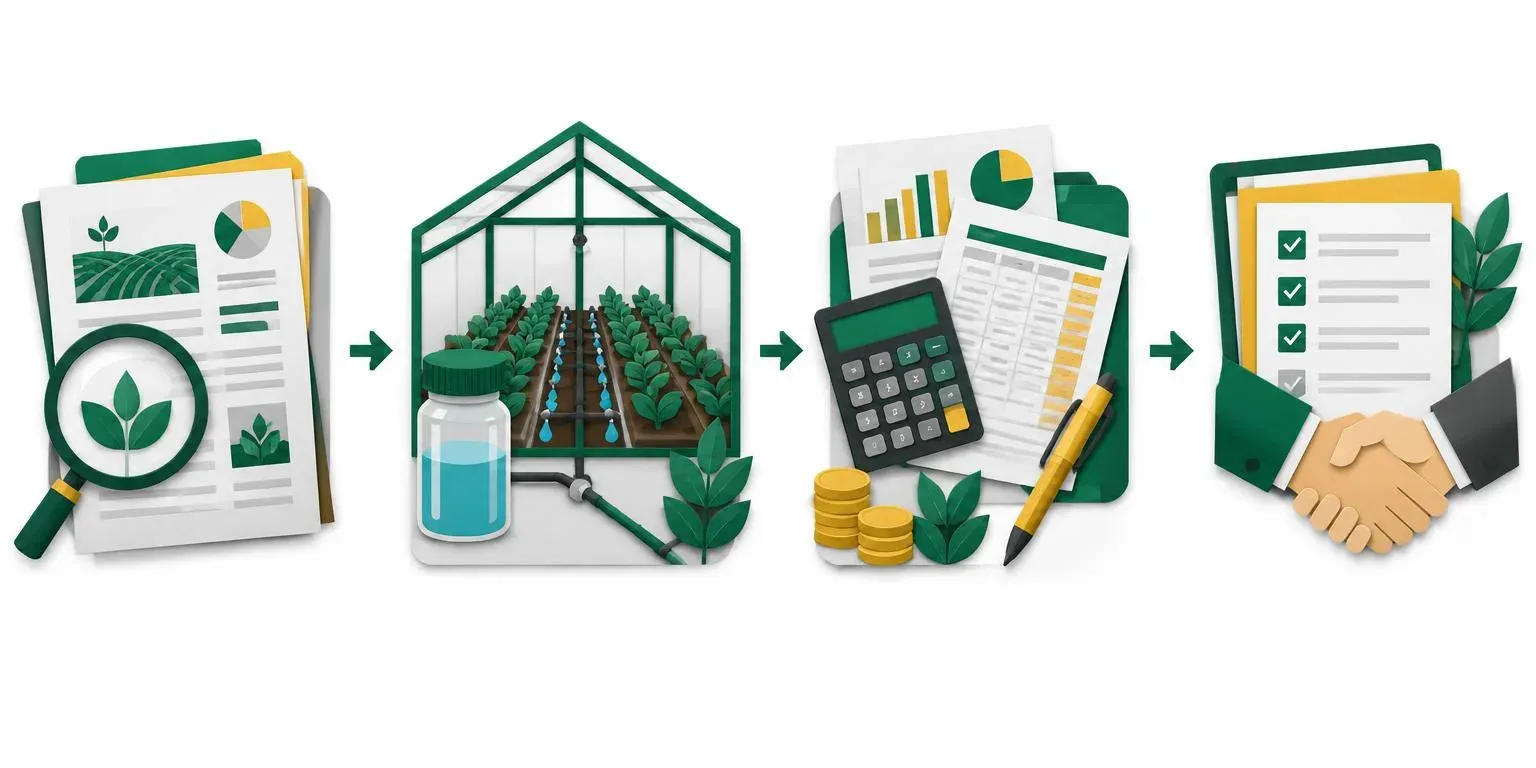
- 1.Research
- 2.Define requirements
- 3.Test assumptions
- 4.Prepare a brief
Read market and country context with its date attached
The Industry Intelligence page publishes source-linked agricultural briefings. Treat an item as dated context: open its official source, check its publication date and ask whether it affects your crop, input, country or procurement schedule. Published briefings are not a live inventory feed, a guaranteed daily update or confirmation that a supplier can deliver. A headline can identify a risk worth checking; it cannot settle a project-specific commercial decision.
The country-solutions hub adds geographic context. Use country guidance to prepare questions about climate, utilities, import conditions and project execution, not to assume one technology or price fits an entire country. Language is not evidence of a local engineering standard. Ask the relevant authority or qualified adviser about rules that apply to your actual site, especially when an article discusses another jurisdiction or a historical market observation.
A practical walkthrough: from greenhouse idea to usable brief
1. Define the commercial objective
An illustrative project team wants to expand vegetable production while keeping its existing operation running. It writes down crop, country, current area, proposed additional capacity, desired timing and known site constraints. Where water quality or connection capacity has not been tested, it records a question rather than filling the gap with a guessed value. That one-page starting brief gives research a purpose.
2. Read, calculate and assign verification
The team uses the Knowledge Center’s planning and water guides, then builds comparable budget scenarios. It lists exclusions, keeps capital expenditure separate from annual operating expenses and identifies who must verify structural capacity, water supply and crop assumptions. A checklist is only useful if each item has evidence or an accountable next action. It is not proof that a permit or design has been approved.
3. Prepare a comparable commercial request
With the procurement tools, the team organizes scope and proposal-comparison questions. It then uses the RFQ builder to describe the project, including uncertainties and documents that require review. Ask for the same scope, currency, delivery basis, installation responsibilities, exclusions and warranty terms in every proposal. A missing item is a comparison gap, not automatically a poor supplier.
Know what is public and what needs human review
The linked educational pages and calculators can be explored publicly; the tools directory explicitly states that its calculators are free. That does not mean every possible advisory or third-party service is included without charge. A buyer project request is reviewed by a sourcing specialist. Account-linked project records require authorized access, while site-specific engineering, agronomy, legal work or external services may require a separate agreement. Confirm scope and terms before relying on any professional service.
SeedMatch is a human-led commercial agricultural procurement platform. A buyer submits a request; the team reviews it and prepares a brief; suitable suppliers are researched only after the project is understood; human follow-up is managed through SeedMatch. Supplier identities and private communications are not public research material. There is no automatic marketplace connection, invented availability, guaranteed quote or automatic financing approval. The commercial project scope normally starts at USD 250K.
Build a source trail you can revisit
This article is prepared by the SeedMatchGroup editorial team from existing public platform resources and the references below. It is educational guidance, not a named expert’s engineering sign-off. The FAO greenhouse good-practice publication offers production and management context for Mediterranean conditions. FAO’s crop-water methodology explains why water estimates need climate and crop inputs. UMass Extension’s commercial greenhouse guide discusses siting and construction considerations in a US context. None supplies today’s project quotation or substitutes for local professional validation.
For every important assumption, retain the source, date, unit and scope. Separate measurements from estimates and unanswered questions. Start at the Knowledge Center, select a guide, test one scenario in the tools directory, and bring a clearer brief to human-led assisted sourcing. Learn more to ask better questions; plan smarter to compare like with like; make better decisions by knowing what still needs evidence.
Practical questions
- What is SeedMatch’s Business Intelligence Center?
- It is the existing Knowledge Center and related public planning resources for commercial agriculture: buyer guides, calculators, source-linked industry briefings and country guidance. It supports project preparation; it is not a live supplier inventory or automatic marketplace.
- Are the calculators free and do I need an account?
- The agricultural tools directory states that its public calculators are free, with no account or payment required. Private project records require authorized access; separate professional or third-party work should be agreed explicitly.
- Can a budget or ROI result be treated as a quotation?
- No. Results depend on the entered assumptions and each tool’s scope. Supplier quotations, engineering validation, financing and future operating performance must be checked separately.
- What should I prepare before requesting supplier proposals?
- Prepare crop, country, area or capacity, site and water evidence, project scope, budget, timeline, responsibilities and unresolved questions. Submit the brief through the RFQ builder for human review; supplier communication is managed through SeedMatch.