
Commercial Seed Production Facility Planning and Procurement Guide
Plan commercial seed operations around crop biology, lot identity, conditioning requirements and verified field-to-storage interfaces.
Can one conditioning line handle every crop?
Not necessarily. Seed size, shape, fragility, incoming condition and separation objectives differ. Require a crop-specific process assessment and representative trials where feasible.
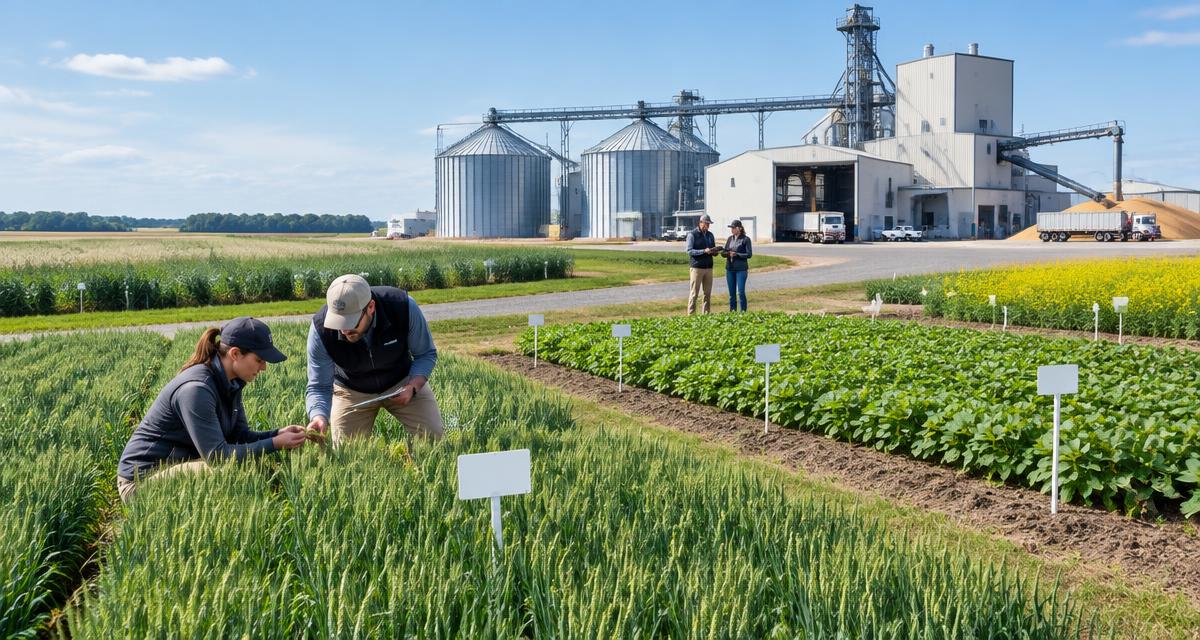
Key takeaways
- Plan the seed system before selecting machinery: A commercial seed facility should be designed around the species, production method, quality requirements and lot structure it must handle.
- Define the product portfolio and regulatory context: List the intended crops, varieties, seed classes or categories, market destinations and annual production calendar.
- Select production zones for purity and practicality: Production-zone selection should consider climate, soil, water, disease pressure, pollination biology, surrounding crops and the ability to enforce field management.
- Engineer the field-to-processing interface: Receiving design begins with the physical condition of harvested material.
- Select conditioning equipment for the actual seed: Conditioning may involve pre-cleaning, air-screen cleaning, size grading, gravity separation, optical sorting and other crop-dependent stages.
Plan the seed system before selecting machinery
A commercial seed facility should be designed around the species, production method, quality requirements and lot structure it must handle. Start with field production and receiving conditions, then work through drying, conditioning, testing, treatment where applicable, packaging and storage. A large cleaner does not create a reliable seed operation if genetic purity, lot identity or moisture control is weak elsewhere. SeedMatchGroup projects start at USD 250,000. Supplier outreach follows human review, and quotations, timing and outcomes are not guaranteed. SeedMatchGroup is not a lender, EPC, certifier, open marketplace or direct connector. Buyers must retain qualified seed-production, engineering and regulatory advisers and establish which activities belong to the grower, processor, laboratory and other service providers.
Define the product portfolio and regulatory context
List the intended crops, varieties, seed classes or categories, market destinations and annual production calendar. Distinguish multiplication of purchased parent material from breeding, variety maintenance or other activities with different expertise and authorization requirements. Document rights to use and multiply the material, applicable contracts and any restrictions on handling or sale. Do not assume that ownership of processing equipment grants commercial rights to a variety. Identify the national authority and rules governing seed marketing, labeling, sampling and any required certification or registration. Export projects may also face phytosanitary and destination-market requirements. Define which laboratory tests are needed and who is authorized or competent to perform them for the intended purpose. Quality targets should be crop- and market-specific rather than copied from an unrelated product. For investors and government programs, verify that the proposed facility has a viable operational mandate, trained personnel and access to appropriate starting material before treating construction as the principal development challenge.
Select production zones for purity and practicality
Production-zone selection should consider climate, soil, water, disease pressure, pollination biology, surrounding crops and the ability to enforce field management. Isolation requirements differ by crop, variety and applicable scheme. Distance alone may not resolve contamination risks where volunteer plants, flowering overlap, insects or windborne pollen create exposure. Obtain crop-specific advice and document how neighboring production will be monitored. Plan field inspection, roguing, parent-line management and pollination arrangements where relevant. Establish records linking each field to its seed source, sowing date, management history and inspection results. Contract-grower arrangements need clear responsibilities for crop establishment, prohibited mixtures, harvest authorization and rejection decisions. Access also matters: a biologically suitable zone may be operationally weak if wet roads prevent timely collection. Assess harvest weather and the time required to reach drying or processing facilities. The production plan should explain how deviations are reported and who has authority to isolate a field or lot before it enters the processing stream.
Engineer the field-to-processing interface
Receiving design begins with the physical condition of harvested material. Some seed arrives relatively clean and dry; other crops require extraction, fermentation, washing or prompt drying before conventional conditioning. Specify the expected moisture range, contaminants, temperature, packaging or bulk handling method and maximum acceptable holding time. These inputs determine unloading arrangements, staging space, initial separation and drying capacity. Build a seasonal arrival profile rather than dividing annual volume evenly across working days. Simultaneous harvests, weather delays and multiple small lots can create a peak that equipment nameplates do not reveal. Define separate routes for accepted, quarantined and rejected material. Vehicles, bins and conveying equipment need cleaning procedures that protect identity between lots. Require receiving records to capture weight, field origin, lot number, condition and any sampling decision. The handover between grower and processor should state when custody changes and how disagreements over moisture, contamination or identity are resolved without mixing the material into released stock.
Select conditioning equipment for the actual seed
Conditioning may involve pre-cleaning, air-screen cleaning, size grading, gravity separation, optical sorting and other crop-dependent stages. Ask equipment providers to explain the separation principle and the seed characteristics it can address. One machine cannot reliably remove every undesirable fraction. Throughput depends on incoming condition, required separation quality, seed shape and the frequency of changeovers, not just the advertised maximum rate. Protect germination and vigor by considering mechanical impacts, conveying methods, drying temperatures and residence times appropriate to the species. Require access for inspection and cleaning, with clear methods to verify that residual seed has been removed. Where seed treatment is included, define approved product use, dosing control, worker protection, ventilation and segregation from untreated material. Include dust collection and assess combustible-dust and other hazards under applicable rules. Request trials using representative material where feasible, while recognizing that a successful trial on one crop and lot does not prove performance across the entire proposed portfolio.
Design storage and quality control together
Storage conditions should follow species-specific requirements, expected holding duration and the moisture condition of seed entering storage. Temperature and relative humidity interact with packaging and seed moisture, so specifying cooling alone is insufficient. Define monitoring locations, alarm thresholds, response responsibilities and backup arrangements for critical environmental controls. Quarantine, released stock, returned goods and rejected lots should remain identifiable and physically controlled. The quality system should describe sampling, sample retention, test requests, release authority, retesting and complaint investigation. Genetic identity, physical purity, germination, vigor and seed health are different attributes; no single test establishes all of them. Define the status of internal screening results versus official or contractually required laboratory results. Link laboratory records to receiving, processing and packaging records through a consistent lot identifier. For mixed portfolios, consider whether storage zones or handling procedures must separate treated seed, untreated seed and other materials. The facility layout should make correct behavior easy rather than relying entirely on operator memory.
Use planning tools and compare complete scopes
The seed rate calculator, seed cost resource and seed crop planning tools can help organize early production assumptions. Check their stated inputs and limitations before using results in a business plan. Reconcile field requirements with expected harvest timing, lot numbers and processing schedules; do not convert a sowing estimate directly into a guaranteed volume of saleable seed. Request proposals against a defined process flow and equipment boundary. Compare the whole receiving-to-dispatch system, including services and information requirements, rather than treating a list of machines as a complete facility.
| Scope area | Information to request | Interface to verify |
|---|---|---|
| Receiving | Arrival conditions and peak handling duty | Field transport and quarantine |
| Conditioning | Crop-specific process and changeover method | Drying, conveying and dust control |
| Storage | Environmental basis and monitoring | Packaging and release status |
| Quality systems | Sampling, records and test responsibilities | Laboratory and lot traceability |
| Installation | Utilities, guarding and acceptance scope | Building works and operator access |
Structure human-reviewed sourcing around responsibilities
Use the RFQ builder to assemble the crop portfolio, site information, process concept, production calendar and budget framework. Include whether the buyer needs a new facility, an expansion or selected equipment replacements. Human review should identify missing technical inputs and determine readiness for supplier outreach. Submission does not automatically connect the buyer to a supplier or create a commercial commitment. Once outreach proceeds, ask each bidder to identify assumptions, exclusions and required buyer inputs. Clarify whether process design, building coordination, utilities, installation supervision, controls and training are included. Where packages are split, appoint responsibility for integration and acceptance across boundaries. Buyers should independently verify relevant experience, service capability and contractual standing. Public-sector buyers must preserve applicable tender and evaluation requirements. Seed certification, variety authorization and phytosanitary decisions remain with the relevant authorities or authorized bodies; they are not outcomes that SeedMatchGroup can confer. Keep unresolved regulatory and biological risks visible alongside equipment procurement milestones.
Complete the facility readiness checklist
Review readiness with production agronomists, processing staff, quality personnel and the future facility manager. A procurement committee that sees only machinery specifications can miss the biological and operational conditions on which performance depends. Record which items must be closed before award and which require confirmation during detailed design or seasonal production.
- Confirm crop portfolio, market requirements and multiplication rights.
- Document field isolation, inspection and harvest-release procedures.
- Establish peak arrivals and crop-specific holding limits.
- Approve lot identification, quarantine and cleaning arrangements.
- Match conditioning stages to representative incoming material.
- Verify drying and storage requirements with seed specialists.
- Define dust, chemical, machinery and fire-safety provisions.
- Assign laboratory, sampling and release responsibilities.
- Confirm utilities, service access and spare-parts support.
- Agree representative acceptance trials and traceability demonstrations.
- Include operating procedures, training and complete handover records.
Commission with representative lots and changeovers
Commissioning should first establish safe installation, guarding, emergency stops, extraction, electrical compliance and utility readiness. Functional tests should verify equipment sequences, interlocks and fault recovery before valuable seed is introduced. Inspect conveyors, elevators, bins and hidden collection points for areas that retain seed or complicate cleaning. Confirm that instruments and weighing devices are suitable for their intended use and appropriately checked. Performance trials should use representative crop material under recorded conditions. Measure process flow, separation results, losses and any relevant seed-quality changes using an agreed sampling approach. Demonstrate a changeover between distinguishable lots, including cleaning, inspection and record completion. Test traceability in both directions: from a package back to its field and processing history, and from a field lot forward to its destinations. If seasonal material is unavailable, define provisional acceptance and later trials explicitly. Handover should include process settings, maintenance instructions, parts lists, cleaning methods, software access and evidence that operators can perform critical tasks.
Ground decisions in public seed guidance
FAO's Seeds Toolkit provides practical guidance across seed production, processing, quality assurance and enterprise development. The OECD Seed Schemes describe frameworks for varietal certification within participating systems. The International Plant Protection Convention's ISPM 38, International Movement of Seeds, addresses phytosanitary considerations. The International Seed Testing Association's International Rules for Seed Testing are a recognized technical reference; verify the applicable edition and access arrangements. These sources address different purposes and should not be treated as interchangeable approvals. None endorses SeedMatchGroup or establishes that a proposed facility or seed lot complies with local rules. Requirements depend on crop, jurisdiction, destination and contractual use. Calculators cannot predict genetic purity, germination, disease status or saleable output. A credible investment decision therefore combines production-zone suitability, enforceable lot controls, qualified testing and maintainable equipment. The facility should be approved as an operating seed-quality system, with machinery supporting that system rather than standing in for it.
Turn "Commercial Seed Production Facility Planning and Procurement Guide" into your RFQ
Answer a few questions and we will draft a structured RFQ you can review, edit and submit to our independent supplier network.
Frequently asked questions
- Can one conditioning line handle every crop?
- Not necessarily. Seed size, shape, fragility, incoming condition and separation objectives differ. Require a crop-specific process assessment and representative trials where feasible.
- Does a processing facility establish genetic purity?
- No. Genetic purity depends heavily on starting material, field isolation, production management and identity controls. Conditioning cannot reliably correct every biological mixture.
- Can SeedMatchGroup certify seed or authorize varieties?
- No. Certification and authorization belong to the applicable authorities or authorized bodies. SeedMatchGroup is not a certifier.
- What is the minimum project size?
- Projects start at USD 250,000. Supplier outreach follows human review, and quotations, timing and outcomes are not guaranteed.
- What should acceptance testing demonstrate?
- It should demonstrate safe operation, agreed crop-specific processing performance, effective changeovers and traceability, with sampling and quality tests defined in advance.
Move from reading to sourcing
The pages below carry the commercial detail for this topic — cost ranges, supplier verification, specification checklists and financing routes.