
Seed Processing Plant Planning and Equipment Procurement Guide
Plan seed processing plants with practical guidance on equipment, capacity, segregation, utilities, supplier quotes and procurement acceptance tests.
What should I prepare before requesting a plant quotation?
Prepare crop profiles, representative samples, seasonal volumes, incoming quality ranges, finished-seed specifications, site utilities and packaging requirements. Identify segregation needs and scope boundaries so suppliers can quote against comparable assumptions.
Key takeaways
- Define the project before selecting equipment: Plan a seed processing plant around crop characteristics, incoming lot variability, required finished-seed quality and seasonal throughput—not a machine catalogue.
- Design intake and lot segregation: Intake must preserve identity while accommodating peak arrivals.
- Select separation stages by defect type: An air-screen cleaner separates through screen geometry and airflow.
- Integrate treatment and packaging: Treatment procurement starts with approved uses, application instructions and destination-market restrictions.
- Engineer dust control and utilities: Provide an equipment-level utility schedule covering electrical loads, starting demand, voltage and frequency, compressed-air quality and consumption, extraction requirements, communications and any process water.
Define the project before selecting equipment
Plan a seed processing plant around crop characteristics, incoming lot variability, required finished-seed quality and seasonal throughput—not a machine catalogue. Define segregation, cleaning, treatment, packaging, laboratory release and dust-control requirements together. Then procure against documented operating conditions, interface responsibilities and measurable acceptance tests, with qualified local engineering and regulatory review before committing capital.
For commercial growers, agribusinesses, investors and governments, the procurement brief should identify crops, varieties, annual volumes, receiving windows, operating shifts, package formats and intended markets. Record incoming moisture, bulk density, impurity types, seed fragility and treatment requirements. Establish land, expansion, staffing and budget constraints before requesting a seed processing plant quotation.
SeedMatchGroup is a human-led, supplier-neutral commercial agriculture platform for projects from USD 250,000. It is not a manufacturer, contractor, lender, certification body, open marketplace or automatic connector. Supplier outreach happens after human review; project submission does not guarantee bids, timing, savings or outcomes.
Design intake and lot segregation
Intake must preserve identity while accommodating peak arrivals. Specify weighment, sampling points, unloading methods, receiving pits or hoppers, temporary storage and rejection procedures. Check whether trucks, bags and bulk containers require separate routes. Receiving capacity should reflect arrival peaks and inspection delays, not simply average daily processing demand.
Define a lot identifier before unloading and maintain physical separation through bins, conveyors, elevators and intermediate containers. Consider dedicated routes where contamination consequences justify them; otherwise document validated cleanout procedures. Include access for inspection, residual-seed removal and spill recovery. Variety changes, treated versus untreated seed, and rejected material require explicit segregation rules.
Pre-cleaning removes coarse debris and light material before downstream equipment. Select scalping, aspiration and protective devices according to actual contaminants. Specify gentle conveying, drop heights and suitable speed controls for damage-sensitive crops. Locate rejects handling so waste cannot re-enter accepted lots or obstruct access.
Select separation stages by defect type
An air-screen cleaner separates through screen geometry and airflow. Procurement specifications should identify crop sizes, required screen changes, aspiration adjustment, access, spare screens and discharge arrangements. Ask suppliers to explain the proposed separation sequence using representative material rather than relying on nominal catalogue capacity.
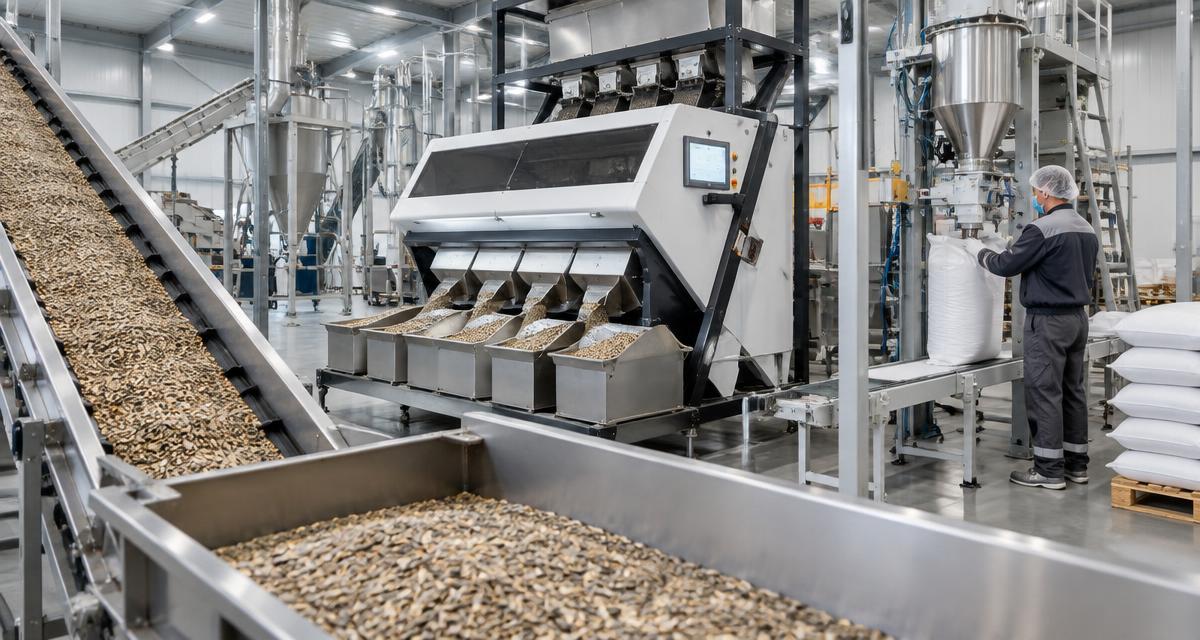
Gravity separation is useful when acceptable seed and defects differ sufficiently in density or aerodynamic behaviour; optical sorting addresses detectable colour, shape or other sensor-visible differences. Neither technology automatically resolves every defect. Similar-density contaminants can challenge gravity separation, while hidden physiological defects may not be optically distinguishable.
Use sample trials to establish whether additional separation adds commercial value. Assess accepted fraction, reject composition, seed losses, mechanical damage and relevant laboratory results together. Specify how middlings are handled and limit uncontrolled recirculation. Compare alternative process flows before buying gravity tables or optical seed sorting equipment.
Integrate treatment and packaging
Treatment procurement starts with approved uses, application instructions and destination-market restrictions. Confirm compatibility with formulations, seed size ranges, dosing systems, mixing, drying or curing needs and batch changeovers. Define containment, operator protection, cleaning and waste handling. Qualified local agronomic and regulatory review is essential; equipment capability does not establish legal permission to apply a product.
Packaging specifications should cover bag or container sizes, weighing accuracy, closure integrity, label content, coding, pallet handling and storage conditions. Protect the distinction between treated and untreated seed throughout dispatch. Include consumable availability and format-change procedures. Use the packhouse sizing calculator only for relevant handling and packing planning estimates, not as a substitute for seed-specific design.
Engineer dust control and utilities
Provide an equipment-level utility schedule covering electrical loads, starting demand, voltage and frequency, compressed-air quality and consumption, extraction requirements, communications and any process water. Confirm site supply reliability and backup requirements. Allocate responsibility for foundations, structures, cable routes, controls integration, fire protection and building ventilation.
Seed and agricultural dust can present respiratory and combustible-dust hazards. Commission a qualified local assessment to determine extraction, housekeeping, bonding, grounding, explosion protection and safe collector location where required. Do not assume a general ventilation fan provides adequate source capture. Treatment areas may require separate containment based on chemical hazards and applicable law.
Assess maintenance access, lifting points, noise, lighting and safe isolation alongside production layout. Utility and safety systems must be priced as part of the operating plant, not left as undefined buyer obligations. Require qualified local engineering, legal and regulatory review of site works and compliance responsibilities.
Connect the laboratory and traceability system
Plan representative sampling at intake, relevant intermediate stages and finished-lot release. Agree sampling methods, sample custody, retention, laboratory turnaround and the tests appropriate to the crop and market. These may include purity, germination, moisture, seed health or other required attributes; laboratory results must be interpreted against applicable specifications.
The laboratory interface should support hold, release, rework and rejection decisions without losing lot identity. Link incoming lots to process settings, equipment cleanouts, treatment batches, packaging codes and dispatch records. Define permissions for changing records, offline procedures and reconciliation of seed, rejects and inventory. A software label alone is not traceability.
Calculate usable capacity and identify bottlenecks
Model the complete line by crop and operating scenario. Usable throughput depends on incoming impurity load, target quality, screen selection, sorter loading, treatment residence time, packaging speed and material handling. Allow explicitly for cleanouts, changeovers, sampling holds, maintenance and staffing. The slowest effective stage, including release or storage constraints, governs sustained output.
Use the seed processing capacity calculator to explore planning estimates, then validate assumptions through sample trials and qualified engineering. Separate hourly throughput from seasonal completion capacity. Test difficult incoming lots and peak packaging demand rather than only the easiest crop. Buffer storage can decouple operations, but increases space, inventory and segregation requirements.
Build the RFQ and compare complete scope
A credible seed processing equipment RFQ gives every bidder the same design basis and identifies unresolved assumptions. Use the RFQ builder to organise the brief. Request a process flow, equipment schedule, layout, utility demand, scope boundaries and commercial exclusions before evaluating headline totals.
- Provide crop and lot profiles, representative samples, incoming conditions and finished-seed requirements.
- State throughput scenarios, shifts, changeover frequency, packaging formats and expansion assumptions.
- Define civil, electrical, extraction, automation and installation interfaces with named responsibilities.
- Request consumables, recommended spares, maintenance access, training and service arrangements.
- Specify testing methods, documentation, warranty terms, delivery basis and payment milestones for review.
| Comparison area | Require in each quotation | Buyer check |
|---|---|---|
| Process capability | Crop-specific assumptions and trial evidence | Are feed conditions and quality targets equivalent? |
| Capacity | Throughput basis and operating limitations | Are changeovers and ancillary constraints addressed? |
| Installed scope | Equipment, interfaces and exclusions | Who supplies extraction, wiring and commissioning? |
| Operating support | Consumables, spares and service terms | Can the site maintain the proposed configuration? |
| Acceptance | Test protocol and remedy provisions | Are measurements and responsibilities clear? |
Normalise quotations to a common scope and currency basis, recording freight, duties, installation, taxes and other locally applicable costs separately. Compare lifecycle obligations without inventing savings. Treat unexplained exclusions and unsupported capacity claims as clarification items, not evidence of better value.
Agree acceptance tests and procurement next steps
Agree factory and site acceptance protocols before contract signature. Factory checks can verify fabrication, controls, safety functions and documentation; they do not replace integrated site testing. Site tests should use agreed representative lots, calibrated instruments, defined sampling methods and a stated continuous operating period under specified feed and utility conditions.
Measure feed rate, accepted output, reject streams, mass balance, specified quality attributes and mechanical damage where relevant. Test treatment dosing, packaging weight, coding, cleanout effectiveness and traceability. Verify extraction and protective systems through competent specialists. Assign independent sampling or laboratory responsibilities where needed, and define retest conditions, punch-list closure and contractual remedies.
Common mistakes include buying nominal capacity, omitting dust systems, testing only clean material and leaving integration ownership unresolved. Next, freeze the design basis, resolve sample-trial questions and obtain qualified local reviews. For broader supply planning, consult global seed sourcing. Submit a documented project brief for human review before any supplier outreach.
Sources and further reading
ISTA International Rules for Seed Testing provide seed-testing context. OECD Seed Schemes provide context on varietal certification and international seed trade. Check applicable editions, scheme participation and local requirements. These institutional sources support planning context; they do not endorse SeedMatchGroup or replace project-specific professional advice.
Turn "Seed Processing Plant Planning and Equipment Procurement Guide" into your RFQ
Answer a few questions and we will draft a structured RFQ you can review, edit and submit to our independent supplier network.
Frequently asked questions
- What should I prepare before requesting a plant quotation?
- Prepare crop profiles, representative samples, seasonal volumes, incoming quality ranges, finished-seed specifications, site utilities and packaging requirements. Identify segregation needs and scope boundaries so suppliers can quote against comparable assumptions.
- Should I buy a complete line or separate machines?
- Compare integration responsibility, crop flexibility, service coverage and total installed scope. Separate machines may suit some projects, but the buyer must assign responsibility for controls, conveying, extraction and overall acceptance.
- When is an optical sorter worth evaluating?
- Evaluate it when commercially important defects are sensor-detectable and earlier stages leave unacceptable contamination. Request representative trials measuring defect removal, good-seed losses and throughput before specifying the machine.
- How should capacity guarantees be written?
- Tie any contractual capacity commitment to defined crops, incoming conditions, output quality, utilities and testing methods. Include rejection limits, sampling responsibilities and remedies, subject to qualified legal and technical review.
- Can SeedMatchGroup contact equipment suppliers for my project?
- Supplier outreach happens after human review of eligible commercial projects from USD 250,000. SeedMatchGroup is supplier-neutral and does not promise bids, response timing, financing or procurement outcomes.
Move from reading to sourcing
The pages below carry the commercial detail for this topic — cost ranges, supplier verification, specification checklists and financing routes.