
How to Reduce Plant Losses in Commercial Greenhouses
Plant mortality is usually a system problem. Track losses by stage, fix propagation, water, climate and hygiene, and design losses out before procurement.
What is the first step to reducing plant mortality?
Record losses by stage, batch and suspected cause. Without stage-level records it is hard to tell whether the problem is propagation, water, climate or disease. Yes. Water treatment, irrigation uniformity, climate control rated for local extremes, monitoring and hygiene features all reduce common causes of loss, so they belong in the specification.
Key takeaways
- Direct answer: how do commercial growers reduce plant losses?: Measure losses by stage, find the main cause at each stage, and fix the system behind it: clean and uniform propagation material, stable root-zone water and nutrition, controlled climate, strict hygiene and early scouti…
- Step 1 — Measure losses by stage, not as one number: A single overall mortality figure hides the cause.
- Step 2 — Start with clean, uniform propagation material: Use seed, plugs or cuttings from sources that provide lot identification and, where applicable, phytosanitary or health documentation.
- Step 3 — Stabilise water and the root zone: Many losses trace back to the root zone.
- Step 4 — Control climate extremes: Short periods of extreme heat, humidity or cold can cause more damage than average conditions suggest.
Every plant lost after propagation carries the cost of the seed, substrate, water, nutrients, energy and labour already invested in it. Reducing plant losses is therefore one of the most direct ways to improve results — and many causes can be designed out at the planning and procurement stage, not only managed later.
Direct answer: how do commercial growers reduce plant losses?
Measure losses by stage, find the main cause at each stage, and fix the system behind it: clean and uniform propagation material, stable root-zone water and nutrition, controlled climate, strict hygiene and early scouting. Write each of these into the project specification so equipment and supplier choices support them.
Step 1 — Measure losses by stage, not as one number
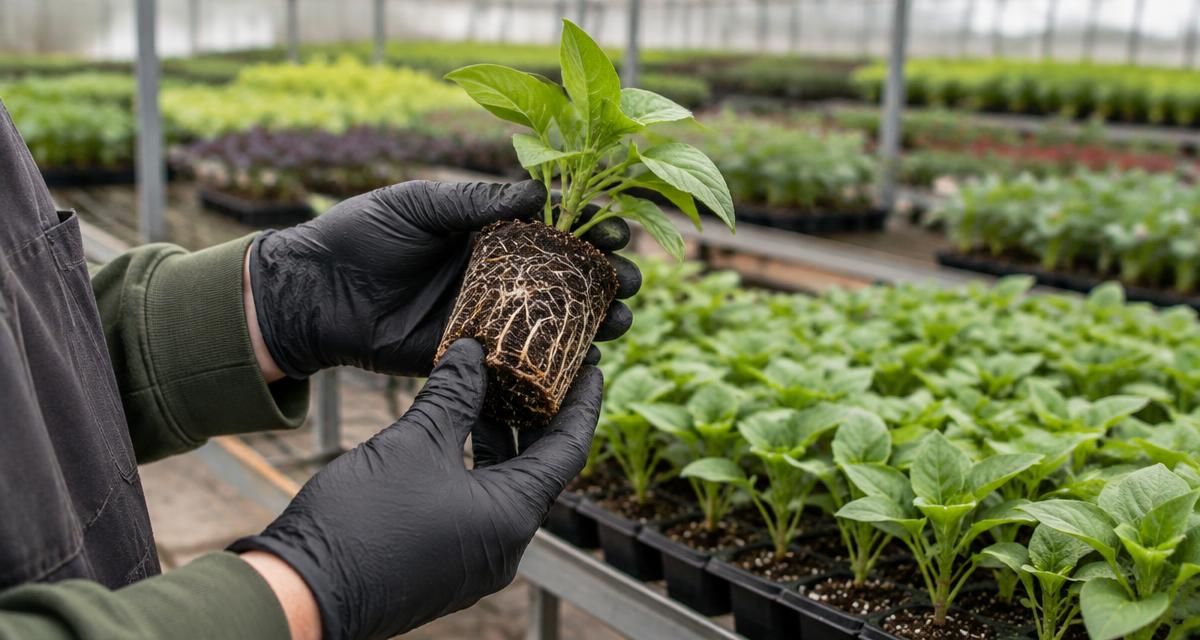
A single overall mortality figure hides the cause. Record losses separately for germination or rooting, transplant, early establishment, production and post-harvest. Record the date, area, cultivar, batch and suspected cause. After a few cycles the pattern usually points to one or two stages.
| Stage | Common causes to investigate | System to check |
|---|---|---|
| Germination / rooting | Seed or cutting quality, temperature, moisture, substrate | Propagation climate, seed lot records, substrate supplier |
| Transplant | Root damage, transplant shock, timing | Handling procedure, plug age, labour training |
| Establishment | Over- or under-watering, salinity, root disease | Irrigation scheduling, drainage, water analysis |
| Production | Pests, disease, climate stress | Scouting programme, ventilation, cooling, hygiene |
| Post-harvest | Heat, handling, delay to cooling | Packhouse flow, cold chain |
Step 2 — Start with clean, uniform propagation material
Use seed, plugs or cuttings from sources that provide lot identification and, where applicable, phytosanitary or health documentation. Keep batch records so a problem can be traced. Uneven plants at transplant tend to stay uneven, so uniformity at propagation matters as much as germination.
Step 3 — Stabilise water and the root zone
Many losses trace back to the root zone. Test the source water before design, specify treatment if needed, and choose irrigation and fertigation equipment that can deliver the required uniformity and control. Monitor drainage volume and EC/pH regularly. The fertigation guide and water treatment guide explain what to specify.
Step 4 — Control climate extremes
Short periods of extreme heat, humidity or cold can cause more damage than average conditions suggest. Design ventilation, cooling, heating and screening around local climate extremes, and use sensors and alarms so the team can act quickly. Ask suppliers to state the design conditions their systems are rated for.
Step 5 — Hygiene and early scouting
Entry procedures, clean tools and benches, removal of crop debris and a weekly scouting routine catch problems while they are still small. Assign responsibility by name and keep records. Follow local agronomist and crop-protection advice and the regulations of your country for any treatment.
Write loss prevention into the RFQ
When requesting quotations, include the water analysis, climate design extremes, required irrigation uniformity, propagation area, hygiene features (entry areas, drainage, washable surfaces) and monitoring requirements. This lets suppliers propose systems that reduce losses rather than the cheapest structure. Qualified commercial projects from USD 250,000 can send one private brief through the RFQ builder for human review.
Limitations
This article is general planning guidance. Causes of plant loss depend on crop, cultivar, climate and local pests and diseases. Diagnosis and treatment decisions should be confirmed by a qualified local agronomist or plant-health specialist.
Turn "How to Reduce Plant Losses in Commercial Greenhouses" into your RFQ
Answer a few questions and we will draft a structured RFQ you can review, edit and submit to our independent supplier network.
Frequently asked questions
- What is the first step to reducing plant mortality?
- Record losses by stage, batch and suspected cause. Without stage-level records it is hard to tell whether the problem is propagation, water, climate or disease.
- Can greenhouse equipment choices reduce losses?
- Yes. Water treatment, irrigation uniformity, climate control rated for local extremes, monitoring and hygiene features all reduce common causes of loss, so they belong in the specification.
- Is there a normal or acceptable loss percentage?
- It varies widely by crop, stage and system, so this guide does not give one. Set targets from your own records and local agronomist advice, then track improvement over cycles.
- How does SeedMatchGroup handle a requirement like "How to Reduce Plant Losses in Commercial Greenhouses"?
- A buyer submits one private brief through the RFQ builder. Plant mortality is usually a system problem. Track losses by stage, fix propagation, water, climate and hygiene, and design losses out before procurement. A dedicated sourcing specialist normalises it into a single technical specification, issues it to qualified international manufacturers, integrators and EPC contractors, and returns offers that can be compared line by line on the same scope, lead time and delivery terms.
Move from reading to sourcing
The pages below carry the commercial detail for this topic — cost ranges, supplier verification, specification checklists and financing routes.