
Planning and Managing Commercial Farmland: A Practical Guide to Site, Layout, Irrigation, Rotation and Risk
A structured guide to planning commercial agricultural land before equipment or crop decisions are locked in: site, soil and water assessment, field layout and blocking, irrigation zoning, crop rotation, mechanization and labor planning, records and data, risk, and phased development.
Where should a commercial farmland plan start?
With a site, soil and water assessment independent of any crop or equipment preference — topography, soil texture and depth across the parcel, drainage, water table where relevant, and the quantity, reliability and quality of the available water source. Crop, layout and irrigation decisions should follow from that assessment, not precede it.
Key takeaways
- Why sequence matters more than any single decision: A farmland plan built in the wrong order tends to lock in constraints that are expensive or impossible to reverse later.
- Site, soil and water assessment first: Every farmland plan should begin with a site assessment that is independent of any crop or equipment preference: topography and slope, soil texture and depth across the parcel (not just at one sample point), drainage ch…
- Comparison: planning stages and what each one locks in: The table below sets out the main planning stages in sequence, what each stage determines for the stages that follow, and the risk of getting the order wrong.
- Field layout, blocking and access: Field layout translates the site assessment into a working farm.
- Irrigation zoning before equipment choice: Irrigation zoning is the process of dividing the farm into pressure and flow zones that match the capacity of the water source and the demand of the crop plan, and it should happen before any specific irrigation equipme…
Commercial farmland management is not a single decision but a sequence of decisions, and the order in which they are made determines whether the land performs to its potential or carries avoidable constraints for decades. Before a crop is chosen, before irrigation equipment is specified, before a single block is fenced or levelled, the site itself has to be understood: its soil, its water, its topography and its access. Projects that skip this sequence and move straight to equipment or planting decisions tend to discover their constraints the hard way, after capital has already been committed. This guide sets out a practical planning sequence for commercial agricultural land — site, soil and water assessment; field layout and blocking; irrigation zoning; crop rotation planning; mechanization and labor; records and data; risk; and phased development — so that decisions are made in an order that keeps later options open rather than closing them off.
Why sequence matters more than any single decision
A farmland plan built in the wrong order tends to lock in constraints that are expensive or impossible to reverse later. Choosing a crop before understanding the soil profile and water table can mean selecting a variety that is poorly matched to drainage or salinity conditions discovered only after planting. Laying out fields before confirming irrigation source capacity can produce a block pattern that cannot be served efficiently by any irrigation method. Buying mechanization equipment before finalizing row spacing and block width can leave machinery that does not fit the land it was bought for. None of these are equipment problems; they are sequencing problems, and they are the ones this guide is built to help a buyer avoid.
Site, soil and water assessment first
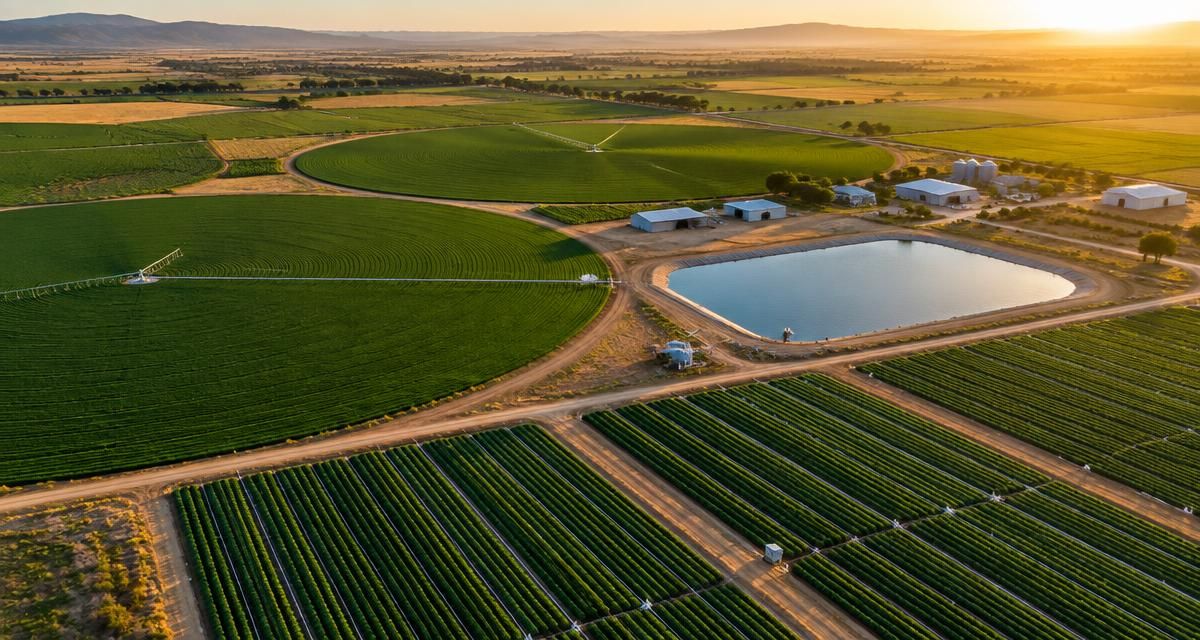
Every farmland plan should begin with a site assessment that is independent of any crop or equipment preference: topography and slope, soil texture and depth across the parcel (not just at one sample point), drainage characteristics, water table depth where relevant, and the quantity, reliability and quality of the available water source. Soil varies within a single parcel more than buyers often expect, and a plan based on one soil sample from the most accessible corner of the land can misrepresent the rest of the site entirely. Water assessment should cover both quantity — can the source sustain peak-season demand across the full cropped area — and quality, since salinity, pH and specific ion content affect both crop choice and irrigation system design. Topography affects drainage, erosion risk, field shape and the feasibility of gravity-fed irrigation, and should be surveyed before any layout decision is made, not inferred from a general impression of the land.
Comparison: planning stages and what each one locks in
The table below sets out the main planning stages in sequence, what each stage determines for the stages that follow, and the risk of getting the order wrong.
| Planning stage | What it determines downstream | Risk if skipped or done late |
|---|---|---|
| Site, soil and water assessment | Which crops and irrigation methods are viable at all | Crop or irrigation choice mismatched to actual soil and water conditions |
| Field layout and blocking | Block size, orientation, access roads, equipment turning radius | Inefficient field shapes that limit machinery and irrigation uniformity |
| Irrigation zoning | Pressure zones, pipe sizing, pump and filtration capacity | Under- or over-sized infrastructure that cannot serve the final cropped area |
| Crop rotation planning | Soil health, pest and disease pressure, labor and equipment scheduling across seasons | Continuous cropping that depletes soil and escalates pest pressure over time |
| Mechanization and labor planning | Row spacing, headland width, workforce scheduling and training | Equipment that cannot operate efficiently in the blocks as built |
| Records and data | Ability to compare seasons, diagnose problems and plan expansion | Decisions made on memory and assumption rather than evidence |
Field layout, blocking and access
Field layout translates the site assessment into a working farm. Block size and shape should be set with reference to the irrigation method under consideration, the turning radius and working width of the mechanization likely to be used, and the natural drainage lines of the site, rather than an arbitrary grid. Access roads need to be planned for the heaviest vehicle expected on the farm, including harvest and input-delivery traffic, not just routine field operations, and headlands at the end of each block need enough width for equipment to turn without repeatedly driving over cropped area. Orientation relative to slope and prevailing wind affects both irrigation uniformity and, in windy regions, crop and structure exposure. A layout decided before these factors are confirmed is a layout that will need costly rework once the farm is operating.
Irrigation zoning before equipment choice
Irrigation zoning is the process of dividing the farm into pressure and flow zones that match the capacity of the water source and the demand of the crop plan, and it should happen before any specific irrigation equipment is purchased. A zone that is too large for the available pump and filtration capacity will deliver uneven water and nutrient distribution across the block; a zone that is too small adds unnecessary pipework, valves and control cost. Zoning decisions also need to account for elevation changes across the site, since pressure requirements differ between a flat block and one with meaningful slope. The crop water requirement for the specific crops and climate under consideration should be calculated before zone sizing is finalized, since irrigation demand varies substantially by crop, growth stage and local evapotranspiration, not by a generic assumption carried over from a different site or crop.
Crop rotation planning
A rotation plan sequences crops across blocks and seasons to manage soil fertility, break pest and disease cycles, and spread labor and equipment demand more evenly across the year than a single continuous crop would. Rotation planning should consider the rooting depth and nutrient demand of each crop in sequence, the pest and disease pressure specific to the crop family, and any fallow or cover-crop period needed to rebuild soil structure between cash crops. It should also be built around the realistic labor and mechanization calendar for the farm, since a rotation that requires simultaneous harvest and planting operations across multiple blocks can overwhelm a workforce or equipment fleet sized for a simpler pattern. Rotation plans are not fixed forever; they should be revisited as records accumulate and as soil and pest data show what is actually happening on the land, not just what was assumed at the planning stage.
Mechanization and labor planning
Mechanization decisions follow from the layout and rotation plan, not the other way around. Row spacing, block width and headland dimensions should be set with reference to the working width and turning radius of the equipment the farm intends to use across its full rotation, not just for the first crop planted. Labor planning needs to account for the peak-demand periods created by the rotation calendar — planting and harvest windows that may overlap across blocks — and for the training and supervision structure needed to operate irrigation, mechanization and record-keeping systems consistently. Projects that plan mechanization and labor as an afterthought to the crop plan frequently discover that the equipment fleet or workforce sized for one season cannot handle the peak demand created once the full rotation is in operation.
Records, data and traceability
A commercial farmland operation generates data from day one — soil test results, irrigation volumes, input applications, yield by block, labor hours and equipment use — and the value of that data compounds only if it is captured consistently from the start. Records make it possible to compare block performance across seasons, diagnose the cause of a yield shortfall rather than guess at it, and support the kind of documentation that buyers, certifiers and financing partners increasingly expect. A farm that keeps no structured records is making every season's decisions from memory and assumption rather than evidence, which becomes a material disadvantage as the operation scales beyond what one manager can hold in their head.
Risk management and phased development
Commercial farmland carries operational risk — weather variability, water source reliability, pest and disease outbreaks, market price movement and equipment failure — and a management plan should identify which risks are being accepted, which are being mitigated through design choices such as irrigation redundancy or diversified rotation, and which require contingency budget. Phased development is itself a risk-management tool: bringing land into production in stages, validating soil, water and crop assumptions on an initial block before committing the full area, allows a plan to be corrected based on real performance data before the capital committed to later phases is locked in. A single-phase commitment of the entire parcel, based only on assumptions validated nowhere on the actual land, concentrates risk that a phased approach can spread and reduce.
Checklist before finalizing a farmland management plan
Confirm soil texture, depth and drainage across the parcel, not from a single sample point. Confirm water source quantity, reliability and quality against peak-season crop demand. Set block layout with reference to irrigation method, equipment working width and natural drainage lines, not an arbitrary grid. Size irrigation zones against actual pump, filtration and pressure capacity, using a calculated crop water requirement rather than an assumption. Build a rotation plan around soil, pest and labor realities, not a single crop in isolation. Confirm mechanization and labor plans against the full rotation calendar, including overlapping peak periods. Set up structured records before the first season begins, not after a problem appears. Identify which risks are accepted, mitigated or require contingency budget, and consider a phased development sequence before committing the full parcel.
Common mistakes
Choosing a crop before the soil and water assessment is complete, then discovering a mismatch after planting. Laying out fields on a convenient grid rather than one informed by irrigation method, equipment access and drainage. Sizing irrigation infrastructure on an assumed water demand rather than a calculated crop water requirement for the actual crop and climate. Planning a continuous single-crop system without rotation, then facing escalating pest pressure and soil depletion. Buying mechanization equipment before row spacing and block dimensions are finalized, leaving a fleet that does not fit the land. Keeping no structured records, which leaves every season's decisions based on memory rather than evidence. Committing the entire parcel to one phase of development without validating assumptions on an initial block first.
Use the tools
The Farm Planning tool helps structure a site's crop, layout and infrastructure plan in one place before procurement begins. The Land Purchase guide sets out what to assess about a parcel — soil, water, topography and access — before committing capital to it. The Crop Water Requirement Calculator produces a calculated irrigation demand for the specific crop, climate and growth stage under consideration, which should underpin irrigation zoning rather than a generic assumption. The Drip Irrigation ROI Calculator helps compare irrigation approaches once zoning and crop water requirement figures are in hand. The Project Budget Calculator helps structure a capital and operating budget across a phased development sequence. The Agricultural Project Workflow page sets out the structured process a project moves through from scope definition to supplier engagement. None of these tools replace a site-specific soil survey, hydrological assessment or agronomic review by a qualified professional; they are planning instruments that help a buyer arrive at a defensible scope before approaching suppliers or service providers.
How SeedMatchGroup helps
Once a farmland management plan has been structured using the tools above — site assessment, layout, irrigation zoning, rotation, mechanization and labor, records and risk — that scope can be carried into a structured request describing the confirmed site conditions, layout, irrigation zones, crop water requirement and phasing, following the process set out on the agricultural project workflow page. Nothing is sent to suppliers automatically: a sourcing specialist reviews every brief manually and may come back for missing details, such as an unconfirmed water quality analysis or an unresolved rotation decision, before anything proceeds further. Allocation to suppliers and service providers is manual and discretionary, considering scope, crop, country, budget, timeline and technical fit; there is no automatic matching. Commercial projects are generally considered from USD 250,000. There is no guaranteed number of quotations, no guaranteed response time, no guaranteed price and no guaranteed award; full allocation terms are set out in the terms of use.
Sources and further reading
For general factual context on land evaluation, soil assessment and farm planning, see FAO, Guidelines for Soil Description and FAO, Land Evaluation. These public resources do not endorse SeedMatchGroup.
Turn "Planning and Managing Commercial Farmland: A Practical Guide to Site, Layout, Irrigation, Rotation and Risk" into your RFQ
Answer a few questions and we will draft a structured RFQ you can review, edit and submit to our independent supplier network.
Frequently asked questions
- Where should a commercial farmland plan start?
- With a site, soil and water assessment independent of any crop or equipment preference — topography, soil texture and depth across the parcel, drainage, water table where relevant, and the quantity, reliability and quality of the available water source. Crop, layout and irrigation decisions should follow from that assessment, not precede it.
- Why does field layout need to be decided before buying mechanization equipment?
- Row spacing, block width and headland dimensions determine whether a given piece of equipment can operate efficiently. Buying mechanization before layout is finalized can leave a fleet that does not fit the land it was bought for.
- How is irrigation zoning different from choosing an irrigation method?
- Zoning divides the farm into pressure and flow zones matched to water source capacity, elevation and crop demand. It should be based on a calculated crop water requirement and should happen before specific irrigation equipment is selected, since zone sizing affects which equipment can serve each zone effectively.
- Why plan crop rotation instead of a single continuous crop?
- Rotation manages soil fertility, breaks pest and disease cycles specific to a crop family, and spreads labor and equipment demand more evenly across the year. A continuous single-crop system tends to escalate pest pressure and deplete soil over time.
- What does phased development actually reduce?
- It reduces concentration risk. Bringing land into production in stages allows soil, water and crop assumptions to be validated on an initial block, with the plan corrected based on real performance data, before capital is committed to the remaining phases.
Move from reading to sourcing
The pages below carry the commercial detail for this topic — cost ranges, supplier verification, specification checklists and financing routes.