
Crop Input Loan Calculator
Size a seasonal input facility, cost the interest and fees, and test whether harvest proceeds cover repayment — in the base case and under stress. Independent, lender-neutral and free.
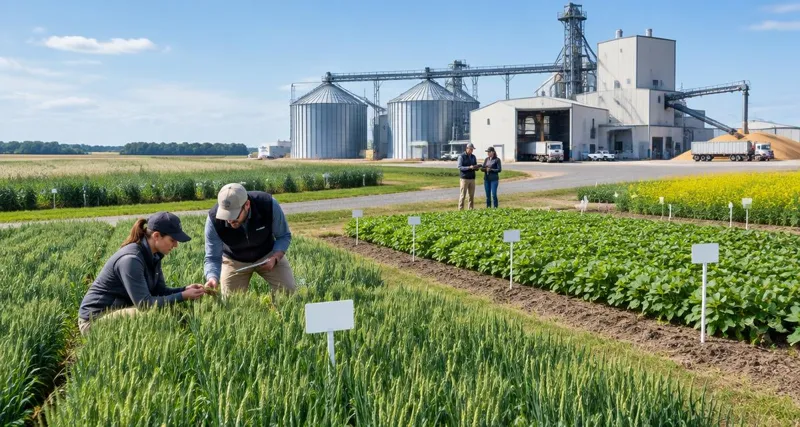
How much crop input finance does a season need?
Seasonal input finance equals input cost per hectare × hectares, less any supplier credit, financed over the crop cycle. Total cost of credit is interest plus fees over the drawdown period.
- Facility size = input cost/ha × hectares − supplier credit already granted.
- Tenor should match the crop cycle, typically 6–12 months.
- Cost of credit = rate × average outstanding balance + arrangement fees.
- Offtake contracts and warehouse receipts materially improve pricing.
Estimate only — not a quotation. Outputs are indicative planning ranges based on the values you enter and typical commercial benchmarks. Real pricing, specifications and lead times vary by country, site conditions and supplier, and are confirmed only in written offers collected through a private RFQ.
Crop, cost and facility inputs
Seed, fertiliser, crop protection, fuel, water and seasonal labour.
Typically 60–80%; higher where the lender pays suppliers directly.
Drawdown at planting to repayment after harvest delivery — usually 4–12 months.
Results
120 ha × US$1K/ha.
Sponsor contribution: US$44K.
Interest US$12K over 8 months + fees US$2K.
9.5 t/ha × US$230/t.
Strong — comfortably above the coverage lenders look for
45% below your projected yield at the same price.
Price at which harvest revenue exactly repays facility, interest and fees.
Educational information only. SeedMatchGroup is not a lender, bank, broker, investment advisor or regulated financial services provider, and does not recommend any specific financier. Figures, tenors, rates and eligibility criteria are indicative ranges based on publicly available programme documentation and vary by country, project, sponsor covenant and market conditions. Always confirm current terms directly with the relevant institution and take independent legal, tax and financial advice.
Repayment scenarios
Lenders price the downside, not the plan. These three scenarios apply the same facility and finance cost to progressively weaker yield and price outcomes, so you can see where the file stops covering itself.
| Scenario | Yield | Price | Revenue | Coverage | Net margin |
|---|---|---|---|---|---|
| Base case | 9.5 t/ha | US$230/t | US$262K | 1.81× | US$74K |
| Mild downside (−10% yield, −8% price) | 8.55 t/ha | US$212/t | US$217K | 1.5× | US$29K |
| Stress case (−20% yield, −15% price) | 7.6 t/ha | US$196/t | US$178K | 1.23× | US$0 |
Even at 7.6 t/ha and US$196/t, harvest proceeds still cover repayment 1.23× — the position credit committees want to see documented, with the mitigations named.
How to read these numbers
Input finance is underwritten on one season. The advance rate decides how much of the budget you carry yourself, the season length decides how much interest accrues before a cent of revenue arrives, and the coverage ratio decides whether the file reaches credit committee at all. Base-case coverage of 1.5× or better with a stressed case still above 1.0× is the shape most agricultural lenders are looking for.
The break-even yield is the single most useful figure to put in front of a lender. It converts an argument about optimism into a measurable buffer: if you break even at 5.8 t/ha and your five-season average is 9.2 t/ha, the conversation moves from whether you are being realistic to how the buffer is protected — insurance, offtake cover and staged input purchase.
Timing matters as much as size. If repayment falls before the harvest settlement window, coverage on paper is irrelevant; match the drawdown to planting milestones and the repayment date to when proceeds actually land.
Frequently asked questions
Understanding the values
What each choice in this calculator means, and how the options differ in practice.
- Lot test data
- Germination, purity and thousand-kernel weight are lot-specific. Use the figures on the seed lot certificate, not variety averages.
- Field vs ideal conditions
- Laboratory figures assume ideal conditions. Field emergence is lower — the gap depends on seedbed, depth and weather at sowing.
Illustrative project summary
1 ha multi-span tomato house
A new commercial entrant builds a first multi-span block with fertigation, insect screens and a basic climate computer.
1 ha · Multi-span polyhouse · Tomatoes
Indicative full greenhouse project CAPEX
USD 575K – USD 1.56M
Illustration only, not a real project or quotation. This is the structure, equipment and site-works budget for the example greenhouse, not the price of this calculator’s individual system, seeds or inputs, and not a result calculated from your entries. Excludes land, permits, packhouse, financing costs and working capital.
Based on the published commercial greenhouse cost benchmark. Written offers require a private project review; commercial projects start from USD 250K.
What can change the result?
This is a preliminary planning estimate based on the values you entered. The variables below usually move the outcome most, and should be confirmed with an agronomist, engineer and supplier offers before final design.
- Growing area and layout — hectares alone are not a greenhouse specification
- Greenhouse type and technology level (tunnel, naturally ventilated, high-tech)
- Structure specification, wind and snow loads, and site civil works
- Energy and utility tariffs, plus tariff escalation over time
- Financing terms, contingency and currency movement
Questions this calculator answers
Typical buyer and investor searches this tool is built for, including the markets where we run the most commercial projects.
- agricultural project financing and loan structuring per hectare for a commercial project
- agricultural project financing and loan structuring for a 2-hectare project — India
- agricultural project financing and loan structuring: indicative planning ranges — Kenya
- agricultural project financing and loan structuring benchmarks for investors — Saudi Arabia
- agricultural project financing and loan structuring under local market conditions — Mexico
- agricultural project financing and loan structuring — what to specify in a supplier RFQ
Method and decision path
How to use this result in a commercial project
Use the result to test scope and compare scenarios. It is not a design, agronomic prescription, financing offer or supplier quotation.
1. Enter site evidence
Replace defaults with measured area, climate, water, energy, crop and commercial assumptions.
2. Test scenarios
Change one assumption at a time and record the effect on capacity, cost, demand or return.
3. Validate the duty
Ask the relevant agronomist, engineer or financial adviser to check the inputs and constraints.
4. Prepare a private RFQ
Carry the confirmed scope into a human-reviewed brief so written offers can be compared on the same basis.
Final specifications, performance, prices, supplier participation and timing depend on the site and written supplier responses; none is guaranteed by this calculator.
Plan the project around the numbers
A calculator output is a starting point. Pair it with the planning guides below to align timeline, irrigation, budget and risk before you launch an RFQ.
One private brief, specialist review, private supplier research and a like-for-like comparison.
Month-by-month schedule from concept to first harvest across 9 stages.
Design principles for drip, pivot, fertigation and filtration on commercial projects.
How CAPEX, working capital and operating cost drive the project business case.
The ten most expensive planning and procurement pitfalls — and how to avoid them.
Procurement answers behind these numbers
A model output only holds if the scope, contract route and delivery terms match the assumptions. These reference answers cover the commercial decisions that move the figure.
- Turnkey EPC vs separate equipment packages
- What belongs in a greenhouse equipment specification
- Normal payment milestones in equipment contracts
- Which Incoterms to use for greenhouse and irrigation equipment
- How long a commercial greenhouse takes from order to handover
- What is normally the owner's scope on a greenhouse project
Move crop input financing into a structured RFQ
Editorial · not a sales pitchOnce the input budget and coverage look workable, a costed, quotation-backed file is what independent financing providers can actually price.
The facts a complete, supplier-neutral request on this topic includes. Use it as a checklist before submitting.
- Total project value (USD) and the portion you intend to finance
- Equity available, and whether it is cash, land or existing assets
- Legal entity, country of registration and years of trading
- Offtake or contract evidence supporting projected revenue
- Preferred instrument: senior debt, leasing, ECA-backed, grant blend
- Required tenor, grace period and target drawdown date
- Existing bank relationships and any current facilities
- Two to three years of financial statements (or projections for greenfield)
- Business plan / feasibility study with cash-flow model
- Supplier quotations or a costed BOQ where available
Starts the financing pre-qualification first; the equipment RFQ runs in parallel once the funding route is clear. You stay in control — nothing is submitted until you review and confirm.
Free to submit · supplier-neutral · reviewed by a specialist before any supplier is contacted.
Running these numbers for a client project?
Agronomists, greenhouse and irrigation consultants use this calculator for feasibility, then hand the project to us for supplier shortlisting, RFQ preparation and quote comparison. You stay client-facing and we work through you.
Your client relationship stays with you — we work through you and never contact your client unless you ask.
Indicative only
- This tool is indicative only.
- It is not financial advice.
- It is not agronomic advice.
- It is not engineering design.
- Final numbers require supplier, agronomist, engineer and local regulatory review.
SeedMatch Group is an independent agricultural project sourcing and RFQ platform. We are not a farm, seed producer, fertilizer manufacturer, irrigation manufacturer, greenhouse builder, EPC contractor, lender or financial advisor. Supplier and project partner outreach is handled only after a commercial project brief is reviewed.
Supplier and manufacturer listings are provided for research, transparency and discovery only. SeedMatch Group does not provide automatic buyer-supplier introductions. Every agriculture project request is reviewed manually by the SeedMatch project team, and supplier introductions are made only after internal approval.