
Retrofit or Replace an Existing Greenhouse? A Decision Guide for Commercial Operators
Compare retrofit, expand or buildHow to decide between upgrading systems in your current structure and replacing it: structural condition, remaining life, disruption, lifecycle cost and a comparison table you can fill in.
Can I add climate screens or lighting to an old structure?
Only after an engineer confirms the structure can carry the extra loads and its remaining life justifies the investment. Upfront, usually. Over a planning period, repairs, production lost to a limiting structure and residual value can change the comparison.
Key takeaways
- Start with the structure: FAO's greenhouse guidance stresses that structure design — height, ventilation area and covering — shapes the achievable climate ([FAO, 2013](https://www.fao.org/4/i3284e/i3284e.pdf)).
- Retrofit vs replace — compare like for like: Over the same planning period for both options: Lifecycle cost = capital cost + Σ yearly operating cost + Σ yearly repairs − residual value.
- A lifecycle comparison you can fill in: Over the same planning period for both options: Lifecycle cost = capital cost + Σ yearly operating cost + Σ yearly repairs − residual value.
- Who decides what: 1.
- Practical sequence: 1.
*Prepared by the SeedMatchGroup editorial team from the cited FAO publications and standard planning arithmetic. It is planning guidance for commercial operators, not an engineering or agronomic sign-off.*
Short answer: retrofit when the structure is sound, has enough remaining life to repay the upgrade, and can carry the new loads (screens, lighting, heavier crops, higher gutters if needed). Replace when the structure limits climate, light or height in ways no system upgrade can fix, or when repair and retrofit costs approach the cost of a new structure over the same period.
Start with the structure
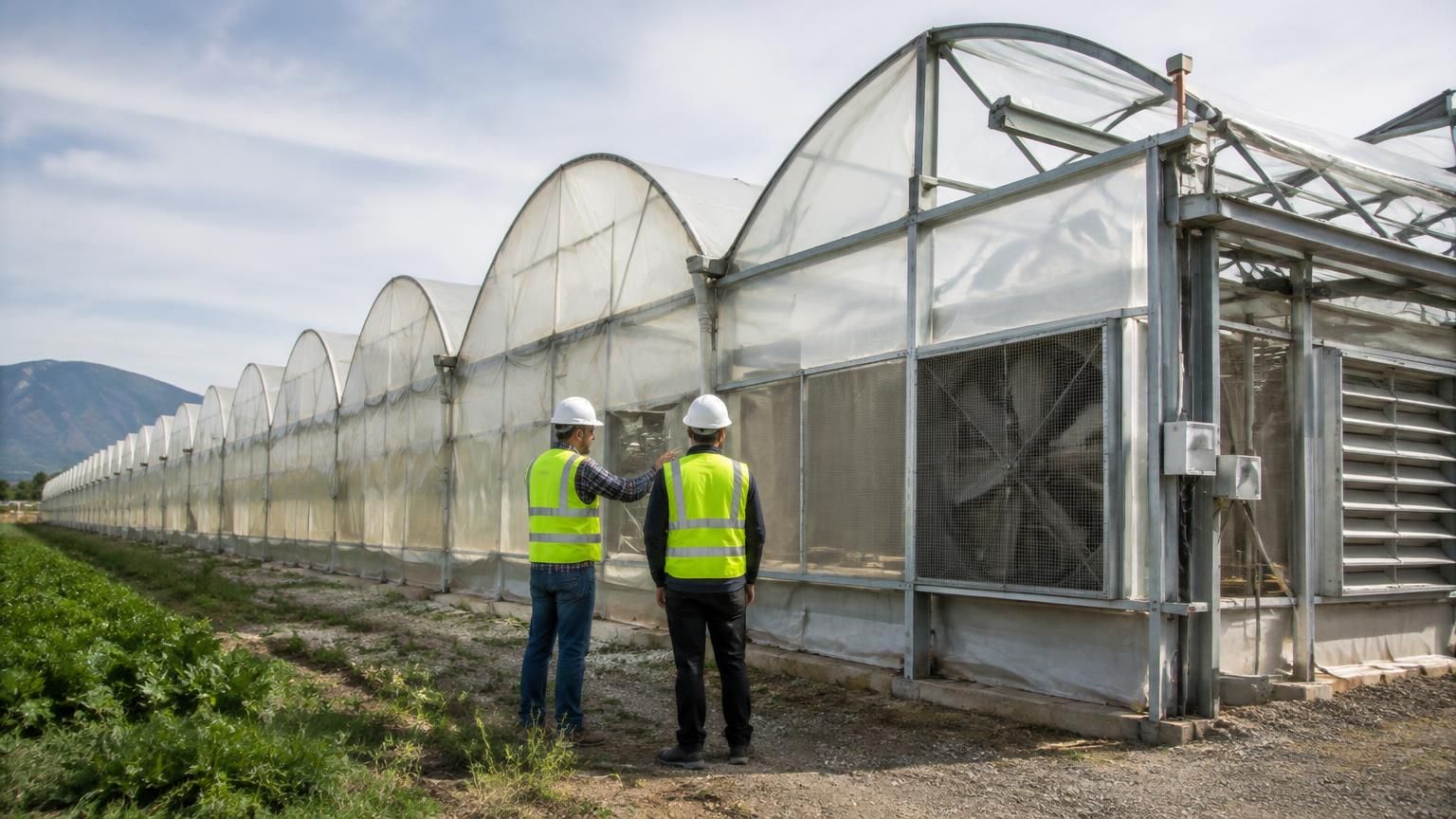
FAO's greenhouse guidance stresses that structure design — height, ventilation area and covering — shapes the achievable climate (FAO, 2013). An engineer should confirm corrosion, foundation condition, wind and snow ratings, gutter height and covering condition before any system purchase.
Retrofit vs replace — compare like for like
| Factor | Retrofit favoured when… | Replacement favoured when… |
|---|---|---|
| Structure condition | Frame and foundations sound, documented ratings | Corrosion, deformation or unknown load ratings |
| Remaining life | Long enough to repay the upgrade | Shorter than the upgrade payback |
| Climate potential | Vent area and height allow the target climate | Low gutters or small vent area cap the climate |
| Light | Covering can be replaced; light is adequate | Structure shades heavily or limits covering choice |
| Disruption | Work fits between crop cycles | Work would stop production for long periods anyway |
| Lifecycle cost | Lower over the planning period | Lower once repairs and lost yield are counted |
A lifecycle comparison you can fill in
Over the same planning period for both options: Lifecycle cost = capital cost + Σ yearly operating cost + Σ yearly repairs − residual value. Net benefit = Σ yearly (extra marketable revenue + operating savings) − lifecycle cost. Use your own records for current performance, and ask suppliers to state their assumptions in writing. Treat any savings figure without a measured baseline as unverified.
| Line | Retrofit (your figures) | Replace (your figures) |
|---|---|---|
| Capital cost | ||
| Production lost during works | ||
| Yearly operating cost | ||
| Yearly repairs and maintenance | ||
| Expected change in marketable yield | ||
| Residual value at end of period |
Who decides what
| Decision-maker | Main question | What they should bring |
|---|---|---|
| Owner / investor | Does the upgrade or expansion pay back under realistic assumptions? | Target return, financing limits, risk appetite |
| Operations / head grower | Where are we losing marketable yield, water or labour today? | Yield, grade-out, labour and climate records by block |
| Engineer / technical manager | Can the structure, power, water and controls carry the change? | Drawings, structure age, electrical capacity, water quality tests |
| Purchasing | Are we comparing like-for-like scopes? | A written scope, required outputs and warranty terms |
| Consultant / agronomist | Is the bottleneck real, and what else could explain it? | Independent review of the data before suppliers are asked to quote |
Practical sequence
1. Structural survey by an independent engineer. 2. Bottleneck audit — see how to diagnose bottlenecks. 3. Fill in the comparison table for both options. 4. Run the retrofit ROI tool and the retrofit vs expand vs build guide. 5. Issue one outcome-based scope to several suppliers.
Sources
- FAO (2013). *Good Agricultural Practices for greenhouse vegetable crops — Principles for Mediterranean climate areas.* PDF
- FAO (2017). *Good Agricultural Practices for greenhouse vegetable production in the South East European countries.* PDF
Build a capital-cost scenario with the greenhouse and irrigation cost calculator: use your own unit prices and allowances, without assuming savings or ROI. Ready to scope it? Use the greenhouse expansion and upgrade request — it is free for buyers and is reviewed by a SeedMatchGroup sourcing specialist. Projects start from USD 250K. Smaller or single-item purchases are better served by a local dealer.
Turn "Retrofit or Replace an Existing Greenhouse? A Decision Guide for Commercial Operators" into your RFQ
Answer a few questions and we will draft a structured RFQ you can review, edit and submit to our independent supplier network.
Frequently asked questions
- Can I add climate screens or lighting to an old structure?
- Only after an engineer confirms the structure can carry the extra loads and its remaining life justifies the investment.
- Is replacement always more expensive?
- Upfront, usually. Over a planning period, repairs, production lost to a limiting structure and residual value can change the comparison.
- How does SeedMatchGroup handle a requirement like "Retrofit or Replace an Existing Greenhouse? A Decision Guide for Commercial Operators"?
- A buyer submits one private brief through the RFQ builder. How to decide between upgrading systems in your current structure and replacing it: structural condition, remaining life, disruption, lifecycle cost and a comparison table you can fill in. A dedicated sourcing specialist normalises it into a single technical specification, issues it to qualified international manufacturers, integrators and EPC contractors, and returns offers that can be compared line by line on the same scope, lead time and delivery terms.
- What size of project does the platform serve?
- SeedMatchGroup works on commercial agricultural projects from USD 250K upward — greenhouses, irrigation and fertigation, seed processing and production facilities, nurseries, packhouses, cold chain, water treatment, agricultural solar and related infrastructure. Smaller retail or hobby requirements are outside the platform's scope.
Move from reading to sourcing
The pages below carry the commercial detail for this topic — cost ranges, supplier verification, specification checklists and financing routes.