
How to Prepare a Commercial Fresh-Produce RFQ: Avocado, Vegetables and Other Crops
Start a sourcing requestA practical RFQ preparation guide for commercial fresh produce: what belongs in the brief, how greenhouse vegetables and orchard crops like avocado differ, and which sourcing route fits which crop — with the Global B2B Group handoff explained honestly.
Is avocado a greenhouse crop?
No. Avocado is an orchard crop grown on trees in open plantations. Greenhouse-produce sourcing covers protected-culture crops such as tomatoes, cucumbers, peppers and herbs. Avocado and other orchard programmes follow the broader agriculture-output route within the Global B2B Group ecosystem.
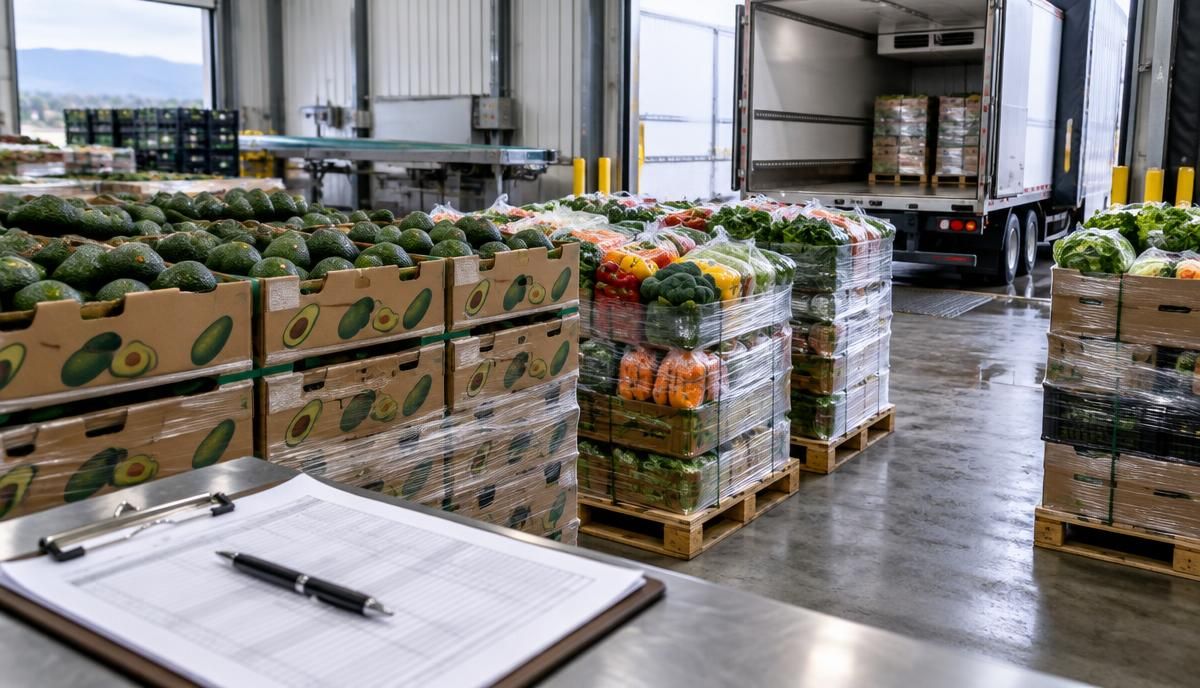
Key takeaways
- Step 1: Put the crop on the right route: Avocado is an orchard crop grown on trees in open plantations — it is not a greenhouse crop, and any source implying otherwise should be treated with caution.
- Step 2: Write the product specification: For each line item: crop and variety type as the market buys it, grade and size with tolerances, quality parameters the buyer measures, and certification requirements.
- Step 3: Define the volume cadence and programme length: State weekly or per-shipment volume with a tolerance band, programme length including ramp-up, the call-off and forecasting mechanism, and substitution rules for shortfalls.
- Step 4: Origin, seasonality and route requirements: State accepted origins and any counter-season combination.
- Step 5: Packaging, cold chain and delivery terms: Specify pack format, net weight, labelling, pallet pattern and any retailer-specific requirements.
Short answer: a commercial fresh-produce RFQ is a written programme, not a shopping list: product specification with tolerances, volume cadence, origin requirements, pack format, documentation, delivery terms and claim procedure. One distinction matters before you write a word: which crop belongs on which sourcing route. Greenhouse vegetables fit SeedMatch's protected-culture supplier network; orchard crops like avocado follow the broader agriculture-output route within the Global B2B Group ecosystem. This guide explains both — and the handoff between them.
It is written for importers, wholesalers, retail chains and food-service buyers. SeedMatch handles procurement projects from USD 250,000 in total annual or seasonal programme value — not per shipment. This guide is educational and is not legal advice.
Step 1: Put the crop on the right route
Avocado is an orchard crop grown on trees in open plantations — it is not a greenhouse crop, and any source implying otherwise should be treated with caution. Greenhouse tomatoes, cucumbers, peppers and herbs are protected-culture crops with controlled-environment suppliers. The distinction decides which supplier base, which seasonality logic and which documentation your RFQ needs. SeedMatch covers greenhouses, irrigation, commercial seed and agricultural infrastructure, including greenhouse-produce sourcing; cross-sector and broader agriculture-output programmes are coordinated within the Global B2B Group ecosystem (globalb2bgroup.com). If part of your programme belongs on another platform, we link you to it and you choose whether to continue there — nothing is submitted, copied or transferred automatically.
Step 2: Write the product specification
For each line item: crop and variety type as the market buys it, grade and size with tolerances, quality parameters the buyer measures, and certification requirements. For avocado specifically, the specification typically addresses variety, size count, dry-matter or maturity expectations at harvest, and defects allowed — confirm the exact standard your market applies. Reference neutral frameworks where they apply, such as Codex Alimentarius standards (Codex Alimentarius).
Step 3: Define the volume cadence and programme length
State weekly or per-shipment volume with a tolerance band, programme length including ramp-up, the call-off and forecasting mechanism, and substitution rules for shortfalls. Seasonal or annual programmes with stated terms let serious suppliers plan harvest and packout against your calendar — spot requests attract spot answers.
Step 4: Origin, seasonality and route requirements
State accepted origins and any counter-season combination. For cross-border programmes, import requirements are set by the destination country's plant protection authority under the IPPC framework — for example USDA APHIS for the United States — and vary by commodity and destination. Confirm current requirements with the official destination authority or a licensed customs broker before signing a programme; do not rely on a supplier's assurance alone.
Step 5: Packaging, cold chain and delivery terms
Specify pack format, net weight, labelling, pallet pattern and any retailer-specific requirements. Agree harvest maturity, pre-cooling, transport temperature ranges and temperature records in transit — the FAO's post-harvest resources give neutral technical background (FAO post-harvest). Choose delivery terms deliberately: Incoterms define where costs and risk transfer, and for perishables the cold chain sits inside the risk window. The current Incoterms are published by the International Chamber of Commerce (ICC); state the named place precisely.
Step 6: Documents, verification and claims
Request company registration and export licences where applicable, food-safety or quality certifications with valid scope and dates, phytosanitary capability for your route, product and packing specifications, and references. Verify certifications with the issuing body where possible. Agree the inspection protocol and the claim procedure for out-of-spec deliveries before the first shipment, and have contracts reviewed by qualified counsel in the relevant jurisdictions.
The fresh-produce RFQ checklist
- Crop routed correctly: greenhouse crops to SeedMatch, orchard and other commodity output via Global B2B Group, the group's buyer-first commodity marketplace.
- Product specification: variety type, grade, size, tolerances, certifications.
- Programme: weekly volume, season length, total volume, call-off mechanism.
- Origin and route: accepted origins, phytosanitary requirements confirmed with official authorities.
- Packaging and cold chain: format, temperature ranges, records in transit.
- Delivery terms: Incoterm with named place, aligned with cold-chain insurance.
- Documents and claims: verification method, inspection protocol, claim procedure.
- Legal review by qualified counsel — this guide is not legal advice.
How SeedMatch helps
SeedMatch is a human-led sourcing platform for commercial agricultural procurement from USD 250,000 in programme value. We help you structure the brief, screen suppliers manually and run a confidential, mediated quotation process — supplier identities are never published and are exchanged only when both sides agree. For greenhouse-produce programmes, start with our sourcing request or the RFQ builder; for orchard crops like avocado and broader agriculture-output programmes, we will point you to the right route within the Global B2B Group ecosystem and you decide whether to continue there. We are not the importer of record, do not provide legal or customs advice, and do not guarantee supply, prices or outcomes.
Turn "How to Prepare a Commercial Fresh-Produce RFQ: Avocado, Vegetables and Other Crops" into your RFQ
Answer a few questions and we will draft a structured RFQ you can review, edit and submit to our independent supplier network.
Frequently asked questions
- Is avocado a greenhouse crop?
- No. Avocado is an orchard crop grown on trees in open plantations. Greenhouse-produce sourcing covers protected-culture crops such as tomatoes, cucumbers, peppers and herbs. Avocado and other orchard programmes follow the broader agriculture-output route within the Global B2B Group ecosystem.
- What must a commercial produce RFQ contain?
- Product specification with tolerances, volume cadence and programme length, accepted origins, pack format, cold-chain and temperature requirements, documentation and verification method, delivery terms with a named place, and a claim procedure. A written programme gets serious quotations; a shopping list gets spot answers.
- Who sets import requirements for fresh produce?
- The destination country. Phytosanitary and import requirements are set by the destination's national plant protection organisation under the IPPC framework and vary by commodity and origin. Confirm current requirements with the official authority or a licensed customs broker before signing a programme.
- How does the handoff to Global B2B Group work?
- If part of your programme belongs on another platform in the ecosystem, we link you to its homepage and you choose whether to continue there. Nothing is submitted, copied or transferred automatically — no form contents, contact details or account is created on your behalf.
- What is the minimum programme value SeedMatch works with?
- USD 250,000 in total annual or seasonal programme value — not per shipment. Below that threshold we can help you prepare documentation as a private draft, but we do not create a qualified sourcing request.
- Does SeedMatch guarantee supply or prices for produce programmes?
- No. SeedMatch is a human-led sourcing intermediary: we structure briefs, screen suppliers and mediate a confidential quotation process. We do not guarantee supply, availability, prices or transaction outcomes, and we are not a party to any resulting supply contract.
Move from reading to sourcing
The pages below carry the commercial detail for this topic — cost ranges, supplier verification, specification checklists and financing routes.