
Plan a greenhouse project around crop goals: use free calculators and project tools before sourcing suppliers
Reviewed: · SeedMatchGroup editorial team
Start with the crop, the market you will sell into, the site and the outcome you need — not with a supplier list. Then use free SeedMatch tools in order: climate load and irrigation sizing to frame the technical scope, a CAPEX/OPEX/ROI scenario to test the economics with your own numbers, a DSCR check if debt is involved, and a structured RFQ so that every proposal answers the same brief. All buyer-facing tools are completely free, and using them carries no obligation to request a quote, buy anything or work with us.
Every result depends on the figures you enter and the built-in assumptions each tool states. The tools give planning estimates, not engineering designs, agronomic advice, yield forecasts or investment returns; confirm them with qualified local engineers, agronomists and advisers.
What is a crop-goal-first greenhouse plan?
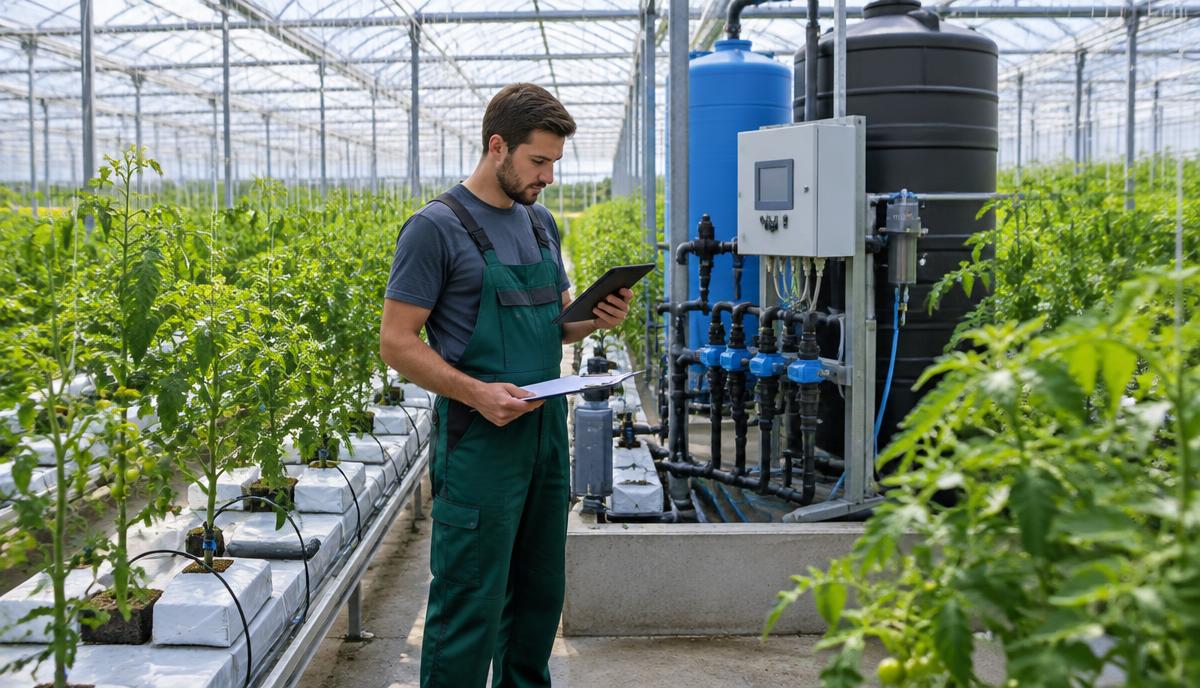
A crop-goal-first plan defines what the project must deliver — crop, harvest window, quality grade, target market and an annual output range you can defend from your own records or advisers — and only then specifies the structure, irrigation, climate equipment, seeds and inputs needed to get there. Suppliers are asked to propose against that brief, so their proposals can be compared on the same basis.
SeedMatch works solution-first: we help you define the crop, site, capacity and desired outcome, then organise comparable proposals from suitable independent suppliers. We do not send you to a generic supplier list.
Are SeedMatch tools really free, and do I have to request a quote?
Yes, every buyer-facing SeedMatch tool and calculator is completely free. You can run them as often as you like, and using them creates no obligation to request a quote, purchase anything or work with us. If the results raise questions or you want help structuring procurement, you can ask our team — that request is also free for buyers.
In what order should you use the tools?
- 1. Write down crop, variety type, harvest calendar, market grade, site location and the outcome you need.
- 2. Size the climate challenge (heating, cooling, ventilation) for your structure and climate zone.
- 3. Estimate peak water demand, pump flow and storage, and get a laboratory water test.
- 4. Model CAPEX, OPEX, margin, payback and ROI with your own prices and quantities.
- 5. If borrowing, check debt service coverage before talking to lenders.
- 6. Put the results into a structured RFQ, then normalise the proposals you receive.
Greenhouse climate calculator: how big is the heating and cooling task?
- Purpose: indicative peak heating load, cooling capacity, cooling water demand and pad-wall area, with system categories (never brands).
- When: before choosing structure, cooling or heating equipment.
- Inputs: greenhouse area, greenhouse type (single-span tunnel, multi-span polyhouse, Venlo glass, semi-closed), ridge height, climate zone, cover system and water quality.
- Steps: choose the structure and climate zone closest to your site, enter area and height, then note the peak loads.
- Limits: uses shared airflow and climate-zone assumptions, not your weather data; a climate engineer must size the final plant.
- In your brief: state the loads as a design basis to be verified, so every bidder sizes against the same peak conditions.
Irrigation planning: how much water, flow and storage?
- Greenhouse irrigation planner — inputs: area (m²), greenhouse type, crop (tomato, cucumber, sweet pepper, leafy greens, herbs or strawberry), irrigation strategy, hours of irrigation per day and water quality. Outputs: peak daily water demand, design pump capacity, storage reservoir and, where relevant, treated (RO) water to size.
- Irrigation water and flow calculator (available in five languages) — inputs: area (ha), reference evapotranspiration ETo (mm/day), crop coefficient Kc, system efficiency (%), operating hours per day and season days. It applies ETc = Kc × ETo (FAO-56) and 1 mm over 1 ha = 10 m³ to return ETc, gross application, daily m³, flow in m³/h and L/s, and season volume.
- Limits: neither tool knows your local ETo, crop stage or water chemistry; take ETo and Kc from local sources and use a water test to decide treatment.
- In your brief: give peak daily volume, required flow and storage as the hydraulic duty bidders must meet, plus the water analysis.
CAPEX, OPEX and ROI scenario: does the project work with your numbers?
- Purpose: a transparent first economic test using only figures you enter (available in five languages).
- Inputs: area, CAPEX per m², optional per-m² structure, irrigation/fertigation, climate and automation costs, other CAPEX, annual energy, labour, inputs, optional fertilizer and other OPEX, annual output, price per unit and years.
- Outputs: total CAPEX, OPEX, revenue, operating margin, simple payback and ROI. Formulas: payback = CAPEX ÷ annual margin; ROI = (margin × years − CAPEX) ÷ CAPEX.
- Limits: undiscounted, before tax and financing; no built-in yields, prices or savings.
- In your brief: share low and high cases so suppliers see which cost lines matter most to you.
Greenhouse ROI calculator and expansion calculator: when to use which?
- Greenhouse ROI calculator — for new projects. Inputs: crop, technology level, area, CAPEX per m², operating cost per m² per year, farmgate price and utilisation. Outputs: low/base/high revenue, EBITDA, payback and return on CAPEX. It uses wide indicative yield and price ranges per crop, so check them against your own market and records.
- Expansion ROI and cost-per-cycle calculator — for existing operations. Inputs: your measured baseline per cycle (area, gross kg/m², rejects %, price, cost per m², cycles per year) and up to four phases (CAPEX, start cycle, added area, yield, reject and cost changes). Outputs: cost per marketable kg per cycle, incremental margin, ROI and payback cycle.
- Limits: both are screening tools; neither includes tax, financing costs, inflation or ramp-up losses.
DSCR calculator: can the project carry debt?
- Purpose: estimate the debt service coverage ratio (DSCR = cash available for debt service ÷ annual debt service) and payback.
- Inputs: total CAPEX, sponsor equity share, interest rate, tenor, projected annual revenue and operating cost as a % of revenue.
- Output: a DSCR band — below 1.25×, 1.25–1.60× or 1.60× and above. These are common planning thresholds, not any lender's rule.
- Financing, where relevant, is arranged only through independent third parties; SeedMatch is not a lender or credit adviser.
RFQ and bid comparison: how do results become comparable proposals?
- Greenhouse RFQ (available in five languages): capture structure type, crop, growing system, area, climate, water, cooling and automation in one structured request. Our team reviews it manually before approaching suitable independent suppliers; no supplier is contacted automatically.
- Greenhouse bid comparison tool: list each proposal against the same scope lines — civil works, foundations, structure and covering, climate control and screens, irrigation zones, fertigation dosing and alarms, electrical connection, freight and duties, installation, commissioning spares, training, FAT/SAT acceptance evidence and as-built documents — to see which bids are genuinely comparable.
- Compare normalised scope and lifecycle cost per marketable kg, not headline price per m².
Which tool answers which planning question?
Use the table to pick the right free tool and see what its result adds to your technical brief.
| Planning question | Tool | Key inputs | What goes into the brief |
|---|---|---|---|
| How much heating and cooling? | Greenhouse climate calculator | Area, type, height, climate zone, cover | Peak loads as a design basis to verify |
| How much water and flow? | Irrigation planner / water and flow calculator | Area, crop or ETo and Kc, efficiency, hours | Peak m³/day, flow, storage, water test |
| Do the economics work? | CAPEX/OPEX/ROI scenario | Your costs, output, price, years | Low/high cases and key cost lines |
| Is a new build viable? | Greenhouse ROI calculator | Crop, technology, area, costs, price | Range of payback to test with bidders |
| Upgrade or expand? | Expansion ROI calculator | Baseline per cycle, phases | Target cost per marketable kg |
| Can it carry debt? | DSCR calculator | CAPEX, equity, rate, tenor | Financing assumptions to confirm |
| Are bids comparable? | RFQ + bid comparison tool | Scope, proposals | Uniform scope, exclusions, acceptance tests |
Pre-sourcing checklist
- Crop, variety type, harvest window, market and quality grade written down.
- Site location, wind, altitude, access and expansion space described.
- Water source, peak-month volume and a recent laboratory water test available.
- Energy supply and tariffs confirmed in writing.
- Climate and irrigation tool results saved with their assumptions.
- CAPEX/OPEX/ROI low and high cases saved; prices and quantities sourced.
- Budget range, financing need and decision timeline agreed internally.
- RFQ scope, exclusions and acceptance tests listed before bids are invited.
Frequently asked questions
Are SeedMatch calculators free to use?
Yes. All buyer-facing tools and calculators are completely free, and using them carries no obligation to request a quote, purchase anything or work with SeedMatch.
How do I estimate greenhouse project cost before talking to suppliers?
Enter your own area, per-m² costs and other CAPEX in the CAPEX/OPEX/ROI scenario calculator. Treat the total as a planning range and replace it with normalised bid prices later.
Can a calculator tell me my greenhouse ROI?
It can show the ROI implied by the figures you enter. It cannot forecast yields, prices or returns; those depend on crop, site, management and market.
How do I plan greenhouse irrigation capacity?
Estimate peak daily demand with the irrigation planner or the ETc = Kc × ETo water and flow calculator, then size pumps and storage for that peak and confirm with a water test and an irrigation designer.
What should a greenhouse equipment procurement brief include?
Crop and outcome, site, design loads, water analysis, hydraulic duty, scope lines, exclusions, delivery terms, commissioning, training, spares and acceptance tests, so every proposal answers the same request.
Why not start with a supplier list?
Supplier lists invite proposals built on each vendor's standard package. Defining the crop, site, capacity and outcome first lets you compare proposals for fit and lifecycle cost.
Related SeedMatch tools
- Greenhouse climate calculator
- Greenhouse irrigation planner
- Irrigation water and flow calculator
- CAPEX, OPEX and ROI scenario calculator
- Greenhouse ROI calculator
- Expansion ROI and cost-per-cycle calculator
- DSCR and payback calculator
- Greenhouse bid comparison tool
- Commercial greenhouse planning checklist: crop, climate, structure, utilities and automation requirements
- Greenhouse climate-control systems compared: ventilation, cooling, heating and energy trade-offs
- How to evaluate greenhouse irrigation and fertigation suppliers: water quality, crop needs and operating cost
- Low greenhouse marketable yield: diagnose before buying upgrades
- Commercial greenhouse system selection: climate, water and CAPEX
- Greenhouse and irrigation bid comparison: a supplier-neutral RFQ scorecard
When the outcome and constraints are defined, our team reviews your project request (free for buyers, typically USD 250,000+ B2B projects) before approaching suitable independent suppliers and organising comparable proposals. Any financing is arranged only through independent third parties.
Start a structured greenhouse project request →Sources
- Penn State Extension — Greenhouse production
- Penn State Extension — Interpreting irrigation water tests
- Penn State Extension — Is irrigation water quality causing yield reductions?
- FAO — Global Agro-Ecological Zones (GAEZ) data portal
- FAO Irrigation and Drainage Paper 56 — Crop evapotranspiration (Allen et al., 1998)
Extension guidance is general. Crop-specific targets, local regulations and qualified local advisers take precedence.