
Commercial procurement guide · Reviewed for this update: 17 October 2026
Seed processing line cost and equipment guide
How much does a seed processing line cost? A reliable answer requires a written scope, not a generic machine price: crop, hourly throughput, incoming moisture, target purity, automation and delivery location determine the equipment and installed budget. No verified comparable line prices are available for this guide, so we publish cost drivers and quotation checks rather than an unsupported range. SeedMatchGroup provides human-reviewed, supplier-neutral procurement for commercial agricultural projects from USD 250K.
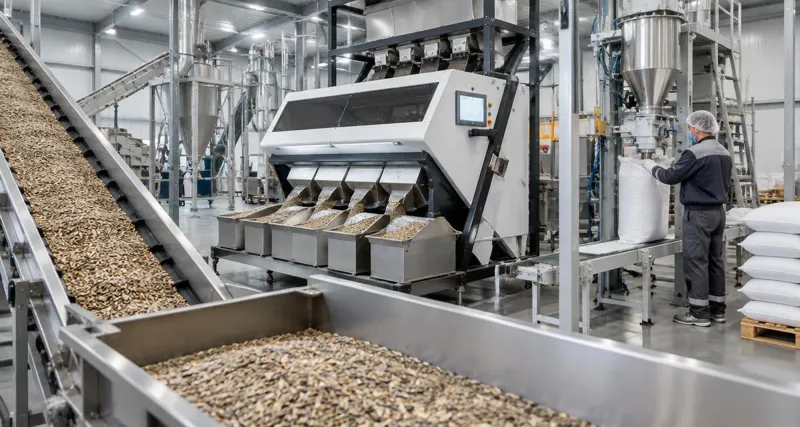
Main stages of a processing line
| Intake and conditional drying | Receiving hoppers, conveying and lot segregation; add drying only where moisture and crop requirements justify it. Protect germination through specialist-verified settings. |
|---|---|
| Pre-cleaning and cleaning | Air-screen cleaners remove chaff, stones and off-size material. |
| Grading and separation | Select length, density or colour separation against the actual contaminants and seed specification; not every line needs every separator. |
| Optional seed treatment | Treatment or coating with dosing control and dust management only where the buyer's process and local authorizations require it. |
| Weighing and packing | Packing format, scales, labels and lot traceability; certification remains a separate verified process. |
Seed cleaning machines and treatment equipment compared
Short answer: an air-screen cleaner is the core seed cleaning machine on most lines; length, density and colour separators are added only when the contaminants in your seed require them. Treatment and coating equipment is a separate decision tied to local product registration.
| Machine | Separates or applies by | Check in the quotation |
|---|---|---|
| Air-screen cleaner | Size (screens) and weight/shape (air flow) | Screen sets for each crop and seed-size range; rated capacity on your crop, not wheat |
| Indented cylinder | Length | Cylinder indent sizes for the contaminants you actually need to remove |
| Gravity table | Density (specific weight) | Feed rate and deck options; whether it follows an air-screen cleaner in the offer |
| Optical (colour) sorter | Colour and shape defects | Camera type, ejector channels and the defect samples used for set-up |
| Seed treater | Applies a measured treatment to each lot | Dosing accuracy, dust control and that the products are registered where you will sell the seed |
| Coating or pelleting drum | Builds a coating or pellet around the seed | Batch size, drying and which crops the supplier has run on the machine |
Build the budget around scope, not a headline price
Two lines with the same advertised tonnes per hour may handle different crops or meet different purity specifications. Ask for the rated operating conditions and a full scope schedule before using a quotation in a financing model. USD 250K is our commercial project threshold, not a seed-line price estimate.
- Process equipment and crop changeovers
- Separate core cleaners from optional grading, drying, optical sorting and treatment. Include crop-specific screens, cleanout access, conveying, buffers and dust extraction. Compare how lot changeovers affect usable capacity.
- Installed scope and site readiness
- Itemize layout engineering, foundations, structural work, electrical supply, controls, installation and commissioning. Confirm which party supplies compressed air, power connections, storage and handling equipment.
- Delivered costs and commercial terms
- Record freight, insurance, duties, taxes, delivery terms, payment schedule and quotation validity separately. Do not infer a local duty or exchange rate: verify classification and use a dated, agreed conversion basis if currencies differ.
- Operating costs and support
- Request declared energy demand under stated conditions, staffing assumptions, consumables, maintenance, spare parts and training. Local electricity eligibility and buyer operating hours determine energy cost; nameplate power alone is not annual consumption.
Compare estimated, quoted, committed and actual amounts separately. An unanswered cost bucket is unknown, not zero; supplier claims remain unverified until the relevant evidence is reviewed.
Specify capacity and acceptance before requesting offers
- Define the input. List crops, varieties, seasonal raw intake, moisture range, seed-size range and expected contaminants. Include representative sampling and lot segregation needs.
- Define the processing window. State campaign days, shifts and planned availability. Use the existing capacity calculator with your own assumptions; its defaults are not a crop recommendation or an equipment guarantee.
- Define the required output. Separate raw-feed throughput from finished-seed throughput. State purity, germination test method, tolerances, packaging and traceability requirements; have a qualified seed specialist confirm them.
- Define acceptance evidence. Agree a test protocol using representative buyer material, measurement methods, test duration, sampling responsibilities and remedies before committing. Confirm installation checks, training and handover documents.
Worked procurement example — hypothetical, not a case study: a multi-crop processor supplies its seasonal intake and shift plan, then asks for both crop-changeover time and finished output under its contaminant specification. A cleaner-only offer and a delivered line with dust extraction cannot be ranked on price until their scope differences are reconciled. No client outcome or savings is implied.
Buyer checklist before requesting quotes
- Crops and varieties, including seed size range
- Tonnes per season and length of the processing window
- Target quality: purity, germination and certification standard
- Incoming moisture and drying need
- Building, power supply and dust/explosion requirements
- Treatment chemistry and local registration rules
- Packing formats and traceability system
- Installation, training and spare parts support
Size your throughput first with the seed processing capacity calculator. For investment context see seed processing investment.
We do not publish price ranges for processing lines: costs depend heavily on capacity and configuration, so a price needs a written specification.
FAQ
- What does a seed processing line include?
- Typically intake and drying, pre-cleaning, cleaning and grading, gravity separation, seed treatment, and weighing and packing. The exact line depends on the crop, capacity and quality standard you must meet.
- How do I size a seed processing plant?
- Start from tonnes per season, the length of the processing window and the shifts per day. Our seed processing capacity calculator turns those inputs into an hourly throughput target for the RFQ.
- Does SeedMatchGroup manufacture seed processing equipment?
- No. SeedMatchGroup is a human-led sourcing specialist. We prepare the specification, run a supplier-neutral RFQ and present comparable proposals; independent suppliers supply and install the equipment.
- How much does a seed processing line cost?
- There is no verified like-for-like price figure on this page. A defensible budget needs crop-specific throughput, incoming seed condition, quality targets, equipment scope, delivery location and installation responsibilities. Request dated itemized quotations in a stated currency; an equipment-only price is not an installed-project total.
- Does a quoted throughput guarantee certified seed output?
- No. The RFQ must separate raw intake from finished seed output and state the crop, moisture, contaminant load and acceptance criteria. Processing does not itself certify a lot or restore lost germination. A qualified specialist and the applicable certification authority must verify the quality requirements.
- What should be excluded or shown separately in a seed-line quote?
- Require an explicit included, excluded or unresolved entry for civil works, utility upgrades, freight, insurance, taxes and duties, commissioning, test runs, training, spare parts and consumables. Record quotation date, validity, currency and delivery terms before comparing offers.
Evidence and limits
Editorial preparation: SeedMatchGroup. General process guidance is informed by FAO and AfricaSeeds' 2018 toolkit; it is not a current equipment price list, certification decision or endorsement. This is original buyer guidance, not a reproduction of the toolkit. Process design, treatment permissions and dust/fire safety require qualified local review.
- FAO / AfricaSeeds: Seed processing — principles, equipment and practice (2018)
- Tamil Nadu Agricultural University: seed processing equipment — equipment principles, not a local quotation or legal approval.
Request supplier-neutral quotes
- Share crops, tonnes per season and quality target.
- We review the brief and confirm it is a commercial project (from USD 250K).
- Only after review do we source appropriate options and support proposal comparison; availability and response timing are not guaranteed.
All supplier communication is managed through SeedMatchGroup. Supplier identities and contact details are not disclosed in the buyer workspace.
Start a project brief