
Procurement guide
The Cost of Sourcing Alone: How a Wider Procurement Network Helps Buyers Make Better Decisions
A practical guide to turning a one-off purchase into a structured, buyer-first sourcing decision.
Published: · SeedMatch Group editorial team
Short answer
Buying alone usually means comparing the few suppliers you already know, on quotes written in different formats, under your own deadline. A structured, buyer-first process starts from one written specification, looks wider for relevant suppliers and compares price together with freight, lead time, minimum order, payment terms, specification and risk. It can improve the quality of a decision; it does not guarantee a lower price or a better outcome.
- Write the requirement once, in measurable terms, so every offer answers the same question.
- Compare delivered and lifetime cost, not only the unit price.
- Keep the decision with the buyer, and validate suppliers and final offers directly before you commit.

A familiar situation
A grower is expanding a greenhouse block before the next planting season. The structure supplier has quoted, but the irrigation and fertigation package, the substrate and the seed for the first crop still have to be bought. The procurement manager calls two suppliers they have used before and asks a third for a price.
Three replies arrive. One quotes ex-works without freight, one includes installation but a shorter warranty, and one lists a different emitter flow rate. Each has its own minimum order and payment terms. The season deadline is close, so the cheapest headline price looks tempting, even though nobody is sure the three offers describe the same thing.
The blind spots of buying alone
None of these are failures of effort. They are the natural limits of seeing the market through one inbox.
- Narrow supplier discovery
- The shortlist is whoever you already know or found quickly. Suppliers better suited to your climate, crop or destination may never be asked.
- Inconsistent quote specifications
- Each supplier answers its own interpretation of the request: different capacities, grades, packaging or scope lines, so the numbers do not line up.
- Price-only comparison
- When the offers are hard to compare, the unit price becomes the easiest thing to judge, even though it rarely tells the whole story.
- Hidden landed and lifecycle costs
- Freight, duties, installation, commissioning, spare parts, energy and water use, and after-sales service can move the real cost more than the headline price.
- Time spent on follow-up
- Clarifying questions, missing documents and revised quotes are chased one email at a time, often by a team that also runs the farm.
- Supplier continuity
- A single source that cannot deliver in a given season leaves the buyer without an alternative that has already been checked.
- Documentation gaps
- Certificates, test reports, phytosanitary documents and technical data sheets arrive late or not at all, and questions surface only after the order.

What a structured, buyer-first sourcing process adds
This is how SeedMatch Group works today. Technology organizes the request and the comparison; a sourcing specialist checks the context; the buyer makes the decision.
1. One structured RFQ
The requirement is written once: crop, climate, site, capacity or quantity, timing, destination, documents and delivery terms. Our RFQ builder and the greenhouse RFQ guide the fields.
2. A broader, relevant supplier search
After review, a sourcing specialist looks for suppliers that fit the project, beyond the buyer's existing contacts. What we check is described in our supplier qualification criteria.
3. Apples-to-apples quote fields
Offers are requested against the same specification, so scope, grade, capacity and Incoterm can be read side by side.
4. More than price
Price is compared together with freight, lead time, minimum order, payment terms, specification, service and open risks, in line with a total cost of ownership view.
5. Market and technical resources
Free calculators and planning tools, cost guides such as the commercial greenhouse cost guide and buyer guides help set realistic expectations before quotes arrive.
6. A documented workflow, a buyer-controlled decision
Questions and answers are coordinated through the platform team, the buyer's details are shared only as their consent allows, and the buyer decides whether and with whom to proceed. See how it works.
SeedMatch Group facilitates sourcing; it is not the manufacturer, seller, importer or operator. Suppliers and final offers still need the buyer's own due diligence and direct validation before any contract.
Buying alone vs. a structured sourcing process
A simple way to see where the differences come from. It describes process, not guaranteed results.
| Decision factor | A one-off buying process may miss | A structured sourcing process can compare |
|---|---|---|
| Supplier pool | Suppliers outside existing contacts | A wider set of relevant suppliers after project review |
| Specification | Offers quoting different products or scope | Offers against one written specification |
| Total cost | Freight, duties, installation, energy and spares | Delivered and lifecycle cost lines side by side |
| Delivery | Lead time against the planting or harvest window | Lead time, Incoterm and delivery point per offer |
| Commercial terms | Minimum order and payment terms | MOQ, payment terms and validity on the same basis |
| Documents | Certificates or test reports arriving late | Required documents listed in the RFQ from the start |
| Risk | Single-source and continuity risk | Open questions and alternatives surfaced earlier |
What to compare
- Specification fit: variety or model, grade, capacity, materials and tolerances
- Climate and site compatibility: temperature range, water quality, soil or substrate, power supply
- Quantity, minimum order and how volume affects price
- Delivered cost: freight, insurance, duties and the Incoterm and named place
- Lead time against your planting, installation or shipping window
- Payment terms, quote validity and currency
- Documents: certificates, test reports, phytosanitary or import documents as applicable
- Installation, commissioning, training, warranty and spare parts
- Running costs over the life of the equipment or programme
- Supplier continuity and an alternative if a delivery fails
What a wider network can and cannot do
A larger, relevant pool of options and shared market learning can improve decision quality, but only when the information is current, comparable and lawfully and ethically gathered. CIPS describes strategic sourcing as understanding needs and the supply market before choosing, rather than reacting to one quote.
We call this the value of a wider sourcing network. It is not a crowd dataset or a price index, and it does not guarantee a better price, availability or outcome. Prices, stock, delivery windows and certifications must be confirmed for each RFQ.
A careful example from animal feed
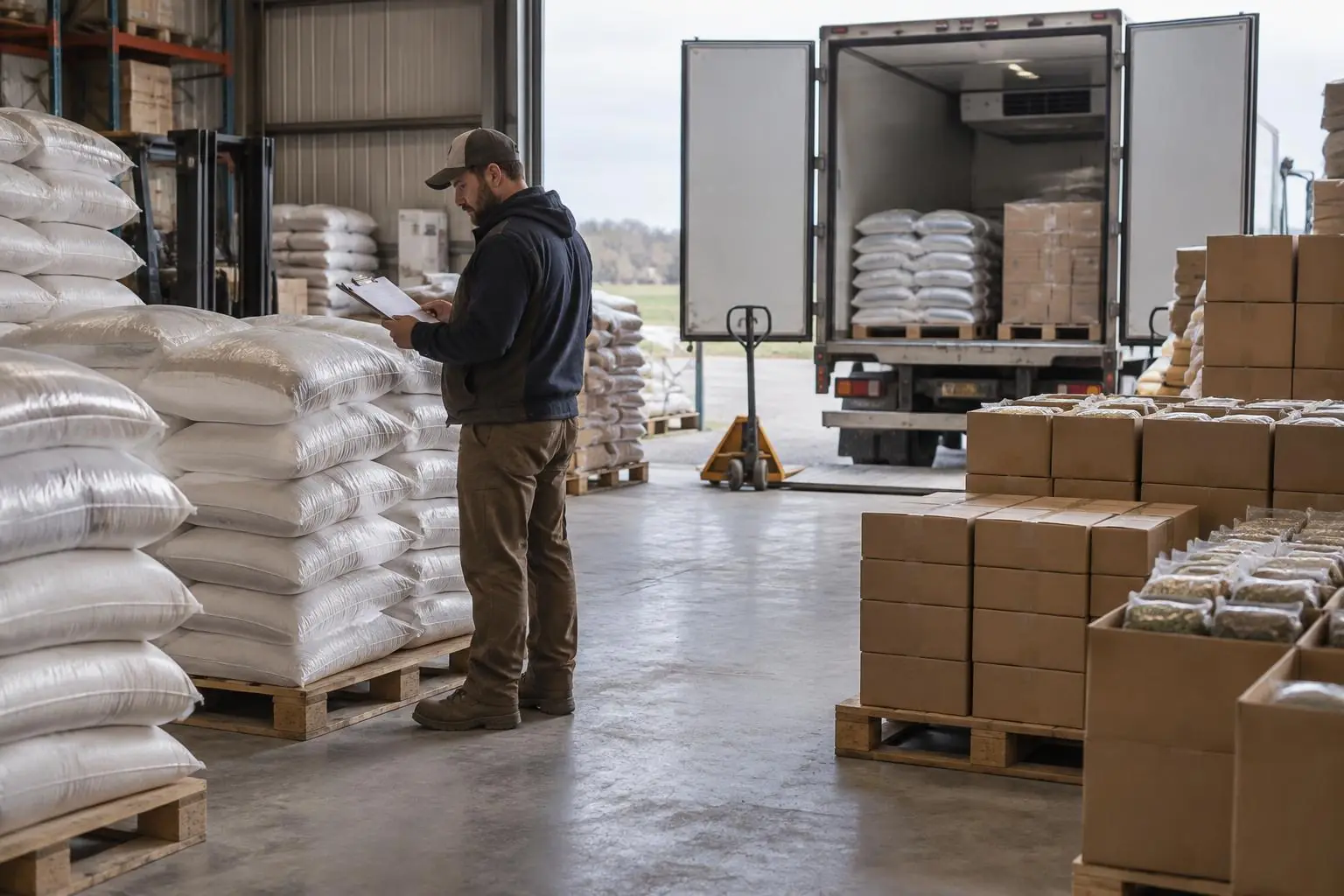
Feed shows why comparison has to go beyond price. A farm sourcing feed would compare formulation and specification, ingredient and nutritional documentation, batch and traceability information where available, delivery reliability, storage and handling needs, minimum order, freight and the full delivered cost.
Feed safety matters across the whole chain. The FAO and IFIF good practices for the feed industry and the Codex Code of Practice on Good Animal Feeding cover safety from production to use, and the WOAH chapter on hazards in animal feed treats purchasing, handling, storage and distribution as relevant to animal and public health. These are general guidance documents; they do not endorse any platform.
Suitability and local requirements must be confirmed with qualified nutritionists or veterinarians and the local regulator; this article gives no veterinary or formulation advice. Within the group, feed is handled by FeedMatch Group; SeedMatch focuses on seeds, greenhouses, irrigation, fertilizers and agricultural technology.
Technology organizes, people check context
Software can structure a request, keep the fields consistent and lay offers side by side. It cannot judge whether a heating system suits a winter design temperature, whether a seed lot's documents match the destination's rules, or whether a supplier's lead time is realistic for the season. A sourcing specialist reviews that context, and the buyer decides. For a step-by-step view, see the agricultural sourcing framework.
Frequently asked questions
What does it cost to source alone?
Usually not a fee, but a narrower view: fewer suppliers asked, quotes that are hard to compare, hidden delivered or lifecycle costs, and time spent chasing documents. The cost is in decision quality and effort, not a fixed amount.
Does a sourcing platform guarantee a lower price?
No. A wider, structured comparison can make offers easier to judge, but price, availability, quality and delivery depend on suppliers and must be confirmed for each RFQ.
What should an agricultural RFQ include?
Crop and variety or equipment type, climate and site conditions, quantity or capacity, timing or season, origin and destination, required documents and certifications, packaging or technical requirements, and preferred delivery terms.
Are suppliers on SeedMatch verified?
SeedMatch reviews supplier documents and profile information as described in its supplier qualification criteria. That is not an on-site audit or product inspection, so buyers should still validate suppliers and offers directly.
Who makes the final decision?
The buyer. SeedMatch coordinates the request and comparison; the buyer decides whether to proceed, with whom, and on what terms, and contracts directly with the chosen supplier.
Is the service free, and is there a minimum size?
It is free for buyers. SeedMatch handles commercial projects and programmes from USD 250,000 in total value.
Discuss your sourcing requirement
Send one structured request for seeds, greenhouse systems, irrigation, fertilizers or agricultural technology. A sourcing specialist reviews it before any supplier is approached, and you stay in control of every decision. Free for buyers; commercial projects from USD 250,000.
SeedMatch Group is the specialised commercial agriculture platform of Global B2B Group, its parent group. globalb2bgroup.com
Sources
General procurement and feed-safety guidance, accessed 25 October 2026. These organisations do not endorse SeedMatch Group.
- CIPS — Total cost of ownership
- CIPS — Strategic sourcing
- FAO & IFIF — Good Practices for the Feed Industry (FAO Animal Production and Health Manual 9, 2010)
- Codex Alimentarius — Code of Practice on Good Animal Feeding (CXC 54-2004)
- WOAH Terrestrial Animal Health Code — Control of hazards of animal health and public health importance in animal feed