
A · Agricultural inputs
Irrigation and fertigation
Irrigation and fertigation equipment moves water and dissolved nutrients from the source to the crop: pumps, filtration, drip or sprinkler distribution and nutrient-dosing units. This page helps commercial growers and project teams compare system types, check dependencies such as water quality, zones and drain water, and prepare a request that our team reviews before any supplier is contacted.
Requests go through SeedMatch Group. Our team reviews each request and coordinates supplier contact; buyers and suppliers are not put in direct contact. The buyer service is free, and projects are qualified from USD 250,000.
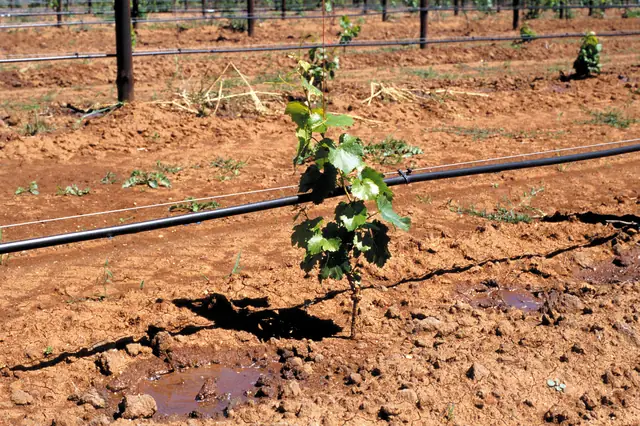
How should a buyer specify irrigation and fertigation?
Irrigation design starts from the water source, its quality and the crop water demand. Emitters, filtration and fertigation dosing equipment are only comparable when the hydraulic design behind them is stated — in a greenhouse that also means irrigation zones, substrate or soil, EC and pH control and what happens to drain water.
Product listings
Details on these listings are supplier-stated. Each card shows whether supplier documentation is on file; unverified details are not confirmed by SeedMatch.
No published listings yet
Listings appear here after supplier information has been reviewed by our team. You can still describe your requirement now.
Describe your requirementProduct types compared
Anonymous product types with documented specification examples — not listings, offers or prices. Add any to your shortlist to build one RFQ.
| Type | Maturity | Best for | Key limitation |
|---|---|---|---|
| Pressure-compensating drip (surface and subsurface) | Mature | Orchards, vineyards, nurseries, greenhouses, uneven terrain. | Clogging risk without filtration |
| Fertigation dosing units with EC/pH control | Mature | Greenhouse substrate crops, orchards, open-field drip. | Probes drift without calibration |
| Irrigation filtration (disc, screen, media) | Mature | All drip and micro-irrigation; surface and reservoir water with algae. | Pressure loss across filters |
| Irrigation controllers and automation | Established | Multi-zone orchards, greenhouses, open-field drip. | Cloud and subscription dependence |
- Mature
Pressure-compensating drip (surface and subsurface)
Emitter flows (examples): 2, 4, 8 or 24 L/h
- Mature
Fertigation dosing units with EC/pH control
Dosing channels (example): up to 6 channels
- Mature
Irrigation filtration (disc, screen, media)
Filtration grade (example range): 50–3,500 µm
- Established
Irrigation controllers and automation
Valve capacity (examples): from about 16 up to 256 valves
SeedMatch buyer guide · editorial, not supplier data
How to specify this category
What to put in your request
- Area, crop, planting layout and growing system (open field, greenhouse soil or substrate)
- Water source, available flow and a recent water analysis (salinity, sodium, specific ions)
- System type: drip, micro-sprinkler, sprinkler or pivot
- Number of irrigation zones and peak daily water demand
- Filtration and fertigation dosing scope, including EC and pH control
- Drain water handling: run-to-waste or recirculation with disinfection
- Automation, pumping and power availability
Questions to ask suppliers
- Is the quote based on a hydraulic design for this layout and water analysis?
- Which crop water demand and peak-day assumption was used to size pumps and pipes?
- What filtration does the water quality require?
- How are EC and pH measured and controlled, and how is drain water handled?
- Which spare parts and service are available locally?
- Who commissions the system and trains operators?
Strengths and limitations buyers weigh
| Option | Strengths | Limitations |
|---|---|---|
| Drip (field or greenhouse substrate) | Places water and nutrients at the root zone and suits fertigation. | Filtration must match the water quality; emitters clog if it does not. |
| Micro-sprinkler | Covers wider root zones in orchards and can be used for frost or cooling. | Wets more surface and uses more water than drip. |
| Sprinkler or centre pivot | Low labour on large, regular field blocks. | Higher pumping energy and wind drift; not used inside greenhouses. |
| Fertigation dosing unit | Doses nutrients with the irrigation water by zone, with EC and pH control on dosing units. | Needs a water analysis, a nutrient recipe and safe handling of acids and concentrates. |
General trade-offs; a specific product's performance comes only from its supplier documentation and the project's design.
What materially changes the quote
| Factor | Why it moves the price or scope |
|---|---|
| Area and number of zones | Zone count sets valves, controllers and pipe network size; area sets lateral and emitter quantities. |
| Water source and quality | Salinity, sodium, iron and suspended solids in the water analysis decide filtration and any treatment (FAO Paper 29). |
| Crop water demand at peak | The peak-day demand (FAO Paper 56 methods) sizes pumps, pipes and storage; a higher peak means larger equipment. |
| System type | Drip, micro-sprinkler, sprinkler or pivot need different hardware, pressure and labour. |
| Topography and distances | Elevation changes and the distance from source to blocks set pressure, pipe diameters and whether pressure-compensating emitters are needed. |
| Fertigation and control level | Venturi, proportional injectors or a dosing unit with EC and pH control are very different scopes. |
| Power availability | Grid, generator or solar pumping changes the pump station, controls and backup. |
| Drain water handling | Recirculation with disinfection adds collection, storage and treatment compared with run-to-waste. |
| Delivery, installation and spares | Incoterm, installation and commissioning scope, operator training and local spares change the delivered total. |
Unknowns and assumptions: If the water analysis, peak demand or layout is not yet known, say so in the request; suppliers otherwise size equipment on their own assumptions, which makes quotes impossible to compare.
Start a request
Choose what you need; the request form opens with these details filled in. Requirements are yours to set — they are not claims about any supplier.
Continue to the request formSuppliers, producers and exporters are responsible for their products meeting product, labelling, certification, phytosanitary and export requirements of the origin and destination countries. A listing does not confirm compliance, availability or suitability.
Availability and the ability to trade depend on the law of each origin, destination and transit country and on the relevant permits and approvals. SeedMatch Group is not a manufacturer, importer, exporter, seller or regulatory approver; requests are reviewed by our team before any commercial introduction. Each participant is responsible for the requirements of its own role under applicable law: suppliers for their products in the origin and destination countries, buyers for their own import permissions and due diligence. We do not guarantee any supplier's compliance. Participant responsibilities · Regulation & restricted items