
Drip Irrigation and Fertigation for Commercial Projects
This commercial fertigation system guide explains how drip layout, filtration, pumping, dosing equipment, EC/pH control, automation and drainage are specified before an equipment RFQ. It applies to greenhouses, hydroponics, orchards and high-value open-field projects; it does not prescribe a crop nutrition recipe.
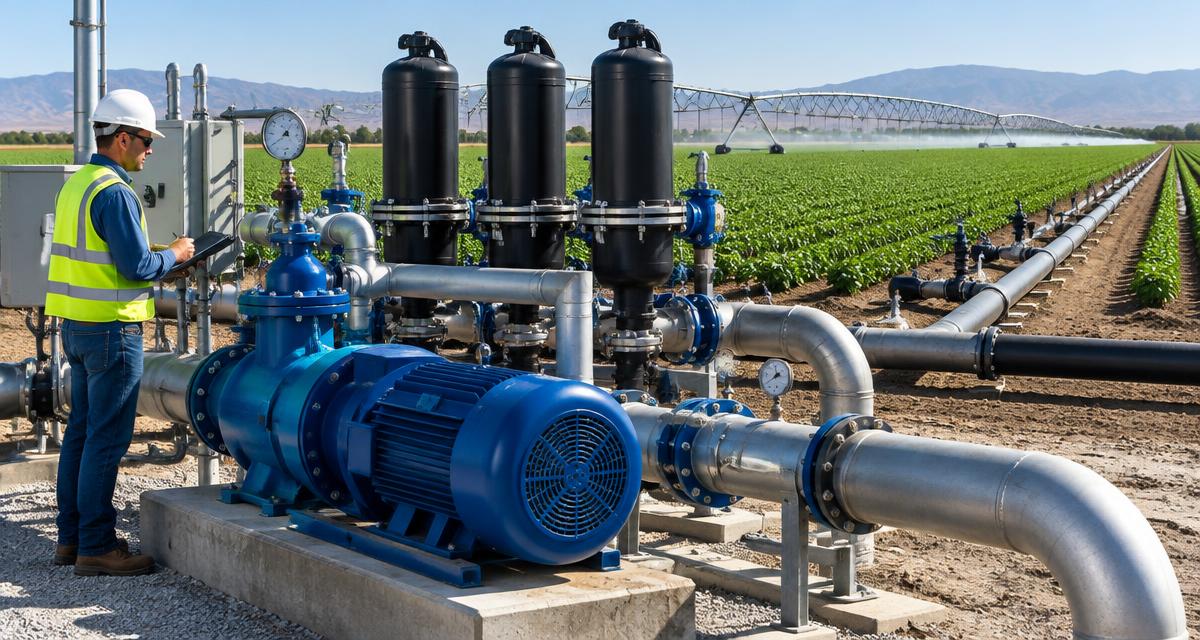
A commercial fertigation system combines drip irrigation, filtration, pressure control, fertilizer injection, EC/pH monitoring and zone controls to deliver water and dissolved nutrients to a defined crop area. Equipment is sized from water analysis, peak irrigation demand, emitter flow, zone count, dosing accuracy and the decision to discharge or recover drainage. Fertilizer products and fertigation equipment require separate commercial specifications.
Request a human-reviewed project quote covering drip irrigation & fertigation guide. Submit your crop, project size, location, water source, scope and budget band — SeedMatch will review the brief before approaching suitable suppliers or project partners.
Submit a project briefSeedMatch Group is an independent agricultural project sourcing and RFQ platform. We are not a farm, seed producer, fertilizer manufacturer, irrigation manufacturer, greenhouse builder, EPC contractor, lender, broker-dealer, investment advisor or financial advisor. Supplier and project partner outreach is handled only after a commercial project brief is reviewed.
What a commercial fertigation system includes
Fertigation injects a buyer-approved soluble fertilizer programme into irrigation water. A complete equipment scope can include raw-water storage, pumping, media or disc filtration, stock tanks, dosing channels or injectors, EC/pH monitoring, zone valves, flow and pressure measurement, controls, alarms and drainage handling. The required configuration follows the water analysis and hydraulic design.
Key design inputs
- •Water source and a laboratory analysis (EC, pH, Na, Cl, HCO₃, Fe, B, hardness).
- •Crop water requirement by growth stage.
- •Number of independent fertigation zones needed for different crop blocks.
- •Target dosing accuracy and automation level.
- •Recirculation strategy: run-to-waste vs closed or semi-closed loop.
Filtration and water quality
Filtration grade must match emitter type and water quality — sand/media filters for organic load, disc or screen filters for finer particulate, and additional treatment (iron removal, RO, acid injection) where the water analysis calls for it. Under-specified filtration is the most common cause of emitter clogging and yield loss in the first two years of operation.
What to send in a fertigation equipment RFQ
- •Site and irrigated area, crop blocks, planting system and planned expansion phases.
- •Water source, laboratory analysis, available flow, pressure and storage volume.
- •Emitter flow and spacing, lateral lengths, zone count and peak operating schedule.
- •Required dosing channels, EC/pH accuracy, automation, remote alarms and data interfaces.
- •Drain-to-waste or recirculation scope, including collection and disinfection where applicable.
- •Power conditions, installation responsibility, commissioning, training, spares and delivery timeline.
Dosing accuracy and its effect
| Dosing accuracy | Typical effect |
|---|---|
| ±5% (precision controller) | Stable EC/pH, lower fertilizer waste, suited to high-value crops |
| ±15% (basic proportional) | Wider nutrient swings, higher fertilizer use to compensate, acceptable for lower-value crops |
| Manual dosing | High variability, not recommended above small commercial scale |
What affects CAPEX
- •Dosing/injection equipment specification.
- •Filtration grade and pre-treatment equipment.
- •Number of fertigation zones and controller sophistication.
- •Recirculation infrastructure (drain tanks, disinfection) if closed-loop.
What affects OPEX
- •Fertilizer grade cost (commodity vs fully water-soluble/chelated).
- •Filter cleaning and replacement frequency.
- •Energy for pumping and disinfection.
- •Water cost, especially where recirculation is not used.
SeedMatch RFQ process
The same reviewed, human-managed process applies regardless of which package of this guide a brief covers.
| Step | What happens | Typical time |
|---|---|---|
| 1. Project brief | Submit crop, project size, location, water source, energy, scope and budget band. | 15–30 minutes |
| 2. Human review | The SeedMatch team reviews the brief and follows up on gaps or unclear scope. | 1–3 working days |
| 3. Scope normalisation | Scope, exclusions and delivery terms are written into one comparable requirement. | 1–3 working days |
| 4. Supplier approach | Suitable manufacturers, integrators or project partners are approached directly, selected per brief. | 3–10 working days |
| 5. Comparison | Returned proposals are structured into a like-for-like comparison of scope and terms. | As proposals arrive |
| 6. Direct contracting | The project owner negotiates and contracts directly with the chosen supplier. | Owner-led |
Timelines are indicative. Supplier availability, season and project complexity change response times, and SeedMatch does not guarantee that any supplier will quote.
Quote readiness checklist
- •Water laboratory analysis, less than 12 months old (EC, pH, Na, Cl, HCO₃, Fe, B, hardness).
- •Site plan or coordinates with plot dimensions and access.
- •Climate data or nearest reference weather station.
- •Crop, growing system (soil, substrate, hydroponic) and target cycles per year.
- •Electricity capacity, reliability and any backup arrangement.
- •Scope split: supply only, supply and install, or turnkey.
- •Budget band in USD and target commissioning quarter.
- •Decision process and who signs the contract.
Common project risks
- •Undefined scope boundary between equipment supplier, civil works and local installation contractor.
- •Missing or outdated water analysis, which blocks accurate fertigation and treatment sizing.
- •Budget band set below the technology level implied by the crop, climate or automation target.
- •Assuming financing is available without a confirmed lender or payment plan in place.
- •Underestimating energy cost exposure in climates with high heating or cooling load.
- •Committing to a structure or system before a full CAPEX-versus-OPEX comparison across the project life.
- •Land, permitting, import duty or customs uncertainty that delays commissioning after contracting.
- •Treating a single unsolicited quotation as representative of the market instead of comparing several suppliers.
SeedMatch Group is an independent agricultural project sourcing and RFQ platform. We are not a farm, seed producer, fertilizer manufacturer, irrigation manufacturer, greenhouse builder, EPC contractor, lender, broker-dealer, investment advisor or financial advisor. Supplier and project partner outreach is handled only after a commercial project brief is reviewed.
Frequently asked questions
Number of independent fertigation zones, dosing accuracy and automation level, whether nutrient solution is recirculated (closed-loop) or run to waste, water quality and required pre-treatment, filtration grade, and whether fully water-soluble/chelated fertilizer grades are specified instead of commodity-grade fertilizers.
No. SeedMatch does not manufacture fertilizers, irrigation equipment, greenhouse structures or automation hardware. SeedMatch reviews project briefs and approaches suitable independent manufacturers and suppliers on the buyer's behalf; supply contracts are signed directly between the buyer and the supplier.
Fully water-soluble and chelated fertilizer grades dissolve cleanly for drip or hydroponic fertigation, reducing clogging and filter maintenance compared with commodity granular grades. They allow precise, crop-stage-specific nutrient recipes to be dosed directly through the irrigation system.
At minimum: country and site location, plot size, crop and growing system, water source and a laboratory water analysis, electricity capacity, target scope (supply only, supply and install, or turnkey), budget band in USD, and target commissioning date. Suppliers cannot price accurately from a crop name and area alone.
Yes. Once a project brief is reviewed and scope is normalised, SeedMatch approaches suitable suppliers and structures the responses so scope, technical assumptions and commercial terms can be compared like for like. SeedMatch does not guarantee that any specific supplier will respond and does not act as a reseller for any supplier.
SeedMatch's focus is commercial agricultural projects from roughly USD 250,000 upwards, including multi-phase programmes and public food-security projects. Home gardening, hobby greenhouses and backyard hydroponic setups are outside scope.
Read this guide in another language
Planning calculators
Related guides
Next steps
Request a quote — Drip irrigation & fertigation guide
Request a human-reviewed project quote covering drip irrigation & fertigation guide. Submit your crop, project size, location, water source, scope and budget band — SeedMatch will review the brief before approaching suitable suppliers or project partners.