
Curated collection · Organic
Organic inputs, organic-compatible practices and organic cultivation projects
Criteria and official sources reviewed 26 October 2026 · 7 product types · 1 project kit
What is in the organic collection?
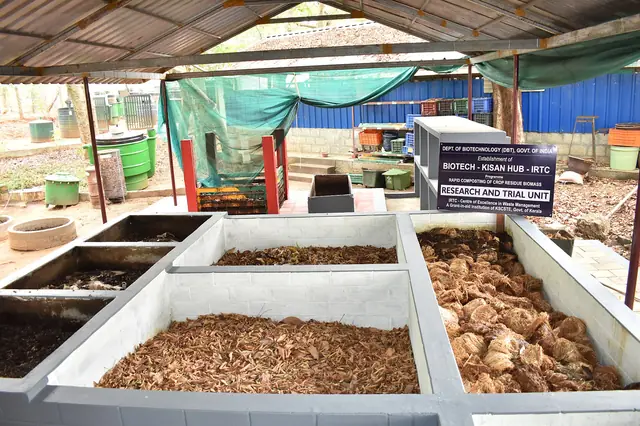
This collection lists inputs and practices used in certified organic production — compost and organic fertilisers, biostimulants, biological control, soil-friendly water management and a soil-grown greenhouse kit. Nothing here is organic by itself: each input must be allowed under the destination's rules and accepted by your certifier, and the crop is certified only after conversion.
How a product earns a place in this collection
We include a product type only when an official organic regulation addresses its use. Each card states the condition that must hold for your project.
- Its use in organic production is defined in an official rule we cite (EU Regulation 2018/848 and 2021/1165, USDA 7 CFR 205, or the destination's equivalent).
- The condition for use is written on the card — for example, the exact product must be listed or accepted by the certifier.
- Products that are only sustainable (less water, less energy) are labelled as supporting practice, never as organic inputs.
- No product, supplier or listing on this site certifies a crop; certification is issued by an accredited certifier or control body to the operator.
Sustainable is not the same as organic
- “Natural”, “bio”, “eco” or “residue-free” are not organic certifications. Organic is a legally protected claim tied to a certified operator.
- Sensors, drip irrigation and robots can make a farm more efficient; they do not make it organic.
- Hydroponic and substrate crops cannot be certified organic in the EU, where organic crops must grow in living soil. The US allows some container systems — confirm with your certifier.
- An input listing (for example an OMRI listing) says a product may be used under one programme; it is not a crop certificate.
Compare the organic inputs and practices
Prices are not shown: no current, comparable sourced price exists for these types. Prices come only from reviewed quotations.
| Product type | Why it is here | Condition for organic use | Maturity | Main limitation |
|---|---|---|---|---|
| Compost and organic fertilizersOrganic-compatible inputs | The core of organic soil fertility: stabilised organic matter and nutrients from plant or animal feedstocks. | Allowed only if the product appears in EU Annex II of 2021/1165 (EU) or meets 7 CFR 205.203 and the National List (US), and the certifier accepts it. | Mature | Variable nutrient content and release |
| Plant biostimulantsOrganic-compatible inputs | Can support nutrient use and stress tolerance in organic systems. | A CE mark under the EU fertilising-products regulation does not make a biostimulant organic; it must be separately allowed for organic use and accepted by the certifier. | Established | Effects are crop-, timing- and formulation-specific |
| Biological control agents (beneficial insects, microbials)Organic-compatible inputs | Beneficial insects, mites and microbials replace most synthetic sprays in organic protected cropping. | Microbial products must be authorised for organic use; releasing living organisms needs local permission. | Established | Short shelf life and cold-chain needs |
| Weeding robots (mechanical and laser)Cultivation drones and crop robotics | Mechanical and camera-guided weeding fits the non-chemical weed management organic rules prefer. | Supporting practice only — the machine has no organic status of its own. | Early commercial | Crop recognition and missed weeds vary |
| TensiometersPrecision soil sensors and telemetry | Soil-water readings help avoid over-watering and nutrient leaching from organic fertilisers. | Supporting practice only — sustainability benefit, not an organic input. | Mature | Needs refilling and servicing |
| Capacitance (FDR) soil moisture probesPrecision soil sensors and telemetry | Continuous soil-moisture trends for scheduling irrigation on soil-grown organic crops. | Supporting practice only. | Mature | Point measurement, not whole-field |
| Tunnel and high-tunnel structuresGreenhouse systems | Soil-grown protected cropping is the usual entry point for organic greenhouse vegetables and berries. | Crops must root in living soil for EU organic; tunnel films and structures need no certification. | Mature | Limited temperature control |
Project packages
Organic soil-grown greenhouse vegetables
Soil-grown organic greenhouse vegetables with compost, biological control and drip — the components a certifier will look at.
8 components: Tunnel and high-tunnel structures, Compost and organic fertilizers, Biological control agents (beneficial insects, microbials), Pressure-compensating drip (surface and subsurface), Irrigation filtration (disc, screen, media), Tensiometers, Fertigation dosing units with EC/pH control, Multi-span polyethylene greenhouse
Organic seed and conversion planning
- Seed varieties catalog
EU rules require organic plant reproductive material where available; US rules require organic seed unless not commercially available. Ask for the organic certificate of the seed lot.
- Brazil organic seeds and inputs guide
MAPA rules, claim distinctions and seed-lot evidence for Brazilian projects.
Ask the AI buyer advisor
Describe your project in plain words. The AI-powered advisor suggests product types and project kits from this catalogue only, shows where the Organic and Premium collection rules apply, and turns your choice into a shortlist and RFQ draft you review. No suppliers, prices or availability; nothing is sent until you submit the form.
Filter the organic collection — or clear the filter to see everything
Shortlist- Project kit · 8 components
Organic soil-grown greenhouse vegetables
A protected-cropping project planned for organic certification: crops rooted in living soil under tunnels or a multispan house, fed with compost and permitted organic fertilisers, protected by biological control and watered by drip. Certification comes from an approved certifier after conversion — not from the equipment.
- Greenhouse systems · Mature
Tunnel and high-tunnel structures
Strawberries, raspberries, blueberries, cherries and season-extension vegetables.
Organic collection - Precision soil sensors and telemetry · Mature
Capacitance (FDR) soil moisture probes
Irrigation scheduling in orchards, vegetables and substrates.
Organic collection - Precision soil sensors and telemetry · Mature
Tensiometers
Irrigation scheduling, greenhouse substrates, research.
Organic collection - Organic-compatible inputs · Mature
Compost and organic fertilizers
Field crops, orchards, greenhouse soil crops.
Organic collection - Organic-compatible inputs · Established
Plant biostimulants
Stress periods, transplanting, fruit set and quality programmes.
Organic collection - Organic-compatible inputs · Established
Biological control agents (beneficial insects, microbials)
Greenhouse vegetables, berries, ornamentals; thrips, whitefly, mites.
Organic collection - Cultivation drones and crop robotics · Early commercial
Weeding robots (mechanical and laser)
Vegetables, sugar beet, onions, organic row crops.
Organic collectionPremium collection
Certification rules by destination market
- European Union
- Regulation (EU) 2018/848 sets production rules; inputs are limited to those authorised in Implementing Regulation 2021/1165. Annual crops need at least two years of conversion before sowing and perennials three years before harvest. Imports need an electronic certificate of inspection (e-COI) in TRACES, issued under equivalence or by a recognised control body. Source
- United States
- 7 CFR Part 205 requires land free of prohibited substances for three years before harvest and certification by a USDA-accredited certifier. Since 19 March 2024, organic imports need an NOP Import Certificate under Strengthening Organic Enforcement. Source
- United Kingdom
- Organic food sold in Great Britain must be certified by a UK-approved control body; check the current list and import arrangements before contracting. Source
- Canada
- Organic claims are regulated by the Canadian Food Inspection Agency under the Canada Organic Regime. Source
- Japan
- Products labelled organic in Japan must meet the organic Japanese Agricultural Standard (JAS) administered by MAFF. Source
- Other markets
- China, the Gulf states, India, Brazil and others run their own organic schemes. Name your destination in the request and we check the applicable rule with you before suppliers are approached.
General guidance, not legal advice. Rules change; confirm the version in force with your certifier or authority before contracting.
Buyer questions
No. Organic status belongs to the certified operator and crop after conversion. An input can only be allowed for use; your certifier decides whether each product is acceptable.
Not in the European Union, where organic crops must grow in living soil. The US allows certification of some container systems. Confirm with your certifier before you design the project.
In the EU, at least two years before sowing for annual crops and three years before harvest for perennials. In the US, the land must be free of prohibited substances for three years before harvest.
No. A listing says a product may be used under a specific programme. It does not certify the farm, the crop or the supplier.
The rule under which the product is allowed, the input listing or certifier acceptance letter, batch analysis, feedstock declaration and, for live organisms, the release permission for your country.
SeedMatch handles commercial projects from USD 250,000 total value. Sending a request is free for buyers, and a sourcing specialist reviews it before any supplier is approached.
Sources
- Regulation (EU) 2018/848 on organic production and labelling
- Implementing Regulation (EU) 2021/1165 — products and substances authorised in organic production
- European Commission — organic imports, equivalence and e-COI in TRACES
- 7 CFR Part 205 — USDA National Organic Program
- 7 CFR 205.202 — land requirements (3 years without prohibited substances)
- 7 CFR 205.204 — organic seeds and planting stock
- USDA AMS — Strengthening Organic Enforcement (implemented 19 March 2024)
- GOV.UK — organic food: UK approved control bodies
- Canadian Food Inspection Agency — organic products
- MAFF Japan — Japanese Agricultural Standards (JAS), including organic JAS
- OMRI — what an input listing means
Request through SeedMatch
Requests go through SeedMatch Group. Our team reviews each request and coordinates supplier contact; buyers and suppliers are not put in direct contact. The buyer service is free, and projects are qualified from USD 250,000.
Free for buyers · commercial projects from USD 250,000 · SeedMatch does not manufacture, certify or guarantee compliance of any product.
Availability and the ability to trade depend on the law of each origin, destination and transit country and on the relevant permits and approvals. SeedMatch Group is not a manufacturer, importer, exporter, seller or regulatory approver; requests are reviewed by our team before any commercial introduction. Each participant is responsible for the requirements of its own role under applicable law: suppliers for their products in the origin and destination countries, buyers for their own import permissions and due diligence. We do not guarantee any supplier's compliance. Participant responsibilities · Regulation & restricted items