
Drones · Procurement checklist
Accepting an agricultural drone: a delivery, compliance and maintenance checklist
Sources reviewed · By the SeedMatch Group sourcing team · General guidance, not legal or agronomic advice
Short answer
Accept a spray or mapping drone only when three things are proven: it matches the purchase specification, it can be operated legally where you farm, and it can be kept flying. In the United States, using a drone to dispense pesticides or other agricultural products falls under FAA Part 137, and the pesticide label must allow aerial application. Drone batteries ship as lithium-battery dangerous goods, so ask for the manufacturer's UN 38.3 test summary. Record a functional and spray-calibration test before signing acceptance, and fix spare-parts, warranty and service terms in writing.
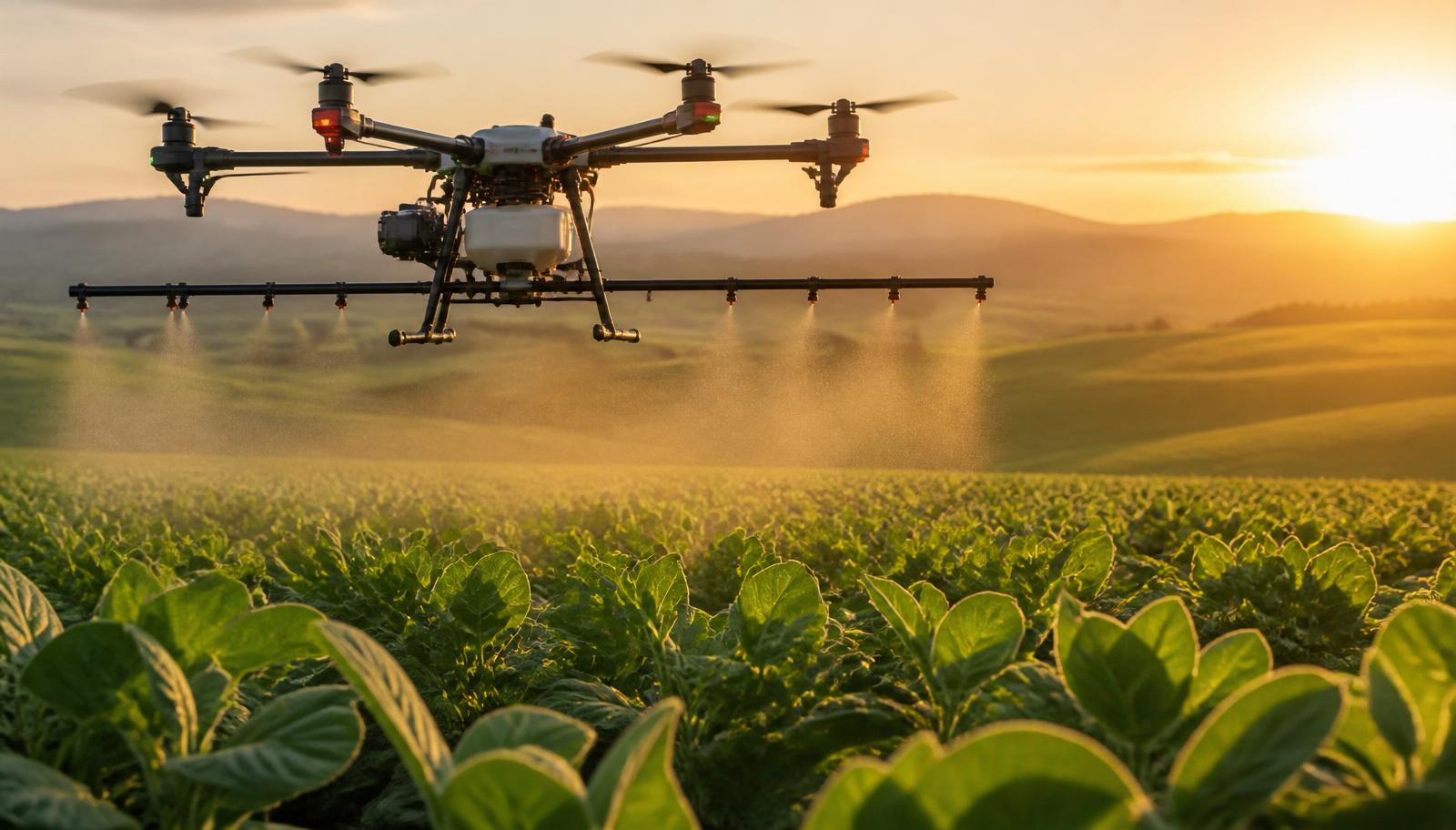
Comparison and checklist
| Stage | What to verify | Evidence to request |
|---|---|---|
| Before shipment | Airframe, tank, nozzles, positioning module, number of battery sets and chargers match the order; firmware version recorded | Packing list with serial numbers, configuration sheet, firmware log |
| Shipping | Lithium batteries classified and packed as dangerous goods for the transport mode | Manufacturer's UN 38.3 test summary; carrier dangerous-goods documents where required |
| Operating approvals | Aircraft registration and identification rules, operator certification and any exemption needed to dispense products | Copies of the operator's certificates and approvals — obtained by the operator, not the seller |
| Functional test | Take-off, hover, route following, return-to-home on low battery and link loss, obstacle sensing | Signed acceptance-test record with date, site and conditions |
| Spray calibration | Flow rate, effective swath and coverage at the planned height and speed for the product to be applied | Calibration sheet; label confirms aerial application is permitted |
| Batteries | Cycle count, cell balance, charging and storage behaviour | Battery health report per serial number |
| Support | Spare parts list with lead times, warranty exclusions (crash, water ingress), service location, training | Written warranty and service terms |
Questions to answer before buying
- Which crops, products and areas will the drone treat, and does each product label permit aerial application?
- Who holds the operating approvals: your company, a contractor or the seller?
- How many battery sets and chargers are needed to keep the drone working through a full spray day?
- Which parts wear fastest, where are they stocked and how long do they take to arrive?
Risks to manage
- Buying a drone for a product whose label does not allow aerial application.
- Drift and off-target application when swath, height and droplet settings are not calibrated for the product.
- Operating without the required certification, registration or exemption.
- Grounding during the season because batteries, propellers, pumps or nozzles are out of stock.
- Warranty disputes after crashes or water ingress if exclusions were not agreed in writing.
What drives the cost
Qualitative drivers only — prices depend on specification, volume, origin and timing and come from supplier quotations.
- Number of battery sets, chargers and field power (generator or vehicle supply)
- Spare-parts kit and consumables such as nozzles and pumps
- Pilot training, certification and approvals
- Insurance required by the operator's regulator or contracts
- Service and repair arrangements, including shipping for repairs
Sustainability considerations
- Well-calibrated, targeted application can reduce worker exposure and off-target spraying.
- Plan collection and recycling of end-of-life lithium batteries with the supplier.
- Spray records with product, rate, location and weather support both compliance and residue management.
Next steps
- Confirm local aviation and pesticide rules for your country using the drone regulations guide.
- Write the acceptance tests and evidence list into the purchase contract before ordering.
- Plan battery sets and spare parts for your daily treated area.
- Request comparable offers through a reviewed RFQ, with support terms quoted alongside price.
Tools and checklists
Ready to compare supplier offers?
A SeedMatch Group sourcing specialist reviews each request and sources comparable offers from independent suppliers. The service is free for buyers; projects start at USD 250,000.
Build a drone procurement RFQFrequently asked questions
Do I need a special approval to spray with a drone in the United States?
Dispensing pesticides and other substances from a drone is covered by FAA Part 137, and drones above 55 lb need additional approvals. Check the FAA's current guidance for your operation; state pesticide agencies may add their own requirements.
Can any pesticide be applied by drone?
No. State guidance in the United States says drone operators must follow the aerial application directions on the label; if a label has no aerial application section, the product cannot be applied by drone. Other countries set their own rules.
Why do drone batteries need special shipping documents?
Lithium batteries are Class 9 dangerous goods for transport. Manufacturers and distributors must make a UN 38.3 test summary available, and carriers apply packing and quantity rules by transport mode.
Sources
Rules and limits change. Confirm the current version with the issuing authority before acting.
- Dispensing chemicals and agricultural products (Part 137) with UAS (opens in a new tab) — Federal Aviation Administration, 2026-05-05
- 14 CFR Part 137 — Agricultural Aircraft Operations (opens in a new tab) — eCFR
- AC 137-1B — Certification process for agricultural aircraft operators (opens in a new tab) — Federal Aviation Administration
- Remote ID (opens in a new tab) — Federal Aviation Administration
- UAS (drone) pesticide applications (opens in a new tab) — Vermont Agency of Agriculture, Food and Markets
- Drone guidance for pesticide applications (opens in a new tab) — Washington State Department of Agriculture
- Lithium battery guidance document (opens in a new tab) — IATA, 2026
- Pesticide Program Dialogue Committee — UAV session (opens in a new tab) — US Environmental Protection Agency, 2019-05