
Agricultural Drone Regulations in India
Authority: Directorate General of Civil Aviation (DGCA). Governing framework: Drone Rules 2021 · Certification Scheme for Unmanned Aircraft Systems 2022.
Do I need a licence to fly an agricultural drone in India?
Yes. Commercial agricultural flying requires a Remote Pilot Certificate obtained through a DGCA-authorised Remote Pilot Training Organisation, a drone holding a DGCA Type Certificate, and a Unique Identification Number registered on the Digital Sky platform. Nano and non-commercial micro exemptions do not cover spray operations.
Last reviewed
Reference summary for commercial buyers scoping an RFQ. Rules change frequently — always confirm current requirements with the national authority before importing hardware or launching a spray programme.
Who this is for and how sourcing works
This page serves commercial buyers scoping agricultural drone programmes in India. SeedMatchGroup works on serious commercial projects from roughly USD 250,000 upwards — professional growers, project developers, agribusinesses, EPC firms, investors and government programmes. It is not a retail channel for home gardens, hobby greenhouses or small seed packets.
Best for
- Commercial farms and plantations running spray, seeding or scouting at scale
- Agricultural service providers building a contracted spray fleet
- Agribusinesses and cooperatives standardising drone operations across sites
- Project developers adding aerial application to a larger farm plan
Typical project types
- Spray-drone fleets for row crops, orchards and plantations
- Mapping, NDVI and crop-scouting programmes
- Aerial seeding and cover-crop establishment
- Fleet plus training, spares and compliance support
What affects project cost
- Registration, type approval and import clearance under DGCA
- Pilot licensing and training for the operating crew
- Payload class, tank size and battery/charging infrastructure
- Spares, service coverage and local technical support
- Insurance and BVLOS or restricted-airspace permissions
RFQ checklist
- Hectares to be covered per season and crop type
- Application type: spray, spread, seeding or mapping
- Number of aircraft, pilots and operating sites
- Import route and destination port
- Training, service and spare-parts expectations
Supplier matching process
- Submit one private brief — project type, country, area or capacity, crop or use case, stage, budget band and timeline.
- A sourcing specialist reviews the brief and structures it into a comparable RFQ specification.
- Qualified independent suppliers and engineering partners are approached privately against that one specification.
- You receive a like-for-like comparison. Supplier identities stay private until you decide to proceed.
Buyer is not charged
Buyers are not charged to submit a brief, receive a supplier comparison or use the planning tools.
SeedMatchGroup helps buyers compare suppliers and request quotes. SeedMatchGroup is an intermediary: it does not manufacture equipment, produce seed, build projects or provide financing directly. Pricing, specification, warranty and delivery remain the responsibility of the selected independent supplier.
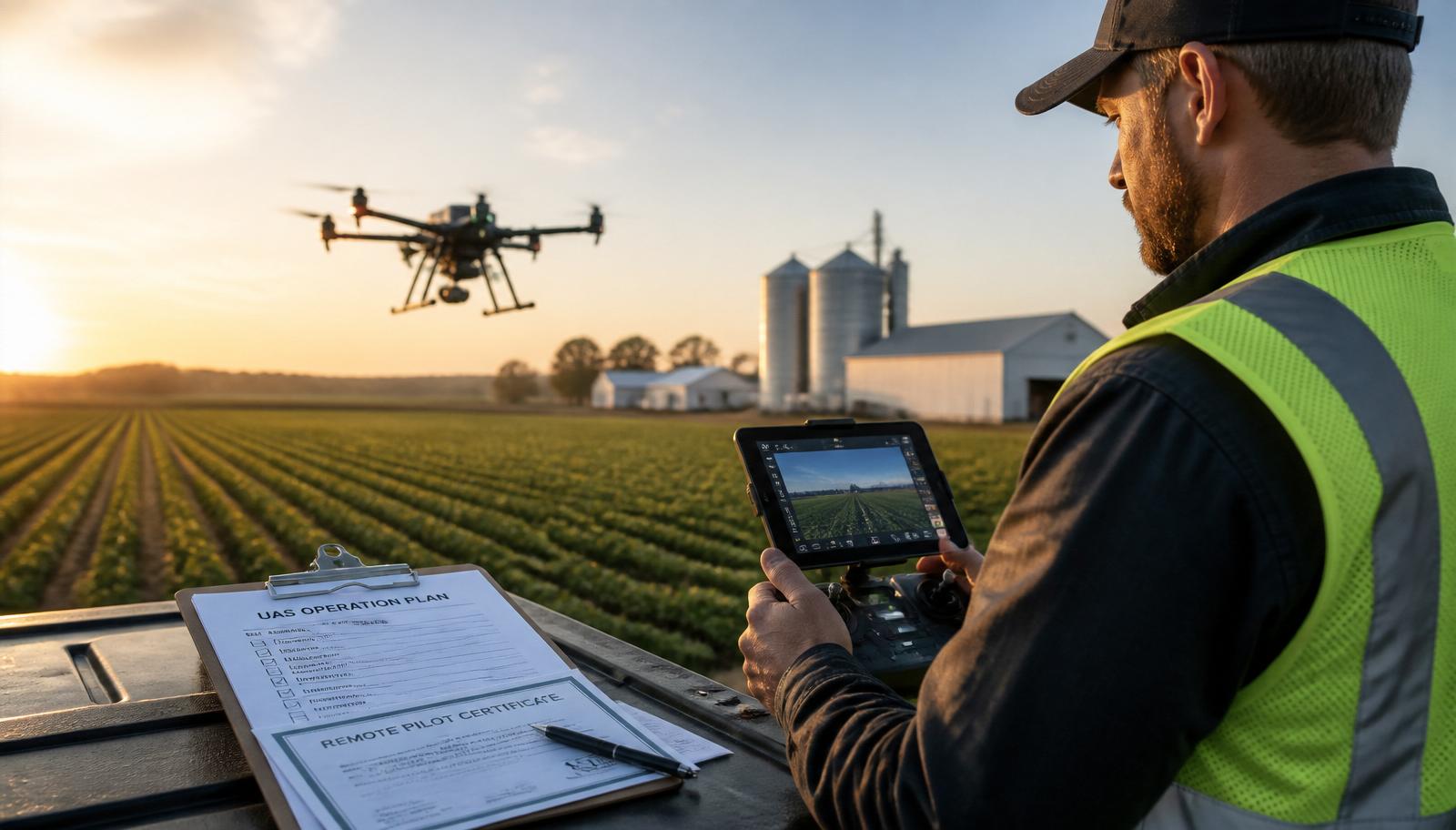
India regulates unmanned aircraft under the Drone Rules, 2021, notified by the Ministry of Civil Aviation and administered by the DGCA through the Digital Sky platform. Four things have to line up before a farm can fly its own spray drone: the aircraft must hold a Type Certificate, it must carry a Unique Identification Number (UIN), the pilot must hold a Remote Pilot Certificate issued after training at a DGCA-authorised Remote Pilot Training Organisation (RPTO), and the chemistry must be approved by the Central Insecticides Board and Registration Committee (CIB&RC) for aerial application.
The single fact that reshapes procurement in India is the import position. Under DGFT Notification No. 54/2015-20 of 9 February 2022 the import of complete unmanned aircraft is prohibited, with narrow exceptions for R&D, defence and security purposes; drone components remain freely importable. A commercial farm therefore does not import a spray platform — it buys a domestically manufactured, DGCA type-certified aircraft, or has one assembled in India from imported components by a certified manufacturer.
This page is a buyer-oriented reference to the sequence, the documents and the cost structure. It is not legal advice, and fee schedules and airspace maps are revised — confirm current figures on Digital Sky before committing a budget.
DGCA regulatory summary
- Weight classes
- Nano (≤250 g), Micro (250 g–2 kg), Small (2–25 kg), Medium (25–150 kg), Large (>150 kg). Spray drones are typically Medium.
- Registration
- Unique Identification Number (UIN) on Digital Sky Platform for every drone above Nano.
- Pilot licensing
- Remote Pilot Certificate from a DGCA-authorized RPTO; Kisan Drone operator training programme available.
- BVLOS
- Permitted under approved BVLOS corridors and specific authorizations.
- Spray-drone rules
- SOP for pesticide application by drones (Feb 2022) — mandatory training, DGCA type certificate, CIB&RC-approved chemistry, agronomic supervision.
- Import & type approval
- Drone imports largely restricted (DGFT order Feb 2022); domestic manufacturing incentivized via PLI scheme.
Key operational rules
- Green / Yellow / Red airspace zones on the Digital Sky Platform
- PAN India spray-drone SOP; CIB&RC approved formulations only
- Type certification for every model above Nano
- Import of complete foreign-built drones is prohibited — buy a type-certified Indian-built platform
- No Permission, No Take-off (NPNT) — flight authorisation filed through Digital Sky
- Third-party insurance mandatory for every commercial operation
How to legally operate an agricultural drone in India
The approvals run in sequence. Each stage consumes the output of the one before it, which is why the order matters more than the individual forms.
- 1Fix the weight category and the operating model
Drone Rules 2021 classify aircraft as Nano (up to 250 g), Micro (250 g–2 kg), Small (2–25 kg), Medium (25–150 kg) and Large (above 150 kg). Agricultural spray platforms are Small or Medium. Nano and non-commercial micro drones enjoy exemptions that do not help a spray programme, so assume the full Type Certificate, UIN and Remote Pilot Certificate stack applies.
- 2Select a DGCA type-certified, Indian-built platform
Because complete drones cannot be imported, the shortlist is the list of models that already carry a DGCA Type Certificate issued under the Certification Scheme for UAS, 2022, following testing through QCI-empanelled laboratories and the National Test House. Verify the certificate against the model and configuration you are buying, not against the manufacturer's brand — a variant with a different tank or airframe is a different certification question.
- 3Register the aircraft and obtain a UIN
Every airframe is registered on Digital Sky and issued a Unique Identification Number. Registration is per airframe, so a three-drone fleet is three UINs, and any transfer or deregistration is filed on the same platform.
- 4Train and certify the pilots at an authorised RPTO
Remote Pilot Certificates are issued after training at a DGCA-authorised RPTO. Course length is typically one to two weeks plus examination scheduling. Budget for at least two certified pilots per active spray fleet — Indian spray windows are short and single-pilot operations stop entirely when that pilot is unavailable.
- 5Put third-party insurance in place
Third-party insurance covering the operation is a condition of both the Drone Rules and the agriculture ministry's spraying SOP. Confirm the policy names drone operations and aerial application specifically rather than assuming general farm liability cover extends to it.
- 6Check the airspace zone for every operating block
The Digital Sky airspace map divides India into green, yellow and red zones. Green-zone flying below the published ceiling needs no prior permission; yellow zones require permission and ATC coordination; red zones are prohibited. Farms near airports, military installations or international borders frequently sit in yellow airspace, which changes the operating calendar.
- 7Clear the chemistry with CIB&RC and follow the spraying SOP
The Department of Agriculture and Farmers' Welfare SOP for pesticide and nutrient application by drones (2022) governs aerial application. Only formulations approved by CIB&RC with a label cleared for drone or aerial use may be applied — the initial tranche cleared in April 2022 covered 477 formulations. The SOP also sets buffer distances from habitation and water bodies, weather thresholds, PPE and pilot-training requirements.
- 8File flight authorisation and keep the records
Operations follow the No Permission, No Take-off principle: authorisation is filed through Digital Sky before flight where required for the zone and category. Flight logs, maintenance records and per-mission spray records (product, dose, area, weather) are the file an auditor or an offtaker asks to see.
- 9Apply for subsidy where you qualify
Agricultural drones attract central and state support through the Sub-Mission on Agricultural Mechanization (SMAM) and the Namo Drone Didi scheme for women's self-help groups. Support levels differ sharply by beneficiary category — FPOs, custom hiring centres, agriculture graduates and SHGs are treated differently from a private estate — so check the current operational guidelines before assuming a percentage.
DGCA licence and certificate classes
Which approval covers which kind of flying, and how long each one lasts.
| Licence / certificate | Scope | Validity |
|---|---|---|
| Type Certificate (aircraft) | Model-level certification issued by DGCA under the Certification Scheme for UAS, 2022, after testing through QCI-empanelled laboratories or the National Test House. Required for Small, Medium and Large drones — i.e. for every agricultural spray platform. | Per certificate; tied to the certified model and configuration |
| Unique Identification Number (UIN) | Airframe registration on the Digital Sky platform. Required for every drone other than Nano and micro drones operated non-commercially by exempt bodies. | Per airframe; updated on transfer or deregistration |
| Remote Pilot Certificate (RPC) | Pilot qualification issued after training at a DGCA-authorised Remote Pilot Training Organisation. Mandatory for commercial operation of Small and larger drones, including all agricultural spraying. | Renewable; renewal fee published in the Drone Rules schedule |
| Remote Pilot Training Organisation (RPTO) authorisation | Organisational approval for entities that want to train and examine pilots themselves rather than buying training. Relevant only to large operators and service providers. | Renewable authorisation |
| Import authorisation (exception route) | Complete unmanned aircraft are prohibited imports under DGFT Notification 54/2015-20, with exceptions for R&D, defence and security requiring an import authorisation. Components remain freely importable. | Per authorisation; not a route available to ordinary commercial farming |
DGCA fees and charges
Statutory fees under the Drone Rules, 2021 are deliberately low — the schedule was rewritten in 2021 to strip out the earlier fee structure. They are not the cost of getting airborne. Type-certification testing at QCI-empanelled laboratories, RPTO training per pilot, insurance and battery fleets are the real numbers in an Indian drone budget, and they are commercial charges rather than statutory ones. Fee schedules are revised; confirm current figures on Digital Sky before budgeting.
| Service | Fee (₹) |
|---|---|
| Unique Identification Number (UIN), Small and above | ₹ 250 |
| Type Certificate — statutory fee by category | ₹ Per Drone Rules schedule; testing charges billed separately by the laboratory |
| Type-certification testing (QCI-empanelled lab / National Test House) | ₹ Commercial charge — typically lakhs, borne by the manufacturer |
| Service | Fee (₹) |
|---|---|
| Issue or renewal of a Remote Pilot Certificate | ₹ 100 |
| Authorisation of a Remote Pilot Training Organisation | ₹ 5,00,000 |
| Renewal of RPTO authorisation | ₹ 25,000 |
| RPTO course fee per pilot | ₹ Commercial charge set by the training organisation |
| Service | Fee (₹) |
|---|---|
| Third-party insurance for drone operations | ₹ Commercial premium — mandatory |
| Battery fleet and replacement cycle | ₹ Consumable; the largest recurring line for spray operations |
Approval timelines in India
What the rules require, and what to plan for in a real project schedule.
| Stage | Statutory requirement | Practical planning |
|---|---|---|
| Sourcing a type-certified platform | Complete foreign-built drones cannot be imported; the aircraft must be domestically manufactured and type-certified. | Delivery lead time from Indian manufacturers, not an approval clock. Confirm the Type Certificate covers the exact configuration before placing the order. |
| Type certification (manufacturer side) | Testing through QCI-empanelled laboratories or the National Test House under the 2022 scheme. | Weeks to months depending on laboratory backlog. Only relevant if you are certifying a new model — buyers of certified models skip this entirely. |
| UIN registration on Digital Sky | Online single-window process; no published day-count in the rules. | Days, provided the aircraft documents and ownership details are complete. |
| Remote Pilot Certificate | Training and examination at a DGCA-authorised RPTO. | Typically one to two weeks of course time plus examination scheduling — the constraint is RPTO course availability, not DGCA processing. |
| Airspace permission (yellow zone) | Permission required for yellow-zone operations; red zones are prohibited. | Per-block coordination. Check the zone before selecting an operating site — a yellow-zone estate changes the whole spray calendar. |
| CIB&RC product clearance | Only formulations approved with a label cleared for aerial or drone application may be sprayed. | Fix the product list before the season. Where an export offtaker sets residue limits, their list governs, not the domestic minimum. |
Ongoing operator obligations
Approvals are the entry ticket. These are the duties that continue for as long as the fleet flies.
Flight authorisation is filed through the Digital Sky platform where the zone and category require it. Building the check into the pre-flight routine keeps a field crew from making the call on the day.
Insurance is a standing condition of both the Drone Rules and the agriculture ministry's spraying SOP. Lapsed cover stops legal operation.
Flight logs, maintenance records and per-mission spray records — product, dose, area, weather and operator — are a continuing obligation and the evidence base for any residue or audit question.
The 2022 SOP sets buffer distances from habitation and water bodies, weather thresholds for wind and temperature, PPE requirements and the qualification of the person flying. These are operational constraints on the calendar, not paperwork.
A drone flown legally with a product whose label does not cover aerial application is still an illegal application. The approved list is the governing document for the tank mix.
Green, yellow and red zones on the Digital Sky map are revised. Re-check the map for each operating block rather than relying on last season's classification.
Documentation pack
What an applicant assembles once and reuses across the DGCA submissions.
- Company incorporation documents and GST registration for the operating entity
- DGCA Type Certificate reference for the exact drone model and configuration
- Digital Sky account and UIN registration for every airframe
- Remote Pilot Certificates and RPTO training records for each pilot
- Third-party insurance policy covering drone and aerial-application operations
- CIB&RC approval references for every formulation in the spray programme
- Airspace zone confirmation for each operating block, plus yellow-zone permissions
- Field records: flight logs, maintenance logs, per-mission application records
The import ban is a procurement rule, not a footnote
Under DGFT Notification No. 54/2015-20 of 9 February 2022, imports of complete unmanned aircraft are prohibited except for R&D, defence and security purposes, while components remain free. For a commercial farm this collapses the shortlist to Indian-built, DGCA type-certified platforms — or to components assembled domestically by a certified manufacturer. Practically, it means the specification conversation happens with Indian manufacturers and their service networks, and that spares, batteries and after-sales support should be contracted locally rather than assumed. The Production Linked Incentive scheme for drones and components exists precisely to make that domestic supply base viable, so the certified-model list grows and is worth re-checking at the point of purchase.
Aviation approval is only half the file
Build the compliance file in two columns. The aviation column is the Type Certificate, the UIN, the Remote Pilot Certificate, insurance and the airspace permission. The agronomy column is the CIB&RC-approved formulation with an aerial label, the dose and water volume adapted to ultra-low-volume application, drift management and buffer distances, and per-mission records signed off under agronomic supervision. Export-facing horticulture adds a third consideration: buyer and destination-market residue limits are usually stricter than the domestic minimum, so the offtaker's list — not the approved list — drives the tank mix.
Own a fleet or hire a drone service provider
India has an unusually deep custom-hiring ecosystem for drones, reinforced by SMAM and Namo Drone Didi support for self-help groups, FPOs and custom hiring centres. For a single estate below a few hundred hectares, hiring a certified operator usually beats owning: no UIN, no pilot certification, no battery fleet and no idle capital between spray windows. Ownership starts to make sense with sustained hectarage across multiple blocks, application windows too tight to depend on a contractor's calendar, or a continuous scouting and mapping programme rather than a seasonal spray need.
Where drones sit in an Indian project budget
Drone capability is rarely a standalone investment. It sits alongside protected cropping, irrigation, mechanisation and post-harvest capacity in the same capital plan, and lenders assess it as part of that plan rather than as an isolated equipment purchase. Where a drone package is financed, it is normally folded into an equipment or mechanisation facility covering the broader scope, and any subsidy entitlement is netted off the financed amount.
Agricultural drone regulations in India — FAQ
Do I need a licence to fly an agricultural drone in India?
Yes. Commercial agricultural flying requires a Remote Pilot Certificate obtained through a DGCA-authorised Remote Pilot Training Organisation, a drone holding a DGCA Type Certificate, and a Unique Identification Number registered on the Digital Sky platform. Nano and non-commercial micro exemptions do not cover spray operations.
Can I import a spray drone into India?
No, not as a complete aircraft. DGFT Notification No. 54/2015-20 of 9 February 2022 prohibits the import of unmanned aircraft, with narrow exceptions for R&D, defence and security purposes that require an import authorisation. Components remain freely importable, so the practical route for a farm is to buy a domestically manufactured, DGCA type-certified platform.
Which authority regulates agricultural drones in India?
The DGCA regulates the aircraft, the pilot and the airspace under the Drone Rules, 2021, through the Digital Sky platform. The Department of Agriculture and Farmers' Welfare issues the SOP for pesticide and nutrient application by drones, and the Central Insecticides Board and Registration Committee (CIB&RC) approves which formulations may be applied aerially.
What are the drone weight categories under the Drone Rules 2021?
Nano up to 250 g, Micro from 250 g to 2 kg, Small from 2 to 25 kg, Medium from 25 to 150 kg and Large above 150 kg. Agricultural spray platforms are normally Small or Medium, which places them squarely inside the Type Certificate, UIN and Remote Pilot Certificate requirements.
How much does drone certification cost in India?
The statutory fees under the Drone Rules, 2021 are low — around ₹250 for a Unique Identification Number and ₹100 to issue or renew a Remote Pilot Certificate, with ₹5,00,000 to authorise a Remote Pilot Training Organisation and ₹25,000 to renew it. The real costs sit elsewhere: type-certification testing at QCI-empanelled laboratories, which the manufacturer bears and prices into the aircraft, RPTO course fees per pilot, insurance and the battery fleet. Fee schedules are revised, so confirm current figures on Digital Sky.
How long does it take to get drone approvals in India?
Digital Sky is designed as a single-window, largely automated system, so UIN registration is typically a matter of days once documents are complete. The binding constraints are RPTO course scheduling for pilot certification — usually one to two weeks of training plus examination timing — and, for a new aircraft model, type-certification testing that can run weeks to months. DGCA does not publish a fixed statutory day-count for each stage, so confirm current processing expectations on Digital Sky.
Which pesticides can be sprayed by drone in India?
Only formulations approved by the CIB&RC with a label cleared for aerial or drone application. The first major tranche, cleared in April 2022, covered 477 formulations, and the list has continued to develop. Applying an otherwise-registered product whose label does not permit aerial use is not lawful, however compliant the aircraft is.
Do I need permission for every drone flight in India?
It depends on the airspace zone. The Digital Sky map divides the country into green, yellow and red zones. Green-zone flying below the published ceiling needs no prior permission; yellow zones require permission and air-traffic coordination; red zones are prohibited. Operations follow the No Permission, No Take-off principle, so check the zone for the block before the season, not on the morning of the spray.
Is drone insurance mandatory in India?
Yes. Third-party insurance covering the operation is required under the Drone Rules and reinforced by the agriculture ministry's spraying SOP. Check that the policy explicitly names drone operations and aerial application — general farm liability cover frequently does not extend to them.
Are there subsidies for agricultural drones in India?
Yes. Support runs through the Sub-Mission on Agricultural Mechanization (SMAM) and the Namo Drone Didi scheme for women's self-help groups, alongside state-level programmes. Support levels differ substantially by beneficiary category — self-help groups, farmer producer organisations, custom hiring centres and agriculture graduates are treated differently from a private estate — so check the current operational guidelines rather than assuming a headline percentage.
Is it cheaper to hire a drone service provider in India?
For most single estates below a few hundred hectares, hiring a certified operator avoids the aircraft purchase, pilot certification, insurance and battery replacement entirely, and India's custom-hiring ecosystem is unusually deep. Ownership becomes attractive with sustained hectarage across multiple blocks, application windows too tight to depend on a contractor's calendar, or continuous scouting and mapping work.
Can drone equipment be included in agricultural project financing?
Yes. Drone packages are normally financed inside a broader equipment or mechanisation facility rather than as a standalone purchase, assessed alongside the irrigation, protected-cropping and post-harvest scope in the same capital plan, with any subsidy entitlement netted off the financed amount.
Related India resources
Institutions, instruments and equipment finance routes active in the Indian market.
Project scope, crops and infrastructure priorities for Indian agribusiness.
What to specify when comparing spray platforms, tanks, nozzles and RTK.
NDVI, multispectral and thermal payloads for scouting programmes.
Official references
Related drone sourcing resources
Spraying, seeding, NDVI, thermal, LiDAR and fleet management for India.
Screened global manufacturers and integrators — released only through the RFQ.
Tank capacity, nozzles, swath and chemistry compatibility for compliant spraying.
RGB, multispectral, thermal and LiDAR payloads for crop monitoring.
What to pin down before quotes are requested — including regulatory route.
Indicative fleet, training and service budget before an RFQ is dispatched.
Leasing, working capital and project finance for drone fleets and agri equipment.
One private brief dispatched to qualified manufacturers for India.
Every country regulation page
Compare India against every other jurisdiction we cover — authority, licensing route, spray-drone approvals and import rules.
DGCA · you are here
Agricultural drone RFQ — India
One private brief for drone hardware, payloads, batteries, software and training with India-compliant documentation. A dedicated sourcing specialist opens it to qualified global manufacturers.