
Packhouse Design and Planning: From Throughput to an RFQ
A supplier-neutral packhouse planning guide covering peak intake, one-way product flow, hygiene zoning, grading, packing, utilities, traceability and RFQ preparation.
How do you size a commercial packhouse?
Start with peak hourly and daily intake, available processing hours, product mix, pack formats, expected rejects, changeovers and dispatch timing. Size each stage and its buffers to prevent one bottleneck from holding harvested product.
Key takeaways
- Define crops, markets and pack formats: List every crop, seasonal window, incoming field container, grade, finished pack, label and pallet pattern.
- Size the line for peak flow: Annual tonnage is useful for economics but insufficient for equipment sizing.
- Map one-directional product flow: The preferred flow moves from receiving and dirty operations toward clean packing and dispatch without unnecessary crossing of people, waste, packaging or finished product.
- Design hygiene into the building: Hygiene is a physical design input.
- Match equipment to product and grade rules: Write the required function and acceptance test for each stage: unloading, washing or dry cleaning, drying, sorting, grading, weighing, filling, sealing, labelling, case handling and palletising.
A commercial packhouse should be designed around the product journey from field reception to dispatch. The first questions are not which grader or packing line to buy, but what arrives on the peak harvest day, how quickly it must move, which market specification it must meet and where clean and dirty flows must remain separate.
FAO’s guide to good practice in fresh-produce packing-house design, management and operation identifies design, operations, equipment, layout, construction finishes, hygiene and documentation as connected decisions. That systems view is the right basis for a buyer specification.
Define crops, markets and pack formats
List every crop, seasonal window, incoming field container, grade, finished pack, label and pallet pattern. A tomato export line, leafy-vegetable wash-and-pack operation and citrus grading facility have different handling, sanitation and automation needs.
Document the customer and regulatory requirements that shape the building: traceability, residue testing, food-safety programme, packaging format, labelling, inspection access and dispatch conditions. Certification requirements should be confirmed with the relevant scheme owner, auditor and authorities; SeedMatch Group does not certify facilities.
Size the line for peak flow
Annual tonnage is useful for economics but insufficient for equipment sizing. Convert the production plan into peak tonnes or units arriving per hour, the realistic operating shift, expected rejects, changeover time and the required dispatch schedule. Then size each stage so one bottleneck does not leave harvested product waiting.
Use the Packhouse Sizing Calculator for an initial throughput and space estimate. Treat the output as a planning assumption to test with the crop plan, harvest profile and equipment suppliers—not as an engineering design.
Map one-directional product flow
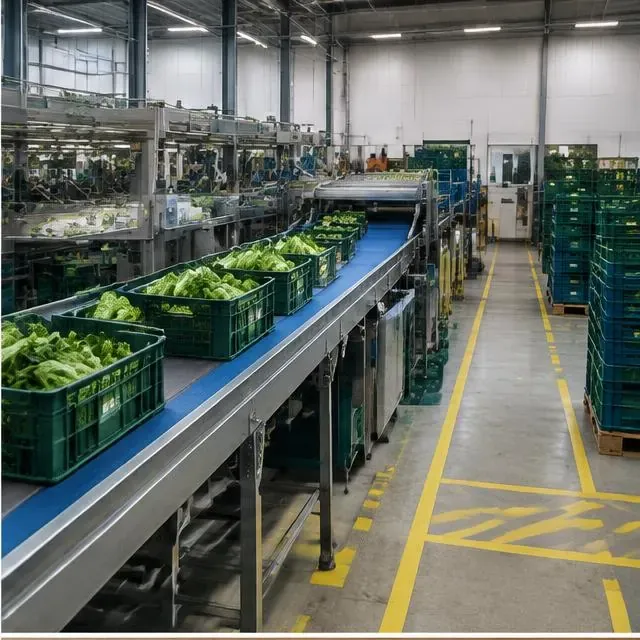
The preferred flow moves from receiving and dirty operations toward clean packing and dispatch without unnecessary crossing of people, waste, packaging or finished product. Draw each movement: incoming produce, operators, forklifts, packaging, wash water, rejects, cleaning tools and finished pallets.
Separate incompatible activities and provide enough buffer space before and after every constrained step. A line that fits on a floor plan may still fail operationally if pallets, empty cartons or rejected product occupy the same circulation route.
Design hygiene into the building
Hygiene is a physical design input. Cleanable finishes, drainage, pest exclusion, handwashing and welfare facilities, chemical storage, waste routes and separation of zones should be resolved before construction. The facility’s food-safety plan and hazard analysis determine the required controls for its crops and processes.
Water used for washing or treatment needs an identified source, quality standard, monitoring plan and discharge route. Where recirculation is proposed, the treatment and verification method belongs in the specification.
Match equipment to product and grade rules
Write the required function and acceptance test for each stage: unloading, washing or dry cleaning, drying, sorting, grading, weighing, filling, sealing, labelling, case handling and palletising. State product range, throughput, accuracy, damage limits, changeover expectations, cleaning access and data outputs.
Automation should follow the labour model, product consistency, maintenance capability and market value. A more automated line is not automatically a better line if local service, spare parts, operator training or format flexibility are weak.
Coordinate the post-harvest interfaces
The packhouse must connect correctly to field logistics, utilities, dispatch and any product-specific pre-cooling or refrigerated holding. SeedMatch Group can structure these interfaces as part of a wider commercial agriculture project. Dedicated refrigeration design, refrigerant selection and standalone industrial cold-storage projects belong with qualified refrigeration professionals and ColdMatch Group.
Keep the main packhouse brief explicit about interface conditions: incoming product temperature, maximum waiting time, required staging, electrical loads, water, drainage, compressed air, data connections, pallet flow and dispatch sequence.
Build traceability from intake to pallet
Define the traceability unit and the data captured at intake, processing, packing and dispatch. The system may need to link field block, harvest date, grower, input lot, quality checks, process line, operator, finished SKU and customer shipment.
Specify labels, scanners, printers, software interfaces, offline operation, retention periods and reconciliation during rework or repacking. A traceability promise is only credible when the physical product flow and data workflow stay aligned.
Compare suppliers on a common basis
Issue the same scope, layouts, product samples, throughput definition and acceptance criteria to every bidder. Require bidders to identify exclusions, utilities, civil works, commissioning, operator training, spare parts, warranty, local service and assumed product characteristics.
Separate building, process equipment, utilities and specialist post-harvest systems so interface ownership is visible. The cheapest equipment schedule may create the highest project risk when no party owns integration.
Packhouse planning checklist
- Crop and finished pack matrix completed
- Peak hourly and daily intake defined
- Process flow and hygiene zones mapped
- Buffer and changeover time included
- Equipment functions and acceptance tests specified
- Water, drainage, power and backup requirements defined
- Traceability workflow mapped
- Waste and rejected-product routes separated
- Dispatch and pallet staging sized
- Interface responsibilities assigned
Continue with the detailed commercial packing house planning guide, test preliminary capacity in the Packhouse Sizing Calculator, or turn the scope into a supplier-neutral RFQ. Every qualified project request is reviewed by a human SeedMatch sourcing specialist before supplier outreach.
Turn "Packhouse Design and Planning: From Throughput to an RFQ" into your RFQ
Answer a few questions and we will draft a structured RFQ you can review, edit and submit to our independent supplier network.
Frequently asked questions
- How do you size a commercial packhouse?
- Start with peak hourly and daily intake, available processing hours, product mix, pack formats, expected rejects, changeovers and dispatch timing. Size each stage and its buffers to prevent one bottleneck from holding harvested product.
- What should a packhouse layout include?
- It should map receiving, inspection, cleaning or washing, sorting, grading, packing, finished-product staging, dispatch, people, packaging, waste and utilities with appropriate hygiene separation and minimal crossing flows.
- What belongs in a packhouse equipment RFQ?
- Include the product matrix, throughput definition, functional scope, accuracy and damage criteria, changeovers, cleaning access, utilities, controls, traceability interfaces, commissioning tests, training, spare parts, warranty and exclusions.
- Does SeedMatch Group design or certify packhouses?
- No. SeedMatch Group gathers requirements, structures the pre-RFQ brief and coordinates independent proposals. Project-specific engineering, food-safety design and certification remain with qualified independent professionals, contractors, scheme owners and authorities.
Move from reading to sourcing
The pages below carry the commercial detail for this topic — cost ranges, supplier verification, specification checklists and financing routes.