
When to expand greenhouse area — and when to improve climate, irrigation or process first
Reviewed: · SeedMatchGroup
Short answer
Improve first when your own records show a large, repeatable gap between your best and worst cycles or blocks, and the cause is climate, irrigation or process. Expand first when the existing area already performs close to your own best cycle, demand is documented, and water, energy, labour and site can support more area.
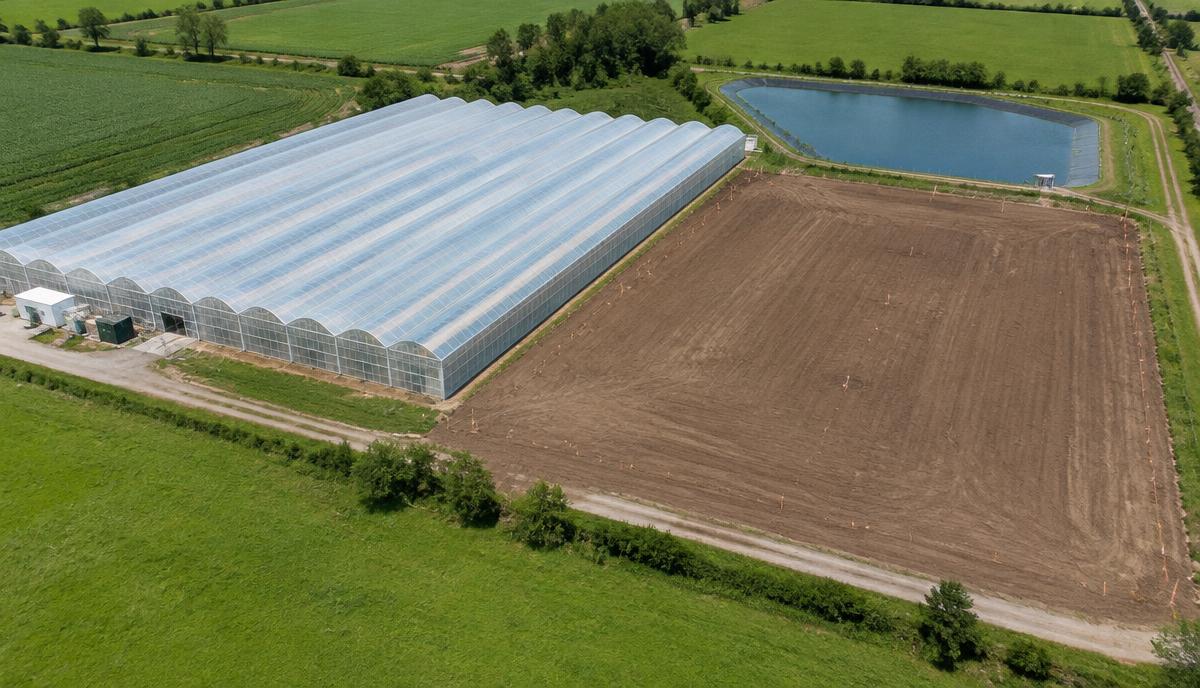
Adding hectares is visible and tempting; fixing an under-performing house is less visible but can be cheaper and less risky. This guide gives you a side-by-side test, using your own data, to decide which path to study in detail first.
The core comparison
Compare two options on the same basis: extra marketable kg per year, the cost to get them and the risk involved.
| Question | Improve existing | Expand area |
|---|---|---|
| Where does extra output come from? | Closing the gap to your own best cycle | New m² at an assumed yield |
| What evidence supports the yield? | Your own records | Your best cycle, if conditions match |
| Main cost | Retrofit, sensors, training | Structure, systems, land works, permits |
| Main risk | Wrong diagnosis | Demand, water, energy, labour, permits |
| Time to first result | Often one cycle | Design, permits and build first |
Step 1 — Measure the internal gap
Using the comparison table from your cycle analysis:
- Take your best comparable cycle as the internal reference.
- Calculate the gap: (best − current) marketable kg/m² × area.
- Identify the likely cause (climate, irrigation, process, equipment, management).
- Estimate the share of the gap that a specific change could close — as a range, not a single number.
Step 2 — Check the expansion prerequisites
- Demand: written buyer interest, contracts or sales history for the extra volume and season.
- Water: licensed volume and quality for the added area (see the water calculator).
- Energy: grid connection, fuel supply, peak capacity.
- Labour: people available in peak weeks, housing and transport.
- Site and permits: land, drainage, access, zoning and building rules.
If any prerequisite is unknown, expansion is not ready to compare yet — record the gap and how you will close it.
Retrofit-or-expand worksheet: cost per extra marketable kg
Compare each option on the same basis — the cost of one additional marketable kg per year. Use one column per option (climate, lighting, irrigation/fertigation, controls, extra growing area).
| Line | Formula |
|---|---|
| Area affected (A) | m² improved, or m² added |
| Baseline yield (Y₀) | your audited marketable kg/m² |
| Expected yield change (ΔY) | retrofit: your assumption from trials or adviser; expansion: Y₀ × ramp-up share in year 1 |
| Extra marketable kg/year | retrofit: A × ΔY · expansion: A × Y₀ × ramp-up |
| Simple annual capital cost | CAPEX ÷ assumed useful life (years) |
| Change in operating cost | extra energy, labour, inputs, maintenance per year (minus savings) |
| Cost per extra kg | (simple annual capital cost + change in operating cost) ÷ extra kg |
Hypothetical illustration: a controls retrofit on 10,000 m² assumed to add 1 kg/m² gives 10,000 extra kg. At USD 120,000 over an assumed 10 years (12,000/yr) plus USD 3,000/yr extra operating cost, the cost is USD 1.50 per extra kg. Every number here is an assumption to replace.
Transparency rules: the formula is undiscounted and before tax and financing; state ΔY's source; run a low case with half the ΔY. Results depend on crop, variety, climate, market price and execution — lighting or climate gains seen in one region or crop do not transfer automatically. For full cash-flow scenarios use the CAPEX/OPEX/ROI scenario calculator.
Hypothetical side-by-side calculation
Hypothetical figures to show the method; replace every value with your own data and quotes.
- Existing area: 20,000 m². Current 28 kg/m², best own cycle 33 kg/m².
- Improve: assume a retrofit could close 40–60% of the 5 kg/m² gap → 40,000–60,000 extra kg/year.
- Expand: 5,000 m² new area at 28–33 kg/m² → 140,000–165,000 extra kg/year, but only after build time and only if demand, water and labour are confirmed.
Divide each option's cost by its extra kg range to compare cost per extra marketable kg — then add the risks from step 2. Use the CAPEX/OPEX/ROI scenario calculator to run your own figures.
Signals that point to improving first
- Your best and worst blocks differ by more than your market price variation can explain.
- Logs show climate setpoints not reached on hot or cold days.
- Irrigation uniformity, drain or EC records are inconsistent.
- Rejects or grade-outs vary strongly between cycles.
- Labour hours per kg rose without a change in crop.
Signals that point to expanding first
- Existing area is consistently close to your own best cycle.
- Buyers are asking for more volume, in writing, in the season you can supply.
- Water rights, energy and labour for more area are confirmed.
- The existing systems (water treatment, packhouse, cold room) have spare capacity or the expansion includes them.
Expansion multiplies whatever your current system does — good or bad. Close the gaps your own records reveal, confirm demand and resources, and then size any expansion on evidence.
Tools and next steps
Frequently asked questions
- Can I do both?
- Yes, often in phases: fix the clear internal gap first, then expand using the improved cycle as the new reference.
- What if I don't know my best cycle?
- Start measuring one block carefully this season. Until then, treat any expansion yield as an assumption to test, not a fact.
- Is cost per m² a good comparison?
- Not alone. Compare cost per extra marketable kg and include operating cost and risk.
- Who checks the diagnosis?
- A local agronomist, extension service or independent engineer, depending on whether the cause is crop, water or equipment.
- Will improving guarantee more yield?
- No. Results depend on crop, variety, climate, water, market and execution. Treat every gain as a range to verify.
Sources
- Penn State Extension — Greenhouse Production
- Penn State Extension — Is Irrigation Water Quality Causing Yield Reductions?
- FAO — Global Agro-Ecological Zones (GAEZ v4)
General planning guidance. Results depend on crop, variety, climate, water, regulation and market; numerical examples are hypothetical. Confirm decisions with qualified local specialists.
Related guides in this series
- Greenhouse Expansion Planning: Demand, Water, Energy, CAPEX
- Commercial Greenhouse Design Basis: Climate, Crop, Water, Budget
- Precision Fertigation: ETc, Drain EC and Distribution Uniformity
- Greenhouse Trial Design: Baseline, KPIs and Sensor Calibration
- Greenhouse Investment Plan: CAPEX, OPEX, ROI Scenarios, RFQ
- Greenhouse Crop Cycle Analysis: Yield per m², Inputs, Rejects
- Greenhouse Retrofit in Phases: Controls, Cooling, Fertigation
- Greenhouse Yield and Quality: Irrigation, EC, Climate Data
- Choosing Greenhouse Vegetable Varieties: HR/IR, Cycle, Market