
How to plan a greenhouse trial: baseline by crop and season, KPIs, sensor calibration and the scale-up decision
Reviewed: · SeedMatchGroup
Short answer
Define one change and one main KPI, record a baseline for the same crop and season, calibrate the sensors you will rely on, run the trial on a comparison area (or a matched before/after period), and decide in advance what result — over what period — would justify scaling up.
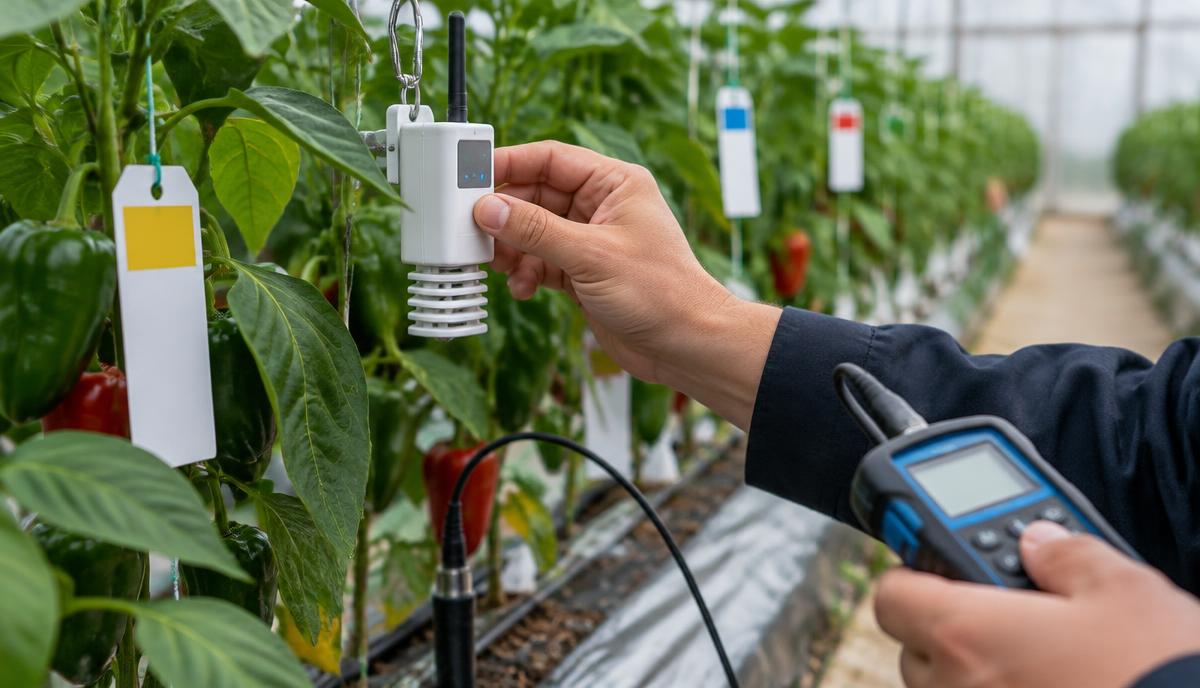
Many upgrades are judged by impression. A simple trial plan turns impression into evidence that you, your financiers and your suppliers can check. This guide gives a one-page trial template and the rules that keep the comparison fair.
One-page trial template
| Field | What to write |
|---|---|
| Question | e.g. "Does the new irrigation strategy reduce water per kg without raising rejects?" |
| Change tested | Only one, described precisely |
| Crop / variety / season | Same for trial and comparison |
| Areas | Trial area and comparison area, mapped |
| Main KPI | One, with unit |
| Secondary KPIs | Two or three, e.g. rejects, labour hours |
| Baseline | Period and values from your records |
| Duration | At least one full crop phase or cycle |
| Decision rule | Result that justifies scale-up, and what stops it |
| Owner | Who records, who reviews |
Building the baseline by crop and season
A baseline is only useful for the same crop, a similar variety and the same season. Pull it from your multi-cycle comparison. If seasons differ, use a side-by-side design in the same period instead of a before/after comparison.
Choosing KPIs
- Main KPI linked to the question: marketable kg/m², L water per kg, kWh per kg, rejects %, hours per 1,000 kg.
- Guard-rail KPIs: things that must not get worse (quality, rejects, disease incidence).
- Write how each is measured and by whom.
Sensor calibration checklist
- Check each temperature and humidity sensor against a reference instrument before the trial and at the midpoint.
- Use shielded, aspirated housings at crop height where possible.
- Calibrate EC and pH meters with fresh standard solutions on a fixed schedule.
- Check water meters against a timed bucket test.
- Log calibration dates; data from an uncalibrated sensor is flagged, not used.
Hypothetical result and decision
Hypothetical numbers for method only.
| KPI | Comparison area | Trial area |
|---|---|---|
| Water (L per kg marketable) | 30 | 26 |
| Rejects (%) | 7 | 7 |
| Marketable yield (kg/m²) | 14 | 14 |
Decision rule set in advance: scale up if water per kg falls by at least 10% with no rise in rejects over a full phase. Here water fell about 13% with rejects unchanged — the rule is met for this crop, season and site. Next step: repeat on a larger block before full roll-out.
When the trial is inconclusive
- Check data quality first (calibration, missing days).
- Extend the trial or repeat it in the next comparable season.
- Ask an agronomist or extension specialist to review the design.
- Do not scale up on an unclear result; do not drop a promising change on one noisy period either.
A trial is a small investment that protects a large one. Set one question, one main KPI, a fair baseline, calibrated sensors and a decision rule written before the results arrive.
Tools and next steps
Frequently asked questions
- How big should the trial area be?
- Large enough to be managed like the rest of the house and to give a readable harvest record — often a full row set or bay rather than a few plants.
- Can I test two changes at once?
- Better not. If results change, you will not know which change caused it.
- Do I need statistics?
- Simple replication (several trial and comparison rows) helps. For formal designs, ask an extension service or research partner.
- What if a supplier runs the trial?
- Agree the template, KPIs and decision rule in writing before starting, and keep your own records.
- Does a good trial guarantee full-scale results?
- No. It reduces uncertainty for that crop, season and site. Scale up in steps and keep measuring.
Sources
- Penn State Extension — Greenhouse Production
- Penn State Extension — Interpreting Irrigation Water Tests
- Penn State Extension — Is Irrigation Water Quality Causing Yield Reductions?
General planning guidance. Results depend on crop, variety, climate, water, regulation and market; numerical examples are hypothetical. Confirm decisions with qualified local specialists.
Related guides in this series
- Expand Greenhouse Area or Upgrade First? A Data-Led Test
- Greenhouse Expansion Planning: Demand, Water, Energy, CAPEX
- Commercial Greenhouse Design Basis: Climate, Crop, Water, Budget
- Precision Fertigation: ETc, Drain EC and Distribution Uniformity
- Greenhouse Investment Plan: CAPEX, OPEX, ROI Scenarios, RFQ
- Greenhouse Crop Cycle Analysis: Yield per m², Inputs, Rejects
- Greenhouse Retrofit in Phases: Controls, Cooling, Fertigation
- Greenhouse Yield and Quality: Irrigation, EC, Climate Data
- Choosing Greenhouse Vegetable Varieties: HR/IR, Cycle, Market