
How to choose seeds and varieties by growing conditions, cycle, resistance, market requirements and availability
Reviewed: · SeedMatchGroup
Short answer
List your growing conditions, cycle and buyer specifications first; shortlist varieties whose documented characteristics fit; check what each resistance code actually covers; confirm seed availability, lot quality and lead time; then trial the shortlist on your own site before committing the whole area.
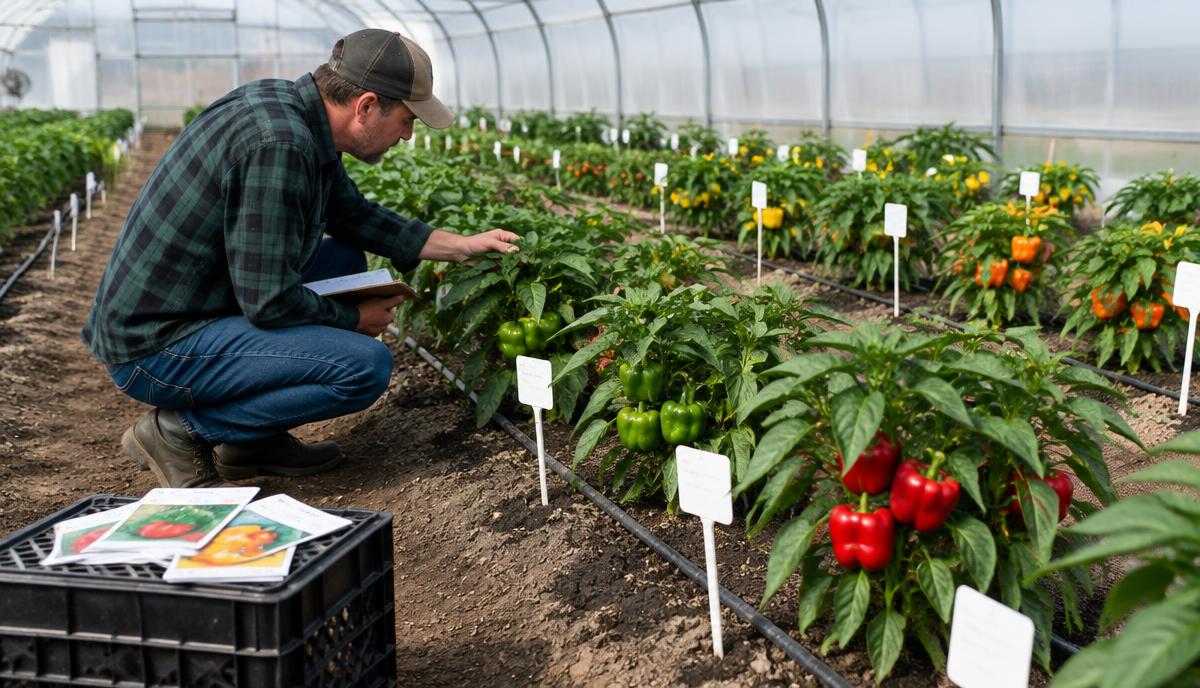
Variety choice is one of the cheapest decisions in a project and one of the hardest to reverse within a season. This guide gives a shortlist matrix, explains how to read resistance claims carefully, and lists the questions to put to seed suppliers.
Step 1 — Write your selection criteria
| Criterion | What to specify |
|---|---|
| Growing system | Soil or substrate, protected or open field, technology level |
| Climate in the cycle | Temperature and light range in the planting window |
| Cycle | Planting and harvest weeks, required earliness or length |
| Pest and disease pressure | Problems recorded on your site or region |
| Market specification | Type, size, colour, firmness, shelf life, packaging |
| Volume and continuity | Seed quantity per season, repeat availability |
Step 2 — Build a shortlist matrix
Score each candidate against your criteria using supplier technical sheets and your own or local trial results. Leave a cell empty rather than guess. A variety that is excellent elsewhere may not fit your climate or market.
Step 3 — Read resistance claims carefully
- Resistance codes refer to specific pathogens and, often, specific races or strains.
- Suppliers usually distinguish high resistance and intermediate resistance; neither means immunity.
- Ask which codes are tested and under which conditions.
- Resistance supports, but does not replace, hygiene and an integrated pest management plan that follows local regulations.
Step 4 — Questions to ask the seed supplier
- Which conditions and regions has this variety been trialled in, and what were the results?
- What do the resistance codes cover, and are they high or intermediate?
- Germination standard, lot testing and seed treatment details?
- Is the variety registered or permitted for sale in my country?
- Seed availability for my volume next season and the one after; minimum order; lead time?
- Recommended plant density and growing guidance for my system?
- Technical support during the first cycle?
Step 5 — Trial before you commit
Grow two to four shortlisted varieties side by side, in the same block and season, managed the same way. Record marketable kg, grade-outs, labour and buyer feedback. See the trial planning guide for KPIs and decision rules.
When information is missing
If no local trial data exists, start with a smaller area per variety and keep your current variety as the comparison. Note phytosanitary and import rules early — they can decide availability.
Define conditions and market first, shortlist on evidence, read resistance claims precisely, confirm availability and trial on your own site — then scale the winner.
Tools and next steps
Frequently asked questions
- Is a higher yield claim enough?
- No. Check the conditions behind the claim, quality specs and market acceptance.
- Do resistant varieties remove the need for crop protection?
- No. Resistance reduces risk for the listed pathogens only; hygiene and integrated pest management remain necessary.
- How many varieties should I trial?
- Usually two to four, plus your current variety as a reference, so the trial stays manageable.
- Can SeedMatchGroup source seed for me?
- You can submit a project request; specialists review requirements and approach independent suppliers manually.
- Will the best trial variety perform the same next year?
- Not necessarily. Seasons differ; repeat the comparison before relying on one result.
Sources
General planning guidance. Results depend on crop, variety, climate, water, regulation and market; numerical examples are hypothetical. Confirm decisions with qualified local specialists.
Related guides in this series
- Expand Greenhouse Area or Upgrade First? A Data-Led Test
- Greenhouse Expansion Planning: Demand, Water, Energy, CAPEX
- Commercial Greenhouse Design Basis: Climate, Crop, Water, Budget
- Precision Fertigation: ETc, Drain EC and Distribution Uniformity
- Greenhouse Trial Design: Baseline, KPIs and Sensor Calibration
- Greenhouse Investment Plan: CAPEX, OPEX, ROI Scenarios, RFQ
- Greenhouse Crop Cycle Analysis: Yield per m², Inputs, Rejects
- Greenhouse Retrofit in Phases: Controls, Cooling, Fertigation
- Greenhouse Yield and Quality: Irrigation, EC, Climate Data