
How to Diagnose Root Rot in a Commercial Hydroponic Greenhouse
Scope a root-zone fixA stepwise diagnostic for growers and farm managers: confirm the pathogen, measure solution temperature and oxygen, check irrigation and hygiene, then decide what to fix before buying equipment.
Can I diagnose Pythium from root colour alone?
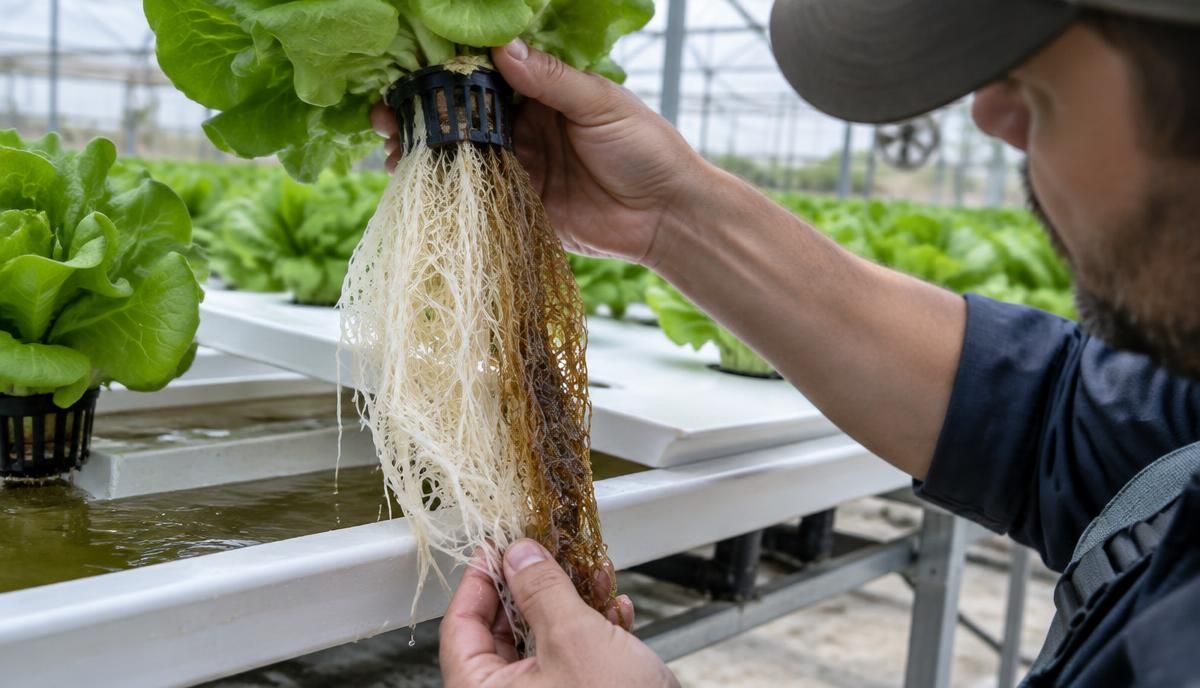
No. Brown, soft roots can also come from oxygen stress, salt damage or other pathogens. A laboratory test of roots and solution is needed to confirm the cause. The nutrient solution is shared, so spores released by infected roots can travel to every plant on the same loop. That is why closed systems usually add drain-water disinfection.
Key takeaways
- What is root rot in hydroponics?: Root rot is the browning, softening and loss of roots caused by root pathogens.
- Who should run this diagnosis?: The head grower or crop manager owns the problem; the farm manager or investor approves any spend; an agronomist or plant-health laboratory confirms the cause.
- Step-by-step diagnosis: 1.
- How to read the results: One brown root sample does not prove *Pythium*, and a disinfection unit does not fix warm, oxygen-poor water.
- What not to conclude: One brown root sample does not prove *Pythium*, and a disinfection unit does not fix warm, oxygen-poor water.
*Prepared by the SeedMatchGroup editorial team from the cited research. It is planning guidance, not a crop diagnosis or an agronomist's sign-off.*
Short answer: root rot in commercial hydroponics is most often caused by water moulds such as *Pythium*, which spread through shared nutrient solution and attack roots already stressed by warm, low-oxygen water. Confirm the pathogen in a laboratory, measure the root-zone conditions, and only then choose between operational fixes and new equipment.
What is root rot in hydroponics?
Root rot is the browning, softening and loss of roots caused by root pathogens. In hydroponic leafy greens and herbs, a 2025 diagnostic guide lists *P. aphanidermatum*, *P. dissotocum*, *P. myriotylum* and *P. oopapillum* as the most-reported species, and notes the disease can affect all economically significant hydroponic leafy greens and herbs (Plant Health Progress). A University of Guelph review documents the same threat across cucumber, tomato, sweet pepper, spinach, lettuce, rose and chrysanthemum (Sutton et al.).
Who should run this diagnosis?
The head grower or crop manager owns the problem; the farm manager or investor approves any spend; an agronomist or plant-health laboratory confirms the cause. Procurement only starts after step 5 below.
Step-by-step diagnosis
1. Record the symptom pattern. Note which crops, which channels, ponds or gutters, and when it started. Disease spreading along a shared recirculation loop points to water-borne inoculum; a single warm bay points to conditions. 2. Send samples to a laboratory. Submit affected roots and a solution sample. Visual symptoms overlap with oxygen stress, salt damage and other pathogens, so do not buy treatment equipment on symptoms alone. 3. Log solution temperature and dissolved oxygen. Measure the supply tank and the drain through a warm week, including afternoons. Research on recirculating hydroponic cucumber in Oman links high nutrient-solution temperature with lower dissolved oxygen and crop stress, and tested cooled solution against an uncooled control (Al-Rawahy et al.). 4. Check irrigation frequency, EC and drainage. Constantly saturated substrate and high EC both stress roots. Compare actual irrigation starts with crop demand using the fertigation calculator. 5. Audit hygiene between crops. Check how tanks, pipes, gutters and channels are cleaned, and whether incoming water, plants or substrate could introduce inoculum.
How to read the results
| Finding | Likely priority | Typical next step |
|---|---|---|
| Pathogen confirmed, spreading through recirculation | Stop spread between plants | Drain-water disinfection and hygiene protocol |
| Warm solution and low oxygen in summer | Root-zone conditions | Shading/cooling, solution cooling or aeration |
| Saturated substrate or high EC | Irrigation control | Radiation- or drain-based irrigation starts, EC control |
| No pathogen, conditions normal | Look elsewhere | Review nutrient recipe, water source and plant material |
What not to conclude
One brown root sample does not prove *Pythium*, and a disinfection unit does not fix warm, oxygen-poor water. Equally, cooling the solution does not stop a pathogen already circulating. Most commercial fixes combine hygiene, root-zone conditions and, in closed systems, drain-water disinfection.
Next step
Once the cause is confirmed, compare the treatment options in Drain-water disinfection compared, then use the root rot problem page to brief a sourcing specialist. For broader yield losses, see diagnosing low marketable yield.
Turn "How to Diagnose Root Rot in a Commercial Hydroponic Greenhouse" into your RFQ
Answer a few questions and we will draft a structured RFQ you can review, edit and submit to our independent supplier network.
Frequently asked questions
- Can I diagnose Pythium from root colour alone?
- No. Brown, soft roots can also come from oxygen stress, salt damage or other pathogens. A laboratory test of roots and solution is needed to confirm the cause.
- Why does root rot spread so fast in recirculating systems?
- The nutrient solution is shared, so spores released by infected roots can travel to every plant on the same loop. That is why closed systems usually add drain-water disinfection.
- Does SeedMatchGroup diagnose crops?
- No. Diagnosis comes from your agronomist and a laboratory. SeedMatchGroup helps commercial projects from USD 250,000 scope and compare equipment offers for the fix.
- How does SeedMatchGroup handle a requirement like "How to Diagnose Root Rot in a Commercial Hydroponic Greenhouse"?
- A buyer submits one private brief through the RFQ builder. A stepwise diagnostic for growers and farm managers: confirm the pathogen, measure solution temperature and oxygen, check irrigation and hygiene, then decide what to fix before buying equipment. A dedicated sourcing specialist normalises it into a single technical specification, issues it to qualified international manufacturers, integrators and EPC contractors, and returns offers that can be compared line by line on the same scope, lead time and delivery terms.
Move from reading to sourcing
The pages below carry the commercial detail for this topic — cost ranges, supplier verification, specification checklists and financing routes.