
Commercial Greenhouses in Uganda — Lake Basin & Highland Horticulture Projects
Commercial greenhouse projects in Uganda — Kampala/Wakiso, Mukono, Mbarara, Kabale and Kasese — scoped for tomato, capsicum, chili, herbs and cut flowers destined for Kampala retail, regional trade and Entebbe airfreight export.
Where in Uganda are commercial greenhouses usually considered?
Common options are peri-Kampala plots in Wakiso, Mukono and Mpigi close to Entebbe airfreight, mid-altitude belts around Mbarara and Kasese, and highland sites around Kabale and Kisoro. The right site depends on water, power, access, labour and the target market — confirm each with site data before design.
Project gallery
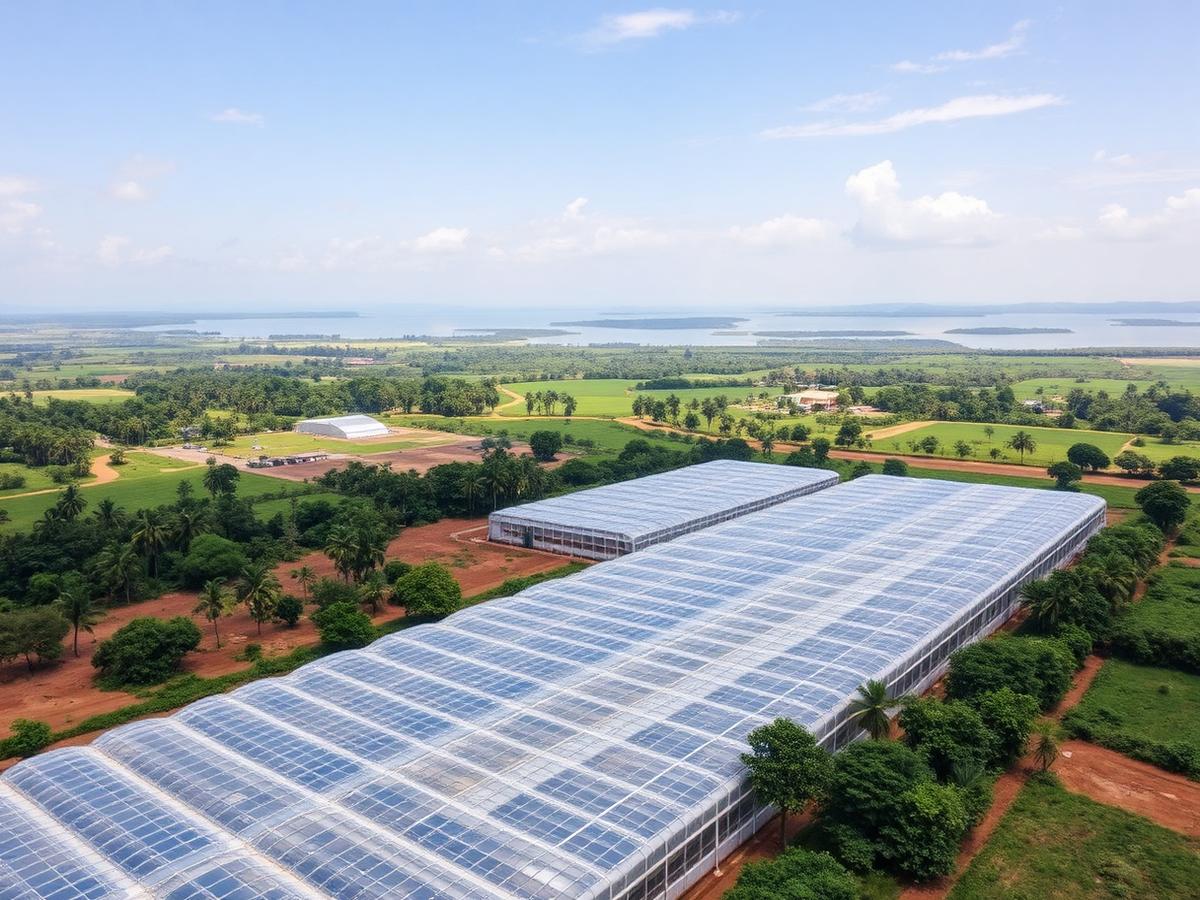
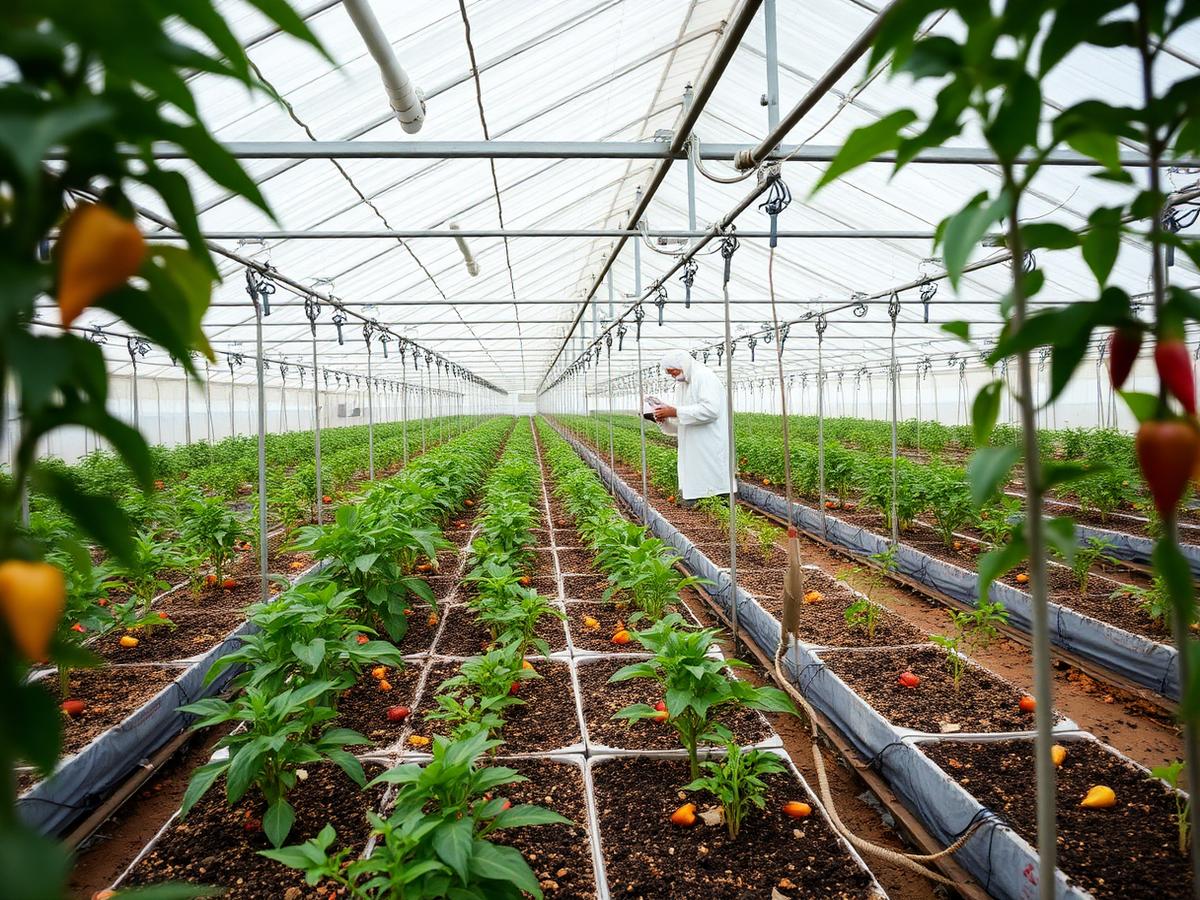
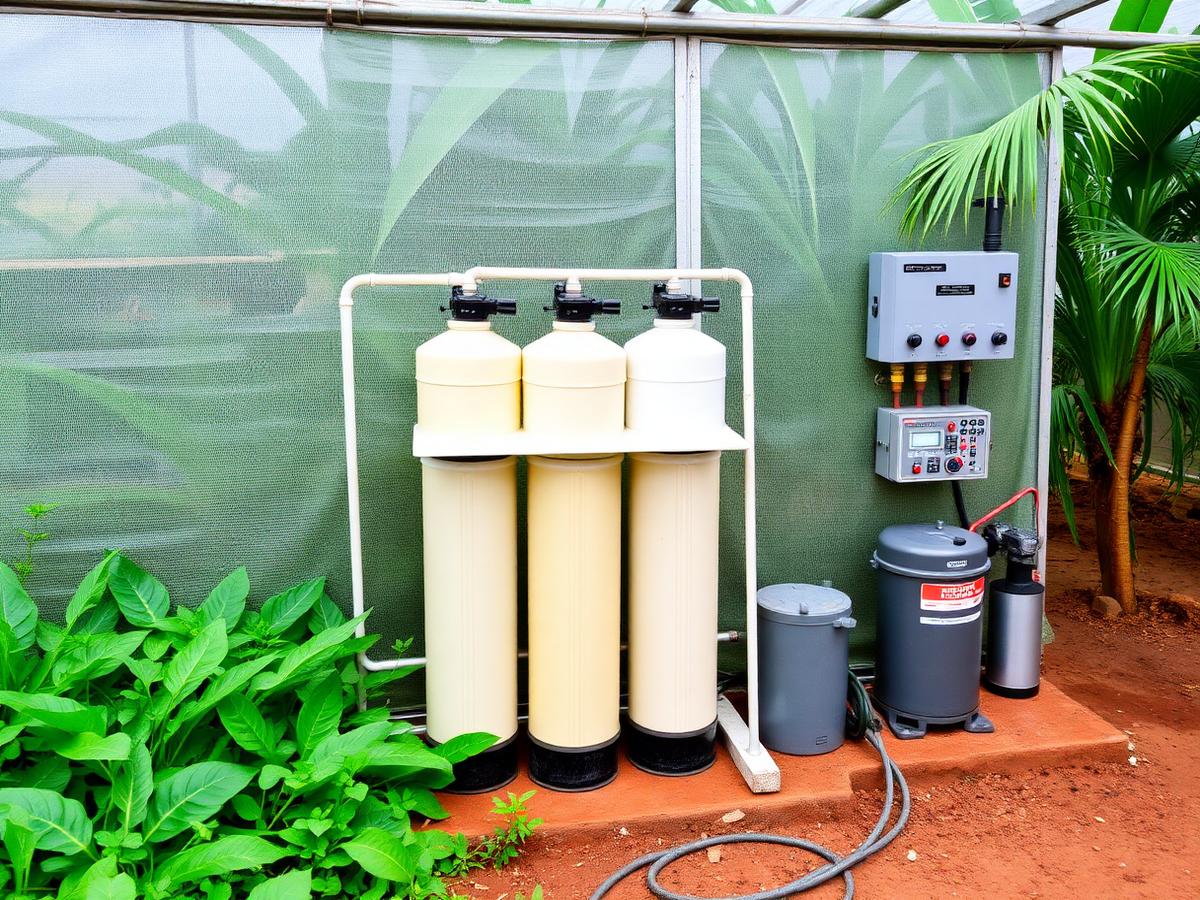
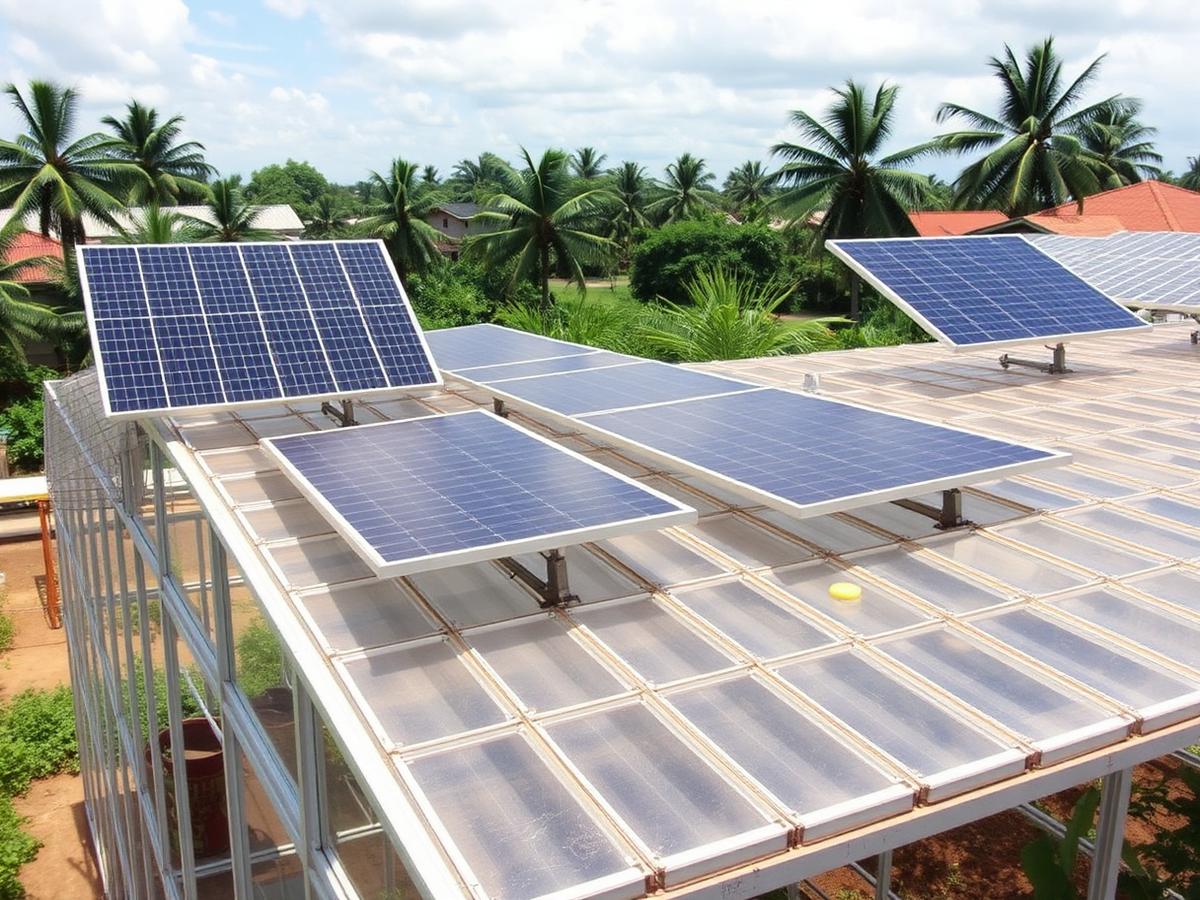
Reference visuals of the technical envelope, systems and workflows behind this greenhouse solution.
Greenhouse types available for Greenhouses in Uganda
Choose a design track and open a prefilled RFQ. Each track is engineered to the local climate, buyer market and financing envelope.
Low-carbon multi-span project tuned for Uganda — passive climate, PV, screens and closed-loop water for premium horticulture.
Protected cultivation designed to support an organic certification application in Uganda — biocontrol-ready climate and substrate options to be confirmed with your certification body.
Solar-powered, water-recirculating greenhouse project scoped toward a net-zero operating target for Uganda climate and grid conditions.
Hybrid drip-irrigated open field + shade-net structures for high-margin vegetables where full glass is not yet bankable.
Smart greenhouse solutions and high-value varieties
Modern greenhouses are not just structures — they are controlled-environment production systems. We specify the automation, crop plan and variety mix so you buy a turnkey greenhouse project that is ready to produce, not just a steel-and-film kit.
Substrate moisture, EC/pH, air temperature, humidity, CO₂ and PAR logged to a cloud dashboard with SMS alerts.
Commercial-grade climate computers that open vents, adjust screens, start fogging and modulate heating from one setpoint.
Multi-channel dosing pumps mix A/B tanks, acid and additives to target EC/pH with closed-loop drain recovery.
Top-lighting and inter-lighting modules for tomato, cucumber and strawberry to extend photoperiod and DLI.
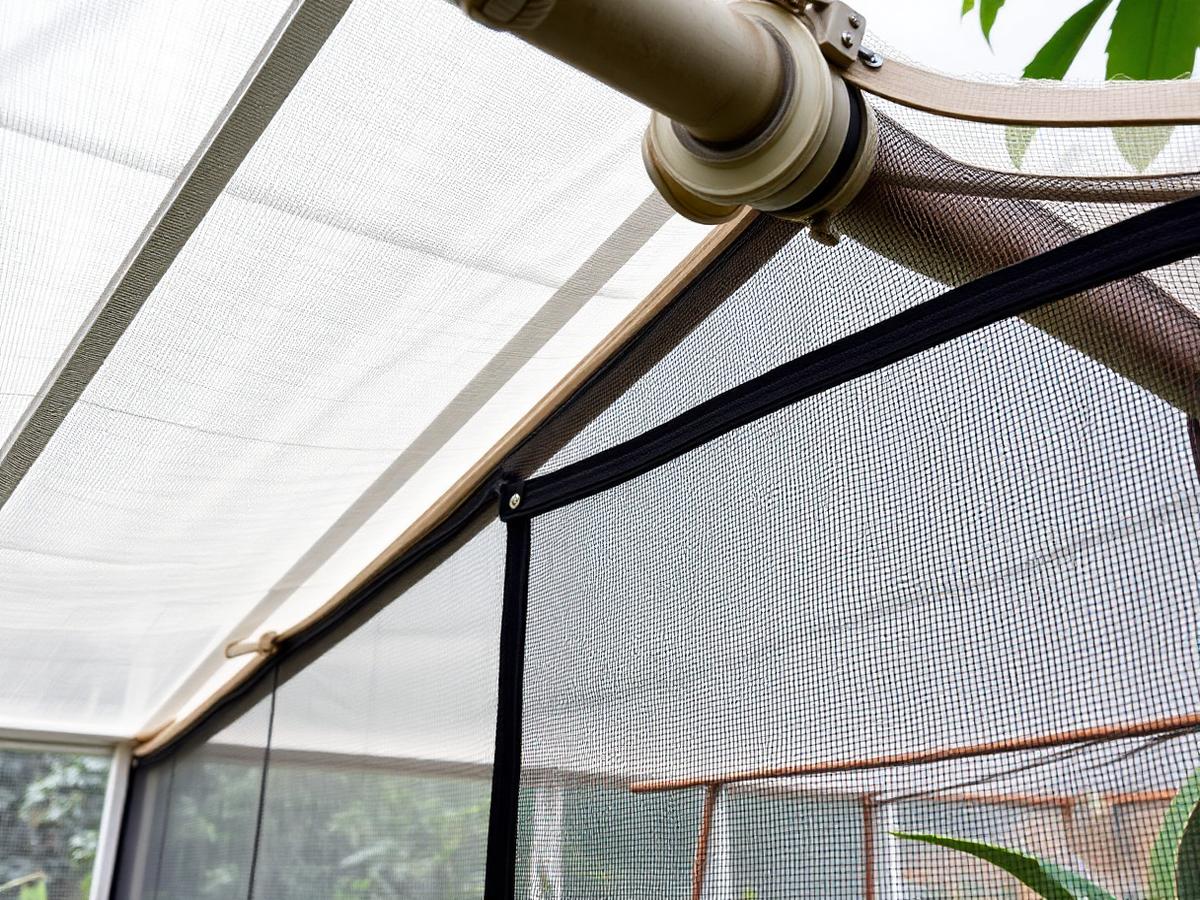
Roof and side vents, energy screens, shade screens and insect-proof meshes automated by light, wind and rain sensors.
Foot-bath stations, buffer zones, QR crop logs and GLOBAL G.A.P. traceability records from day one.
Choose the right crop mix before you buy
Each crop has its own greenhouse configuration, climate setpoints and payback profile. Below are the most common commercial varieties buyers ask us to source.
Beef, cherry, cocktail and heirloom lines on high-wire or V-shape systems for year-round supply.
tomato greenhouse, cherry tomato greenhouse, beef tomato seedsParthenocarpic slicing and mini-cucumber varieties on vertical trellises for dense, high-yield production.
cucumber greenhouse, greenhouse cucumber seeds, hydroponic cucumberRed, yellow and orange blocky peppers bred for greenhouse climate, export shelf life and pack count.
greenhouse pepper, sweet pepper seeds, capsicum greenhouseButterhead, romaine, oakleaf and baby-leaf mixes in NFT or deep-flow hydroponics for fast rotation.
hydroponic lettuce, lettuce greenhouse, leafy greens greenhouseEver-bearing table-top varieties for premium local and export markets, raised off the ground for labour efficiency.
strawberry greenhouse, greenhouse strawberry plants, table-top strawberryBasil, coriander, dill, mint, chives and microgreen mixes for restaurant and retail programmes.
herb greenhouse, basil greenhouse, microgreens greenhouseRose, chrysanthemum, alstroemeria and carnation configurations for export cold-chain programmes.
flower greenhouse, rose greenhouse, cut flower greenhouseGlossy black eggplant and Courgette varieties grafted for long-cycle greenhouse performance.
eggplant greenhouse, zucchini greenhouse, aubergine greenhouseBuy a complete greenhouse project, not just a structure
Tell us your crop, climate, area and target market. We open a vendor-neutral RFQ to greenhouse manufacturers, climate-system suppliers and EPC integrators, then help you compare structure, automation, varieties and financing in one place.
Typical design envelope
Components in the stack
Extra corrosion allowance and elevated foundation detailing for high-humidity Lake Victoria sites.
Hydroponic tomato and capsicum on coir, plus soil-based herbs and chilies for regional traders.
PV + battery sized to keep pumps and cold rooms running through grid outages.
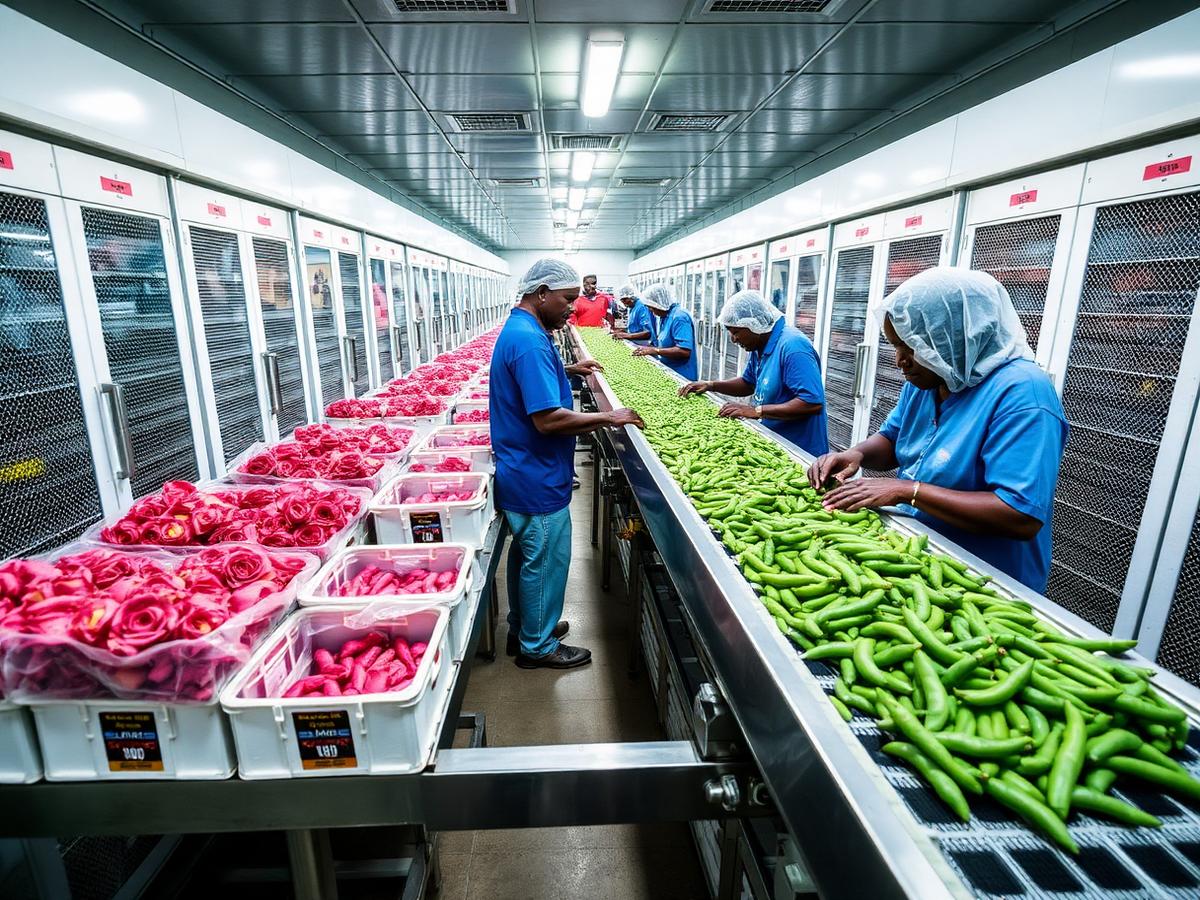
Pack-house + pre-cooling and Entebbe airfreight reefer staging.
PVoC certificates, seed and plant import permits and clearing assigned by name in the RFQ; certification stays the grower's responsibility.
Rainwater harvesting and drain recirculation to smooth dry-season pumping.
Why it matters
- Moves part of the crop plan from open field into protected horticulture with more controllable quality.
- Positions output for Kampala retail, regional EAC trade and airfreight export programmes — where the buyer's standards are met.
- Gives lenders and development-finance institutions a documented scope and comparable bids to assess.
- Keeps PVoC, permit and clearance responsibilities explicit before money moves.
FAQ
Common options are peri-Kampala plots in Wakiso, Mukono and Mpigi close to Entebbe airfreight, mid-altitude belts around Mbarara and Kasese, and highland sites around Kabale and Kisoro. The right site depends on water, power, access, labour and the target market — confirm each with site data before design.
It can, but access is never automatic. It depends on the buyer's standards (often GLOBALG.A.P.), EU plant-health and pesticide-residue rules for the specific crop, and a licensed exporter. A greenhouse does not guarantee market access; plan certification and offtake alongside the build.
Under the UNBS (Inspection and Clearance) Regulations 2022, listed goods are verified before export, and UNBS states that consignments above USD 2,000 FOB covered by compulsory standards need a Certificate of Conformity from pre-export verification (PVoC). Assign who books and pays for PVoC in the RFQ and confirm each HS code with a licensed clearing agent.
Commercial seed imports go through a registered seed merchant or dealer with an import permit under the Seeds and Plant Regulations 2017, plant import permits are issued through MAAIF's crop inspection and certification department, and varieties for commercial use are listed on the National Variety List. Confirm permits before shipment.
Designs usually combine sufficient roof and side ventilation, anti-drip film, raised beds and covered drainage to manage the March–May and September–November rains. Bidders should show how their ventilation and drainage are sized for the specific site.
Ugandan and development lenders such as Uganda Development Bank and aBi Finance publish agricultural finance programmes, and eligibility is decided by each lender. SeedMatchGroup can provide a documented scope and comparable bids for eligible projects from USD 250,000; it is not a lender and does not arrange approvals.
Ready to source this greenhouse project?
A dedicated sourcing specialist opens your project brief to qualified global greenhouse builders, equipment vendors and EPC partners — vendor-neutral, buyer-first.
Greenhouse designs available in Uganda
Every design track is engineered for the local climate, buyer market and financing envelope. Open the design that matches your project.
Low-carbon multi-span with PV, screens and closed-loop water — the bankable baseline.
ExploreEU 2018/848 & USDA-NOP certified protected cultivation for premium retail.
ExploreFossil-free heat pumps, ATES and captured CO₂ for CBAM-aligned export.
ExploreAgrivoltaic and semi-transparent PV shells for solar-heavy grids.
ExplorePrecision drip, filtration and fertigation for open-field and greenhouse blocks.
ExploreFull protected-cultivation stack — structures, climate, water, energy and offtake.
ExploreGreenhouse projects in other countries
Compare climate, offtake and financing across the country pages we operate. Each links to a prefilled RFQ tuned for the local project envelope.
Highland export horticulture — GLOBAL G.A.P. tomato, capsicum and cut flowers.
Open project pageKigali-airfreight highland projects for EU / GCC premium buyers.
Open project pageNorthern highland & coastal projects with KIA/JNIA airfreight.
Open project pageShire Highland horticulture for retail and humanitarian offtake.
Open project pageLusaka & Copperbelt greenhouse projects with PV backup.
Open project pageArid-climate food-security projects with solar and RO water.
Open project pageArid & coastal desalination-fed closed-system projects.
Open project pageSouss-Massa & northern export projects for EU retailers.
Open project pageNubaria, New Delta and reclaimed-land desert greenhouse projects.
Open project pageClimate-controlled desert projects on treated or desalinated water.
Open project pageIndustrial heated complexes engineered for −25 to −35 °C winters.
Open project pageNew mid-tech projects plus modernization of existing greenhouse stock.
Open project pageNiayes & Saint-Louis coastal projects for EU and ECOWAS trade.
Open project pageDesert & coastal food-security greenhouses on desalinated water.
Open project pageOuémé Valley & coastal projects for ECOWAS retail supply.
Open project pageLomé port & Kara plateau ECOWAS export corridors.
Open project pageCyclone-detailed hi-tech greenhouses for hospitality supply.
Open project pageDesalination-fed island projects for food security and tourism.
Open project pageHigh-tech CEA and hydroponic projects on desalinated water with full recovery.
Open project pageGas-heated tomato and cucumber complexes for winter export windows.
Open project pageHighland floriculture and vegetable projects with airfreight cold chain.
Open project pageRetrofit, automation, solar and water efficiency for established growers.
Open project pageExpansion, retrofit and automation across Sinaloa, Bajío and Baja.
Open project pageCoastal desert agro-export protected agriculture and nursery capacity.
Open project pageBerry, nursery and water-efficient protected cultivation projects.
Open project pageEU hi-tech Mediterranean greenhouses with closed-loop water.
Open project pageTropical humidity-controlled projects for melon, strawberry and export leafy greens.
Open project pageRain-rated highland and lowland projects for leafy greens, melon and strawberry.
Open project pageWind- and hail-rated multi-span projects for the La Plata belt, Cuyo and the north.
Open project pageTunnel and multi-span projects for off-season vegetables, saline water and load-shedding.
Open project pageAlmería & Murcia modernization — screens, closed fertigation and drain recovery.
Open project pageCrete & Macedonia multi-span builds and low-energy winter production.
Open project pageGeothermal-heated and coastal export complexes across Antalya and Şanlıurfa.
Open project pageHigh-tech Venlo glasshouses with LED, screens and heat-pump or geothermal plant.
Open project pageHeat-pump and biomass glasshouse projects with twin screens and LED winter lighting.
Open project pageHeated Atlantic glasshouses and shaded Mediterranean multi-span with drain recovery.
Open project pageSicily & Puglia tunnel-to-multi-span modernization with closed fertigation.
Open project pageVenlo glass with heat pumps, LED and rainwater-fed recirculating fertigation.
Open project pageSnow-load rated glasshouses with CHP heat, CO₂ recovery and LED winter lighting.
Open project pageState-by-state climate packages — desert cooling, northern LED glass and Sun Belt humidity control.
Open project pageSnow-rated glass with heat pumps, district heat and high-hour LED for winter production.
Open project pageDistrict-heat and biomass glasshouses with twin screens and LED winter lighting.
Open project pageWater-first closed hydroponics for the Jordan Valley and Mafraq plateau.
Open project pageCooled projects with RO salinity control; lighter spec in Salalah's khareef.
Open project pageFood-security CEA on desalinated water with condensate and drain recovery.
Open project pageNVPH polyhouse, net-house and precision drip across plains and hill zones.
Open project pageHigh-gutter tropical structures, NFT hydroponics and propagation nurseries.
Open project pageHighland floriculture and berry projects with hail cover and closed fertigation.
Open project pageDa Lat highland hydroponics plus typhoon-rated lowland protected cultivation.
Open project pageVolcanic-highland hydroponic projects for modern retail, hotels and export.
Open project pageHeated winter production and EU-funded modernization of legacy glasshouses.
Open project pageLow-cost gas and geothermal heat for winter tomato and cucumber windows.
Open project pageInsect-proof screened farms with borehole drip and solar hybrid power.
Open project pageHeated glass, twin energy screens and EU-funded modernization of existing stock.
Open project pageAlentejo and Algarve berry tunnels with closed fertigation and reservoir storage.
Open project pageTyphoon-rated rain shelters and Benguet highland hydroponics with solar hybrid power.
Open project pageInsect-proof screened farms with borehole drip, solar backup and packhouse cooling.
Open project pageSemi-closed glass, automation and recycled-water hydroponics for premium retail.
Open project pageTyphoon and snow-rated houses with heat pumps, CO2 enrichment and automation.
Open project pageSmart-farm builds with thermal storage, LED winter lighting and closed fertigation.
Open project pageWind-rated glasshouses with heat-pump or geothermal heat and closed rainwater fertigation.
Open project pageDistrict-heat and heat-pump glasshouses with twin screens and LED winter lighting.
Open project pageSnow-rated Nordic glass with full LED production and high-capacity heat plant.
Open project pageBiomass and heat-pump projects with twin screens and organic-compatible fertigation.
Open project pageSnow-rated high-tech glass with automation against premium retail specifications.
Open project pageFlanders-grade Venlo glass with rainwater basins and closed recirculating fertigation.
Open project pageWind-rated glass with active dehumidification for humid, low-light winters.
Open project pageHigh-radiation cooling-led houses with drip fertigation on desalinated and reclaimed water.
Open project pageCooled semi-closed and multi-tier facilities engineered for land productivity.
Open project pageTyphoon-rated structures with humidity control and export-grade grading and cold chain.
Open project pagePick the design that fits your Uganda project
Every Uganda greenhouse project maps to one of three engineered tracks — sustainable, certified organic, or net-zero. Open the design brief that matches your buyer, financing envelope and certification path.
Bankable baseline for Uganda's equatorial highlands.
Open sustainable greenhouses design 1Certification path for high-value export vegetables and herbs.
Open organic greenhouses design 2Fossil-free heat pumps, ATES and captured CO₂ for CBAM-aligned export.
Open net-zero greenhouses design 3Compare every greenhouse archetype, climate system and country project on one page.
Back to hubWhat to confirm before you contact greenhouse suppliers
Suppliers can only quote comparably when the same facts are on the table. This is the information a serious greenhouses in uganda request needs — bring what you have, and we will mark the rest as assumptions or open questions before anything goes out.
- Crop, variety and target market (local retail, wholesale or export)
- Production target per year and planned expansion phases
- Growing method: soil, substrate, hydroponic or vertical
- Country, site location, altitude and land status
- Temperature, humidity, wind and solar radiation profile
- Covered area now, and the area you intend to reach
- Water source, availability, storage and water analysis
- Irrigation, fertigation and filtration/treatment requirement
- Cooling, heating, ventilation and shading requirement
- Grid supply, solar, backup power and energy cost
- Automation, sensors, monitoring and labour model
- Packing, pre-cooling, cold storage and export requirements
- Budget range, buyer contribution, financing need and timeline
- Permits, environmental requirements and internal approvals
How the process actually works
- 1Initial conversation — you describe the project in your own words, 24/7.
- 2Structured requirements — we organise what is confirmed, assumed and still missing.
- 3Project or RFQ brief — one comparable document instead of scattered emails.
- 4Human review — the SeedMatch project team reviews qualifying projects.
- 5Appropriate routing — supplier discovery or financing-pathway context, where justified.
Next step
Human-reviewed project routing and financing-pathway discussion generally start from an expected total project value of about USD 250,000. Below that, use the planning guides and calculators — they are free and no request is required.
SeedMatch structures requirements, prepares RFQs and provides supplier-discovery and financing-pathway context. We are not a manufacturer, farm operator, EPC or engineering contractor, lender or pricing authority, and buyers are never connected to suppliers automatically. Sending a request does not guarantee a supplier, price, financing, yield, permits or delivery.
Before you import into Uganda
- UNBS states that consignments above USD 2,000 FOB covered by compulsory standards need a PVoC Certificate of Conformity.
- Commercial seed imports go through a registered seed merchant or dealer with an import permit; plant import permits come from MAAIF.
- Varieties for commercial use are tested and listed on the National Variety List.
Official sources checked 25 October 2026: UNBS imports inspection · MAAIF crop inspection. General information, not customs or legal advice.
Full Kenya and Uganda import and RFQ checklist