
Commercial Greenhouses in Tanzania — Northern Highlands & Coastal Projects
Design and source greenhouse projects across Tanzania — Arusha, Kilimanjaro, Iringa, Njombe, Morogoro and coastal Tanga — engineered for tomato, capsicum, cut flowers and herbs destined for KIA/JNIA airfreight, regional retail and EAC export.
Best regions in Tanzania for greenhouse projects?
Arusha, Kilimanjaro, Iringa and Njombe deliver altitude and climate; Morogoro suits peri-Dar retail; Tanga suits coastal export with corrosion detailing. Yes — GLOBAL G.A.P., TPHPA and TAHA-aligned projects can enter EU/UK/GCC programs through licensed exporters and KIA/JNIA airfreight.
Project gallery
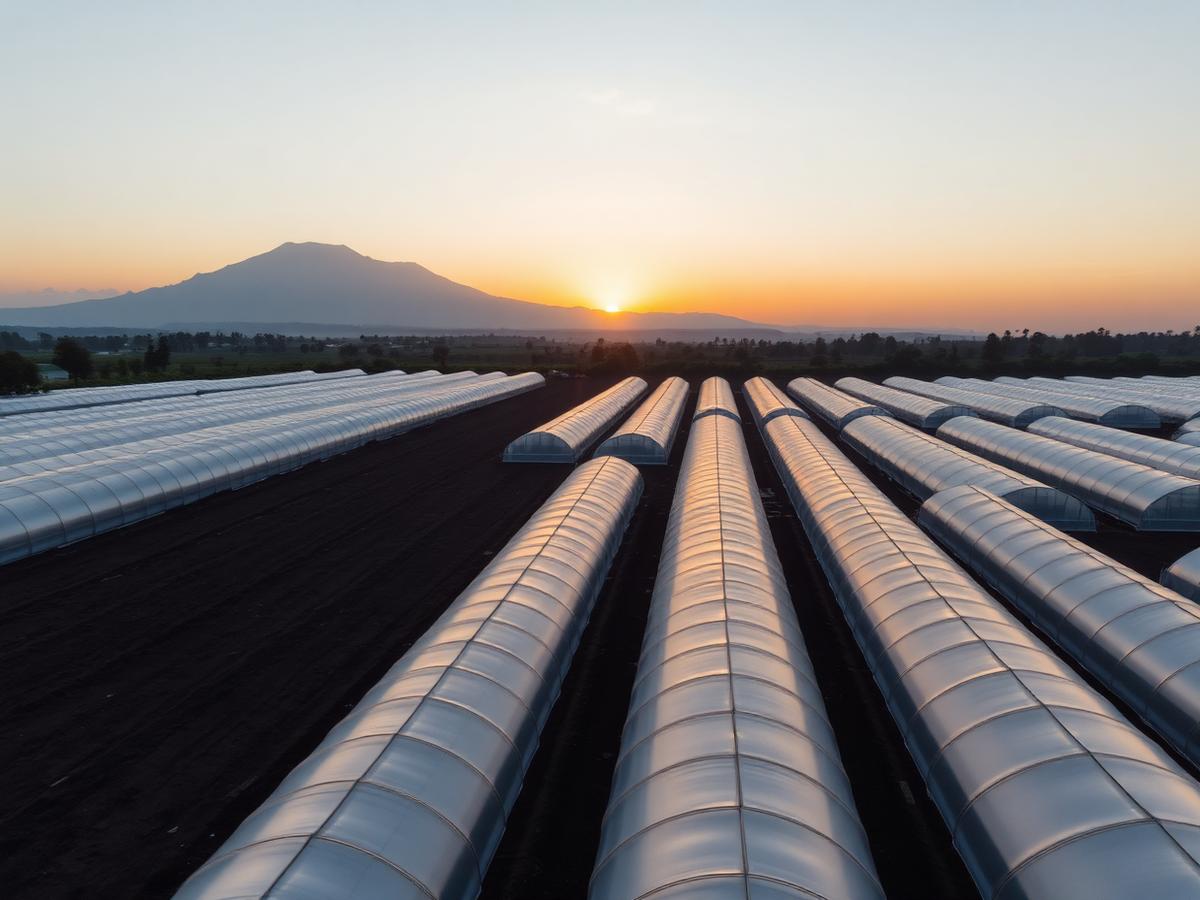
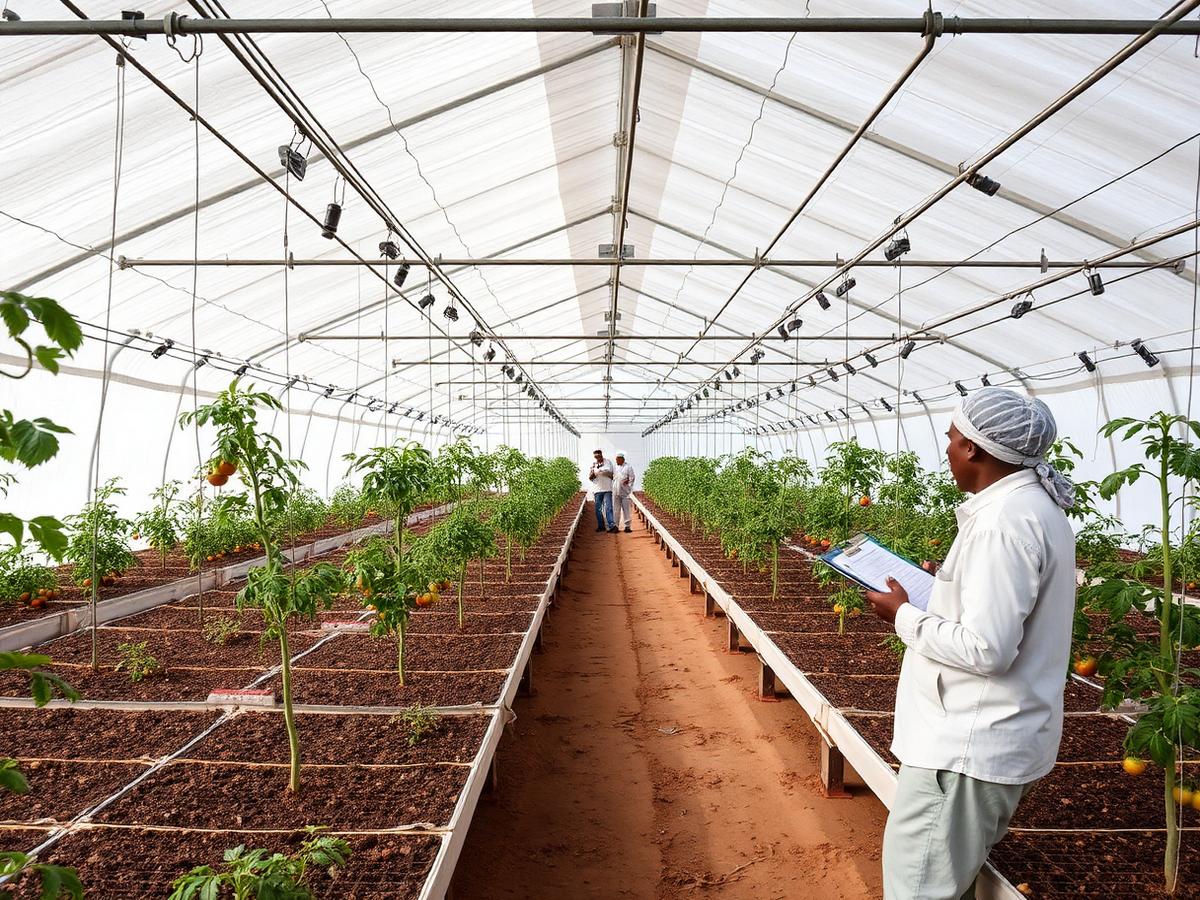
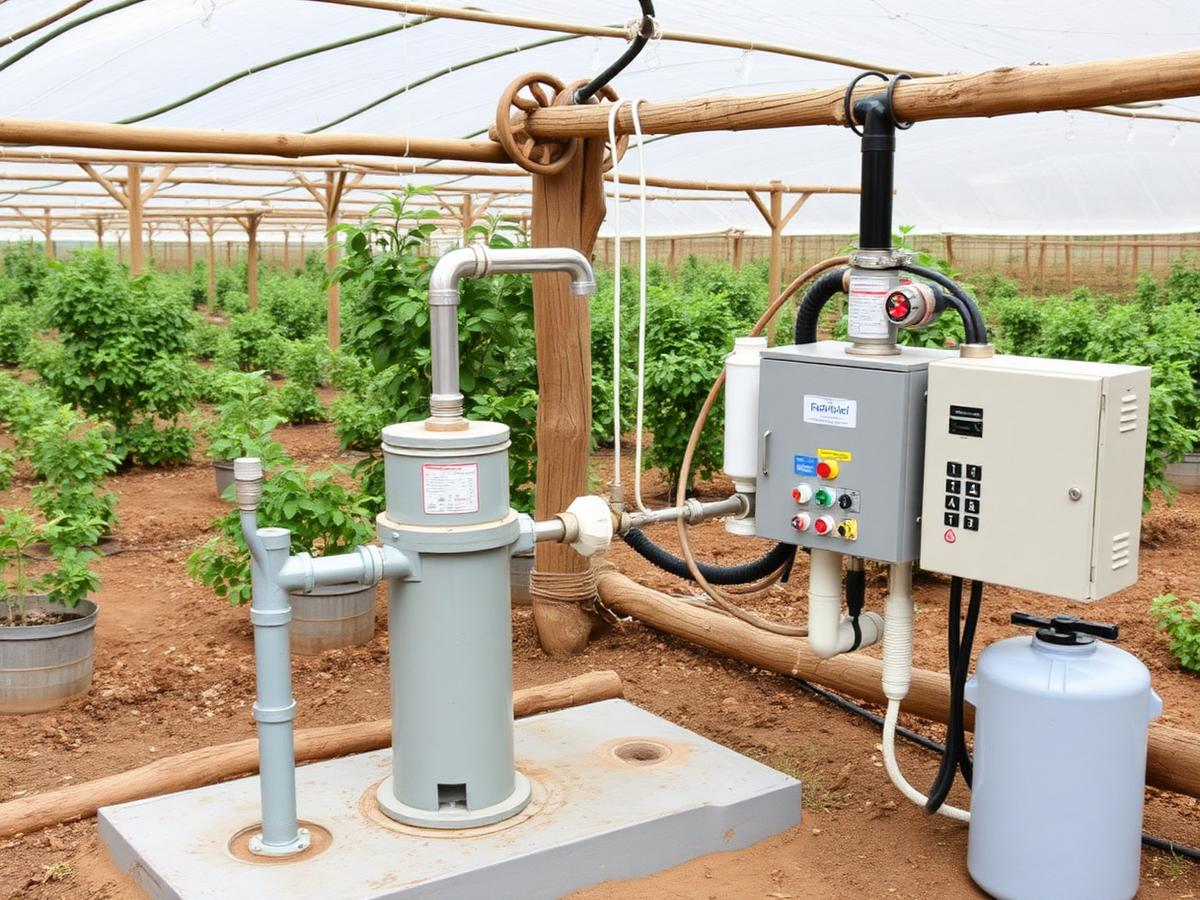
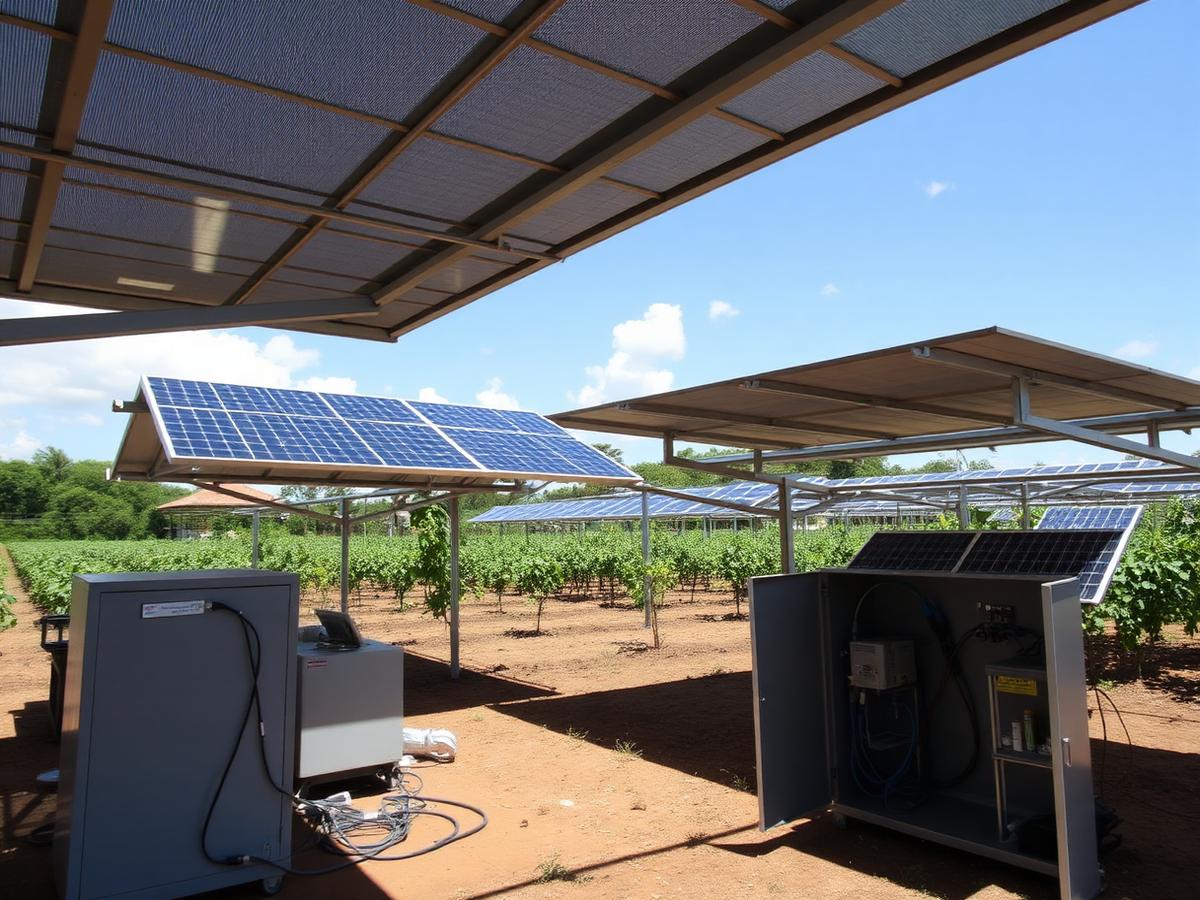
Reference visuals of the technical envelope, systems and workflows behind this greenhouse solution.
Greenhouse types available for Greenhouses in Tanzania
Choose a design track and open a prefilled RFQ. Each track is engineered to the local climate, buyer market and financing envelope.
Low-carbon multi-span project tuned for Tanzania — passive climate, PV, screens and closed-loop water for premium horticulture.
Protected cultivation designed to support an organic certification application in Tanzania — biocontrol-ready climate and substrate options to be confirmed with your certification body.
Solar-powered, water-recirculating greenhouse project scoped toward a net-zero operating target for Tanzania climate and grid conditions.
Hybrid drip-irrigated open field + shade-net structures for high-margin vegetables where full glass is not yet bankable.
Smart greenhouse solutions and high-value varieties
Modern greenhouses are not just structures — they are controlled-environment production systems. We specify the automation, crop plan and variety mix so you buy a turnkey greenhouse project that is ready to produce, not just a steel-and-film kit.
Substrate moisture, EC/pH, air temperature, humidity, CO₂ and PAR logged to a cloud dashboard with SMS alerts.
Commercial-grade climate computers that open vents, adjust screens, start fogging and modulate heating from one setpoint.
Multi-channel dosing pumps mix A/B tanks, acid and additives to target EC/pH with closed-loop drain recovery.
Top-lighting and inter-lighting modules for tomato, cucumber and strawberry to extend photoperiod and DLI.
Roof and side vents, energy screens, shade screens and insect-proof meshes automated by light, wind and rain sensors.
Foot-bath stations, buffer zones, QR crop logs and GLOBAL G.A.P. traceability records from day one.
Choose the right crop mix before you buy
Each crop has its own greenhouse configuration, climate setpoints and payback profile. Below are the most common commercial varieties buyers ask us to source.
Beef, cherry, cocktail and heirloom lines on high-wire or V-shape systems for year-round supply.
tomato greenhouse, cherry tomato greenhouse, beef tomato seedsParthenocarpic slicing and mini-cucumber varieties on vertical trellises for dense, high-yield production.
cucumber greenhouse, greenhouse cucumber seeds, hydroponic cucumberRed, yellow and orange blocky peppers bred for greenhouse climate, export shelf life and pack count.
greenhouse pepper, sweet pepper seeds, capsicum greenhouseButterhead, romaine, oakleaf and baby-leaf mixes in NFT or deep-flow hydroponics for fast rotation.
hydroponic lettuce, lettuce greenhouse, leafy greens greenhouseEver-bearing table-top varieties for premium local and export markets, raised off the ground for labour efficiency.
strawberry greenhouse, greenhouse strawberry plants, table-top strawberryBasil, coriander, dill, mint, chives and microgreen mixes for restaurant and retail programmes.
herb greenhouse, basil greenhouse, microgreens greenhouseRose, chrysanthemum, alstroemeria and carnation configurations for export cold-chain programmes.
flower greenhouse, rose greenhouse, cut flower greenhouseGlossy black eggplant and Courgette varieties grafted for long-cycle greenhouse performance.
eggplant greenhouse, zucchini greenhouse, aubergine greenhouseBuy a complete greenhouse project, not just a structure
Tell us your crop, climate, area and target market. We open a vendor-neutral RFQ to greenhouse manufacturers, climate-system suppliers and EPC integrators, then help you compare structure, automation, varieties and financing in one place.
Typical design envelope
Components in the stack
Arusha/Kilimanjaro belt design for premium tomato, capsicum and cut flowers with minimal heating.
Cold room + pack-house sized for KIA / JNIA airfreight and regional reefer trade.
PV + battery stabilizes pumps and cold rooms through TANESCO outages.
Rainwater + borehole with treatment train; drain-water recovery loop.
TPHPA, TAHA and GLOBAL G.A.P. documentation packaged with construction.
Corrosion detailing for Tanga/Mtwara belt and cyclone-adjacent projects.
Why it matters
- Locks in EU/UK/GCC offtake via GLOBAL G.A.P. and TAHA-supported traceability.
- Uses Northern Highlands temperate window for year-round production.
- Qualifies for TADB, TIB, IFC and AfDB horticulture financing.
- Integrates with KIA/JNIA airfreight and coastal reefer logistics.
FAQ
Arusha, Kilimanjaro, Iringa and Njombe deliver altitude and climate; Morogoro suits peri-Dar retail; Tanga suits coastal export with corrosion detailing.
Yes — GLOBAL G.A.P., TPHPA and TAHA-aligned projects can enter EU/UK/GCC programs through licensed exporters and KIA/JNIA airfreight.
TADB, TIB, IFC, AfDB and impact funds finance bankable projects with anchor offtake and structured technical dossiers.
Arusha, Kilimanjaro, Iringa and Mbeya highlands for temperate crops; coastal Tanga and Dar es Salaam belt for tropical vegetables and hospitality supply.
Water permits are secured with basin authorities; boreholes and rainwater harvesting are combined with recirculating drip to protect the aquifer and reduce OPEX.
EU (via KLM/Turkish/Ethiopian airfreight from JRO/DAR), Middle East and regional East African supermarkets. GLOBAL G.A.P. is the entry standard.
TADB, CRDB, NMB, AfDB and DFI facilities finance projects with a bankable dossier and offtake. We coordinate technical due diligence for lenders.
Ready to source this greenhouse project?
A dedicated sourcing specialist opens your project brief to qualified global greenhouse builders, equipment vendors and EPC partners — vendor-neutral, buyer-first.
Engineer each system for Tanzania
Irrigation, hydroponics, fertigation, cooling and water treatment each carry their own local planning ranges, calculators and RFQ scope in Tanzania.
Structure, covering, climate and gutter height matched to the local wind, light and temperature envelope.
Open greenhouses in TanzaniaDrip, filtration, pumping and hydraulic zoning sized against real peak-season crop demand.
Open irrigation in TanzaniaSubstrate, NFT, gutter and recirculation systems matched to crop, water quality and labour cost.
Open hydroponics in TanzaniaDosing units, stock tanks, EC/pH control and recipe management for precise nutrient delivery.
Open fertigation in TanzaniaVentilation, pad-and-fan, fogging, screens and heating sized against the local energy price.
Open cooling in TanzaniaFiltration, RO, disinfection and drain recovery matched to the raw water available on site.
Open water treatment in TanzaniaGreenhouse designs available in Tanzania
Every design track is engineered for the local climate, buyer market and financing envelope. Open the design that matches your project.
Low-carbon multi-span with PV, screens and closed-loop water — the bankable baseline.
ExploreEU 2018/848 & USDA-NOP certified protected cultivation for premium retail.
ExploreFossil-free heat pumps, ATES and captured CO₂ for CBAM-aligned export.
ExploreAgrivoltaic and semi-transparent PV shells for solar-heavy grids.
ExplorePrecision drip, filtration and fertigation for open-field and greenhouse blocks.
ExploreFull protected-cultivation stack — structures, climate, water, energy and offtake.
ExploreGreenhouse projects in other countries
Compare climate, offtake and financing across the country pages we operate. Each links to a prefilled RFQ tuned for the local project envelope.
Highland export horticulture — GLOBAL G.A.P. tomato, capsicum and cut flowers.
Open project pageKigali-airfreight highland projects for EU / GCC premium buyers.
Open project pageLake basin & highland tomato, capsicum and cut-flower projects.
Open project pageShire Highland horticulture for retail and humanitarian offtake.
Open project pageLusaka & Copperbelt greenhouse projects with PV backup.
Open project pageArid-climate food-security projects with solar and RO water.
Open project pageArid & coastal desalination-fed closed-system projects.
Open project pageSouss-Massa & northern export projects for EU retailers.
Open project pageNubaria, New Delta and reclaimed-land desert greenhouse projects.
Open project pageClimate-controlled desert projects on treated or desalinated water.
Open project pageIndustrial heated complexes engineered for −25 to −35 °C winters.
Open project pageNew mid-tech projects plus modernization of existing greenhouse stock.
Open project pageNiayes & Saint-Louis coastal projects for EU and ECOWAS trade.
Open project pageDesert & coastal food-security greenhouses on desalinated water.
Open project pageOuémé Valley & coastal projects for ECOWAS retail supply.
Open project pageLomé port & Kara plateau ECOWAS export corridors.
Open project pageCyclone-detailed hi-tech greenhouses for hospitality supply.
Open project pageDesalination-fed island projects for food security and tourism.
Open project pageHigh-tech CEA and hydroponic projects on desalinated water with full recovery.
Open project pageGas-heated tomato and cucumber complexes for winter export windows.
Open project pageHighland floriculture and vegetable projects with airfreight cold chain.
Open project pageRetrofit, automation, solar and water efficiency for established growers.
Open project pageExpansion, retrofit and automation across Sinaloa, Bajío and Baja.
Open project pageCoastal desert agro-export protected agriculture and nursery capacity.
Open project pageBerry, nursery and water-efficient protected cultivation projects.
Open project pageEU hi-tech Mediterranean greenhouses with closed-loop water.
Open project pageTropical humidity-controlled projects for melon, strawberry and export leafy greens.
Open project pageRain-rated highland and lowland projects for leafy greens, melon and strawberry.
Open project pageWind- and hail-rated multi-span projects for the La Plata belt, Cuyo and the north.
Open project pageTunnel and multi-span projects for off-season vegetables, saline water and load-shedding.
Open project pageAlmería & Murcia modernization — screens, closed fertigation and drain recovery.
Open project pageCrete & Macedonia multi-span builds and low-energy winter production.
Open project pageGeothermal-heated and coastal export complexes across Antalya and Şanlıurfa.
Open project pageHigh-tech Venlo glasshouses with LED, screens and heat-pump or geothermal plant.
Open project pageHeat-pump and biomass glasshouse projects with twin screens and LED winter lighting.
Open project pageHeated Atlantic glasshouses and shaded Mediterranean multi-span with drain recovery.
Open project pageSicily & Puglia tunnel-to-multi-span modernization with closed fertigation.
Open project pageVenlo glass with heat pumps, LED and rainwater-fed recirculating fertigation.
Open project pageSnow-load rated glasshouses with CHP heat, CO₂ recovery and LED winter lighting.
Open project pageState-by-state climate packages — desert cooling, northern LED glass and Sun Belt humidity control.
Open project pageSnow-rated glass with heat pumps, district heat and high-hour LED for winter production.
Open project pageDistrict-heat and biomass glasshouses with twin screens and LED winter lighting.
Open project pageWater-first closed hydroponics for the Jordan Valley and Mafraq plateau.
Open project pageCooled projects with RO salinity control; lighter spec in Salalah's khareef.
Open project pageFood-security CEA on desalinated water with condensate and drain recovery.
Open project pageNVPH polyhouse, net-house and precision drip across plains and hill zones.
Open project pageHigh-gutter tropical structures, NFT hydroponics and propagation nurseries.
Open project pageHighland floriculture and berry projects with hail cover and closed fertigation.
Open project pageDa Lat highland hydroponics plus typhoon-rated lowland protected cultivation.
Open project pageVolcanic-highland hydroponic projects for modern retail, hotels and export.
Open project pageHeated winter production and EU-funded modernization of legacy glasshouses.
Open project pageLow-cost gas and geothermal heat for winter tomato and cucumber windows.
Open project pageInsect-proof screened farms with borehole drip and solar hybrid power.
Open project pageHeated glass, twin energy screens and EU-funded modernization of existing stock.
Open project pageAlentejo and Algarve berry tunnels with closed fertigation and reservoir storage.
Open project pageTyphoon-rated rain shelters and Benguet highland hydroponics with solar hybrid power.
Open project pageInsect-proof screened farms with borehole drip, solar backup and packhouse cooling.
Open project pageSemi-closed glass, automation and recycled-water hydroponics for premium retail.
Open project pageTyphoon and snow-rated houses with heat pumps, CO2 enrichment and automation.
Open project pageSmart-farm builds with thermal storage, LED winter lighting and closed fertigation.
Open project pageWind-rated glasshouses with heat-pump or geothermal heat and closed rainwater fertigation.
Open project pageDistrict-heat and heat-pump glasshouses with twin screens and LED winter lighting.
Open project pageSnow-rated Nordic glass with full LED production and high-capacity heat plant.
Open project pageBiomass and heat-pump projects with twin screens and organic-compatible fertigation.
Open project pageSnow-rated high-tech glass with automation against premium retail specifications.
Open project pageFlanders-grade Venlo glass with rainwater basins and closed recirculating fertigation.
Open project pageWind-rated glass with active dehumidification for humid, low-light winters.
Open project pageHigh-radiation cooling-led houses with drip fertigation on desalinated and reclaimed water.
Open project pageCooled semi-closed and multi-tier facilities engineered for land productivity.
Open project pageTyphoon-rated structures with humidity control and export-grade grading and cold chain.
Open project pagePick the design that fits your Tanzania project
Every Tanzania greenhouse project maps to one of three engineered tracks — sustainable, certified organic, or net-zero. Open the design brief that matches your buyer, financing envelope and certification path.
Multi-span with dual screens suits Tanzania's coastal and highland zones.
Open sustainable greenhouses design 1Supports EU 2018/848 for premium retail & agro-tourism.
Open organic greenhouses design 2Fossil-free heat pumps, ATES and captured CO₂ for CBAM-aligned export.
Open net-zero greenhouses design 3Compare every greenhouse archetype, climate system and country project on one page.
Back to hubWhat to confirm before you contact greenhouse suppliers
Suppliers can only quote comparably when the same facts are on the table. This is the information a serious greenhouses in tanzania request needs — bring what you have, and we will mark the rest as assumptions or open questions before anything goes out.
- Crop, variety and target market (local retail, wholesale or export)
- Production target per year and planned expansion phases
- Growing method: soil, substrate, hydroponic or vertical
- Country, site location, altitude and land status
- Temperature, humidity, wind and solar radiation profile
- Covered area now, and the area you intend to reach
- Water source, availability, storage and water analysis
- Irrigation, fertigation and filtration/treatment requirement
- Cooling, heating, ventilation and shading requirement
- Grid supply, solar, backup power and energy cost
- Automation, sensors, monitoring and labour model
- Packing, pre-cooling, cold storage and export requirements
- Budget range, buyer contribution, financing need and timeline
- Permits, environmental requirements and internal approvals
How the process actually works
- 1Initial conversation — you describe the project in your own words, 24/7.
- 2Structured requirements — we organise what is confirmed, assumed and still missing.
- 3Project or RFQ brief — one comparable document instead of scattered emails.
- 4Human review — the SeedMatch project team reviews qualifying projects.
- 5Appropriate routing — supplier discovery or financing-pathway context, where justified.
Next step
Human-reviewed project routing and financing-pathway discussion generally start from an expected total project value of about USD 250,000. Below that, use the planning guides and calculators — they are free and no request is required.
SeedMatch structures requirements, prepares RFQs and provides supplier-discovery and financing-pathway context. We are not a manufacturer, farm operator, EPC or engineering contractor, lender or pricing authority, and buyers are never connected to suppliers automatically. Sending a request does not guarantee a supplier, price, financing, yield, permits or delivery.
Commercial greenhouse questions — Tanzania
Best regions in Tanzania for greenhouse projects?
Arusha, Kilimanjaro, Iringa and Njombe deliver altitude and climate; Morogoro suits peri-Dar retail; Tanga suits coastal export with corrosion detailing.
Are Tanzanian greenhouse products exportable?
Yes — GLOBAL G.A.P., TPHPA and TAHA-aligned projects can enter EU/UK/GCC programs through licensed exporters and KIA/JNIA airfreight.
What financing is available?
TADB, TIB, IFC, AfDB and impact funds finance bankable projects with anchor offtake and structured technical dossiers.
Which Tanzanian regions are best suited for greenhouses?
Arusha, Kilimanjaro, Iringa and Mbeya highlands for temperate crops; coastal Tanga and Dar es Salaam belt for tropical vegetables and hospitality supply.
- • Ventilation and insect screening
- • Irrigation and solar pumping
- • Water storage and filtration
- • Fertigation for tomato and vegetables
- • Nursery/seedling production
Boreholes and river abstraction dominate; sediment loading makes sand filtration and buffer tanks the first line item on most Tanzanian projects.
Active regions: Arusha · Kilimanjaro (Moshi) · Iringa / Mufindi · Morogoro · Dar es Salaam corridor · Zanzibar · Indicative currency: TZS
Plan the project, then request a turnkey proposal
Model water, cooling or heating, energy, CAPEX, OPEX, yield and ROI for Tanzania in one tool — then send the complete brief to a private RFQ without re-entering anything. SeedMatchGroup sources and matches qualified suppliers; it does not manufacture greenhouses and does not guarantee yield, ROI or financing.
Greenhouse and irrigation projects by city
Siting, water source, logistics and planning ranges differ by catchment. Open the city closest to your site for local greenhouse and irrigation scope.
Commercial greenhouse FAQ for Tanzania
Cost, technology, water, energy, siting and financing answers using Tanzania planning ranges. All figures are indicative planning ranges, not quotations.
Delivered CAPEX in Tanzania typically lands near 1.00× the international reference base for the same specification, once freight, duties, civil works and local installation labour are included. Structure and covering usually account for 45–60% of the budget, climate and irrigation systems 20–30%, and water treatment, power and civil works the balance. Model your own case in the greenhouse investment calculator, then open an RFQ for supplier pricing.
Tanzania is an irrigation-led greenhouse market: naturally ventilated multi-span or macro-tunnel structures, solar-powered pumping, storage and filtration, and automated fertigation for tomato, sweet pepper and seedling nurseries serving Arusha, Dar and regional buyers.
Plan on about 43 m³/day average and 70 m³/day at peak per hectare. Pumps, mains and buffer storage are sized on the peak figure, not the average. Delivered irrigation water in Tanzania is commonly modelled near $0.30 /m³, which is why drain recovery and recirculation change project economics.
Energy is commonly modelled at $0.12 /kWh in Tanzania, with cooling at roughly 55 kWh/m²/year at a high-tech reference specification. Screens, ventilation area and pad-and-fan or dehumidification choices move that figure more than any other line item, so they belong in the OPEX model before the structure is specified.
Arusha, Kilimanjaro (Moshi), Iringa / Mufindi, Morogoro, Dar es Salaam corridor, Zanzibar are the areas where light, water access, labour and logistics most often align for commercial-scale protected cultivation. Boreholes and river abstraction dominate; sediment loading makes sand filtration and buffer tanks the first line item on most Tanzanian projects.
Most Tanzania projects are financed against a complete brief: engineered scope, CAPEX and OPEX model, offtake or market plan, and land and water rights. Labour is typically modelled near $10000 per hectare per year at mid-tech, which lenders check against your yield assumptions. SeedMatchGroup prepares the project package and introduces qualified lenders and suppliers; it does not lend and does not guarantee financing, yield or ROI.
Buying, importing and installing in Tanzania
Local procurement route, indicative lead times and who is contractually responsible for delivery, installation and commissioning. Planning ranges only — binding terms come from the supplier contract.
Sea freight to Dar es Salaam, then road to Arusha, Iringa, Morogoro or the Southern Highlands. On the paperwork side: EAC common external tariff, TBS conformity assessment and a registered local importing entity; clearance at Dar es Salaam should be planned with float. Practically, that means the importing entity, incoterms and the customs broker should be fixed before supplier pricing is compared, because a CIF or DDP quotation and an ex-works quotation for the same specification are not comparable in Tanzania. SeedMatchGroup structures the technical scope and runs the RFQ; the supplier, freight forwarder and customs broker remain independent third parties contracted directly by the buyer.
Indicatively: 10–16 weeks manufacturing plus 6–9 weeks sea freight and clearance for the structure and covering package, with climate computers, screens and fertigation often on a longer or separate schedule. Allowing for design freeze, foundations and civil works, plan on 10–16 months to first crop. These are planning ranges for scheduling and cash-flow modelling, not commitments — binding delivery dates come from the supplier's contract.
Independent third parties, in every case. The manufacturer or its appointed contractor is responsible for delivery, erection and system commissioning; the freight forwarder is responsible for shipping and customs clearance; local civil and electrical contractors are responsible for foundations, connections and site works. Local erection labour is available and inexpensive; irrigation, fertigation and pack-house commissioning typically comes with the supplier's regional team. SeedMatchGroup is an independent procurement and sourcing platform — it does not manufacture, ship, install, commission or warrant any equipment, and it is not a party to the supply contract.
Fix the incoterm and named place of delivery, the split between supplier scope and local scope (foundations, power, water connection), the payment milestones tied to shipment and commissioning, a defined commissioning and performance test with acceptance criteria, warranty duration with in-country spare-parts and service response, and liquidated damages or a clear remedy for late delivery. Local certification and clearance obligations should be assigned by name — in Tanzania that detail is where most schedule disputes start.
Not manufacturing. The recurring causes are late design freeze (specification changes after the order), permits and utility connections handled in sequence instead of in parallel, customs documentation prepared after shipment rather than before, and foundations or power not ready when the containers land — which turns storage and demurrage into avoidable cost. Financing approval timing is the other common gate. Build the procurement schedule backwards from the target planting date and start permits, FX and civil design first.
More on the Tanzania process: how the procurement process works, how suppliers are qualified and request a Tanzania project quote.
Start from the target planting date, then place permits, financing, customs and civil works in parallel rather than in sequence.
Supply, shipping, installation, commissioning and financing are contracted directly with independent providers. SeedMatchGroup structures the brief and runs the RFQ.